They Love Their $14.95 Million Hamptons House. The Problem? Their Dog Hates It

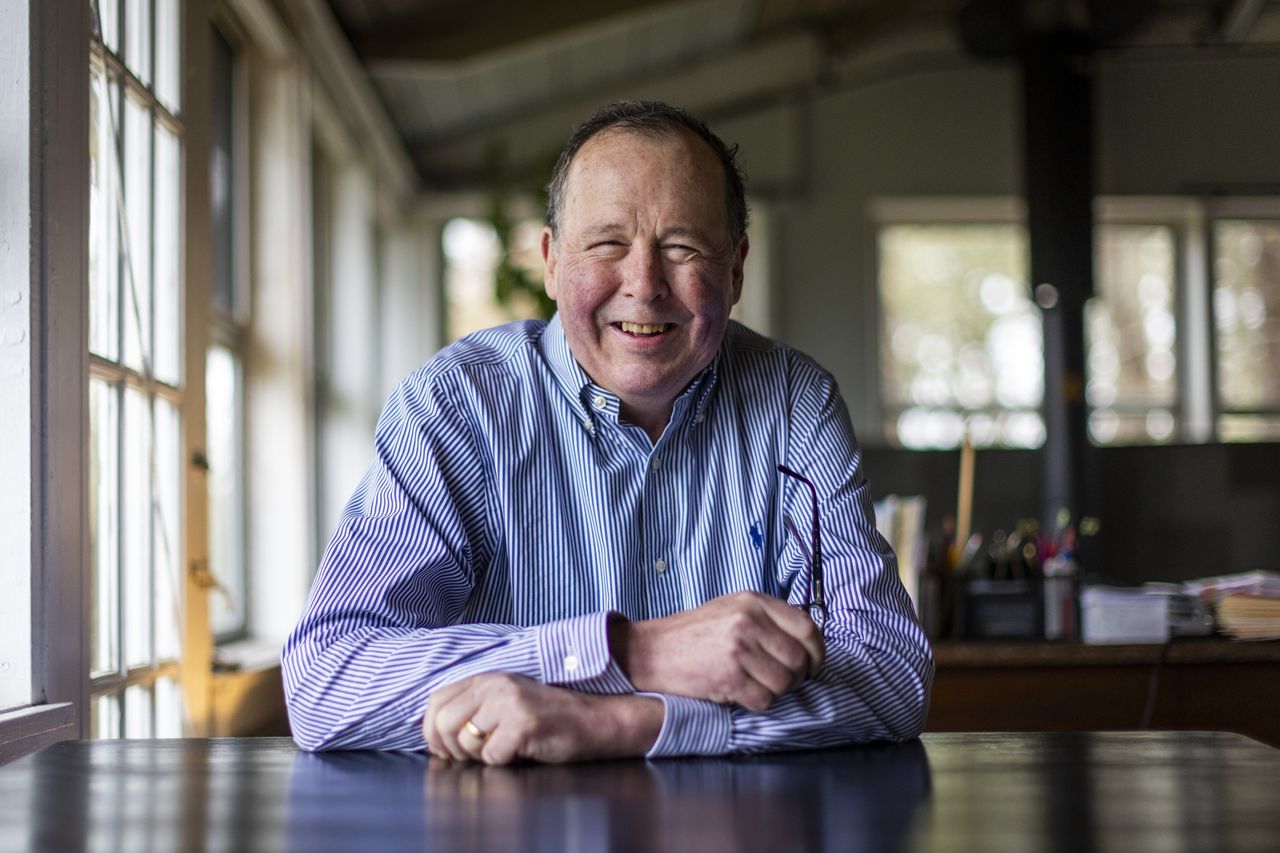
Shortly after Bryan Graybill and Daniel Dokos moved into their dream home in Sag Harbor, N.Y., in 2022, the couple realised they had a problem: Their beloved Covid dog, a redheaded goldendoodle named Rufus, didn’t like the house.

“He was sort of a little pouty,” said Graybill, an interior designer, who said they adopted Rufus from a dog breeder in Montecito, Calif., where they rode out the pandemic.

Now, the couple is doing what any self-respecting dog parents would do: They are moving.

“I’m slightly ashamed to admit that we’ve become ‘those people,’ making life decisions around our dog,” said Graybill. And yet, he said, “He’s the joy of our life.”

The house is coming on the market for $14.95 million, said Preston Kaye of Hedgerow Exclusive Properties, which is co-listing the property with Noble Black and Erica Grossman of Douglas Elliman . Graybill and Dokos, a lawyer, who also have homes in East Hampton and Montecito, plan to split their time between the two. They also have a place in New York City.

Before Rufus, Graybill said the couple thought the newly built Sag Harbor house would be their “forever home.”

When they got married in 2015, they lived mainly in East Hampton and began building a house there. During construction, they rented a place in Sag Harbor and unexpectedly fell in love with the area and bought property there, too. “It’s sort of a vibrant little town, even in the middle of winter,” Graybill said. They wound up renting out the newly built East Hampton house until recently.


In 2018, they paid $2.65 million for a nearly ½-acre property in Sag Harbor with about 110 feet of frontage on Upper Sag Harbor Cove. Graybill said at the time, the property had a modest, roughly 1,600-square-foot house built in the 1950s.

Graybill said he initially assumed the house would be overly-complicated to renovate because of its proximity to the water. “Buying the property was a roll of the dice,” he said. “We didn’t know how much we could do.”

As it turned out, they could do quite a bit.

Diving into historic research, the couple learned that a stretch of the now-defunct elevated railroad that once ran from Bridgehampton to Sag Harbor crossed a corner of their property, which was also home to a warehouse during the area’s whaling heyday in the 1800s.

With approval from local officials, Graybill and Dokos substantially renovated the 1950s home, building a roughly 4,200-square-foot house with five bedrooms in its footprint. “It required a huge feat of engineering acrobatics to figure it out,” Graybill said. Because the house is set back 12 feet from the water, they were able to add a pool, a pool house and a two-car garage between the house and the street.

Graybill said the property’s original 1880s building inspired him to commission a warehouse-like structure with loading dock doors, high ceilings and open spaces. Part two of the design was to convert the industrial space to a home, using features like interior window walls. Permitting took about three years, and it took another two years to complete construction.

Graybill said despite being smaller than their East Hampton home, which is about 6,500 square feet, the house in Sag Harbor felt “intimate” and had all the amenities they wanted, including a pool, a pool bar and an office that looks west over the cove and north over a marsh and bird sanctuary. Graybill, who trained in London under the late restaurant designer David Collins , said he adopted certain U.K. sensibilities in the Sag Harbor home, such as high-set windows to maximize natural light, and a “boot room” near the front door where visitors can sit and remove their shoes and coats. The large kitchen is a “working” kitchen with pots and pans hanging within reach. “It’s not a relaxation area,” he said. “You’re in the kitchen to cook.”


They spent about $8 million on construction, landscaping and hard and soft costs, Graybill said. “I thought it would be our forever home, so I really leaned into everything being custom.”

Graybill said they “went a little indulgent” on interior finishes like light fixtures, paint, plaster and kitchen appliances, and the windows were made in Charleston, S.C., by a company specialising in historic windows.

The median sale price in Sag Harbor was $1.9 million during the fourth quarter of 2023, down 12% from the prior-year period, according to real-estate appraisal firm Miller Samuel. But sales were up 61.5% year-over-year during the quarter, while inventory rose 16.8% compared with the fourth quarter of 2022.

Graybill said they designed the house before adopting Rufus, so there are no doggy amenities. “Gosh no, and as a result he sleeps in the bed with us and walks freely on whatever furniture he wants,” he said. After a romp on the beach, Rufus also bathes in their tub. (Graybill said part of the decision to move to East Hampton is that the house there has a covered porch where they can put a dog sink.)

Like other pet owners, Graybill and Dokos adopted Rufus during Covid when they were living in Montecito and spending more time at home. “Dan had never had a dog,” said Graybill, who grew up with poodles and lab retrievers and was initially reluctant to get a dog because he knew how much responsibility it would be. “We like our freedom,” he said.

But Graybill said one night as they lay in bed, Dokos texted him a picture of a local breeder’s two golden doodles. “One was William and one was Harry,” he recalled. When they went to see the dogs the next day, Harry—the smaller of the pups—ran right up to Dokos. They brought him home that afternoon and named him Rufus, which means redheaded in Latin. The trio fell into a new routine that included daily jaunts on the beach.

Graybill said when they moved to Sag Harbor, Rufus’ joyful demeanour changed.

They took him to nearby bay beaches, but they were narrow and a bit rocky. “The dog was constrained,” Graybill said. He couldn’t run as fast or as far as he had in California. “He couldn’t dig.”

Graybill said he and Dokos thought Rufus would acclimate until they drove to East Hampton one day and the dog was back in his element. “The smile on his face—if dogs could smile—I said to Dan, ‘I think the dog is happier in East Hampton,’” Graybill said.

Graybill said he has no regrets about deciding to sell the house, in part because he and Dokos enjoyed the building process together. “I’m giving up this life we wanted to build in Sag Harbor,” he said, “but I’m gaining this daily ritual of going to the beach with my husband and dog, and I just really cherish that.”

Big Tech Is Downsizing Workspace in Another Blow to Office Real Estate

Big technology companies are cutting back on office space across major coastal cities, leaving some exposed landlords with empty buildings and steep losses.

The pullback marks a sharp reversal after years when companies such as Amazon.com , Meta Platforms ’ Facebook and Google parent Alphabet had been bolstering their office footprints by adding millions of square feet of space.

Their expansion continued even after the pandemic erupted and many employees started working remotely. Tech companies have been the dominant tenant in West Coast cities like Seattle and San Francisco, and by 2021 these companies came to rival those in the finance industry as Manhattan’s biggest user of office space .

Now, big tech companies are letting leases expire or looking to unload some offices. Amazon is ditching or not renewing some office leases and last year paused construction on its second headquarters in northern Virginia. Google has listed office space in Silicon Valley for sublease, according to data company CoStar . Meta has also dumped some office space and is leasing less than it did early on in the pandemic.

Salesforce , the cloud-based software company, said in a recent securities filing that it leased or owned about 900,000 square feet of San Francisco office space as of January. That is barely half the 1.6 million of office space it reported having in that city a year earlier.

Tech giants looking to unload part of their workplace face a lot of competition. Office space listed for sublease in 30 cities with a lot of technology tenants has risen to the highest levels in at least a decade, according to brokerage CBRE . The 168.4 million square feet of office space for sublease in the first quarter was down slightly from the fourth-quarter 2023 peak but up almost threefold from early 2019.

Even tech companies that are renewing or adding space want less than they did before. The amount of new office space tech companies leased fell by almost half in the fourth quarter of last year compared with 2019, CBRE said.

Tech’s voracious appetite for office and other commercial real estate had been an economic boon for cities. The new workspace usually brought an influx of well-paid employees, boosted cities’ property-tax revenue and translated into more business for local retailers and shop owners.

Now, the waning appetite is a blow to cities at a time when it is difficult to find other big tenants. For landlords already grappling with higher interest rates and a drop in demand from financial companies, law firms and other tenants, tech’s reversal is especially painful.

In some cases, tech’s softening demand can lead to plunging real-estate values. Take 1800 Ninth Avenue, a 15-story office building in Seattle. Amazon’s rent payments helped almost triple the building’s value in the decade after the 2008-09 financial crisis.

In 2013, Amazon moved into about two-thirds of the building. At the end of that year, the building sold for $150 million—almost double the $77 million it had sold for just two years earlier.

Its price kept climbing as strong demand from tech companies and low interest rates drew big investment firms into the Seattle commercial-real-estate market. In 2019, J.P. Morgan Asset Management bought the building for $206 million.

Amazon’s lease expires this year, and the company is moving out. The building is listed for sale. It is expected to sell for about a quarter of its 2019 price, according to estimates by real-estate people familiar with the property.

“We’re constantly evaluating our real-estate portfolio based on the dynamic and diverse needs of Amazon’s businesses by looking at trends in how employees are using our offices,” an Amazon spokeswoman said in a statement.

When the pandemic upended the U.S. office market, large tech companies were initially a bright spot. They continued adding space, betting they would eventually need it as they hired more people and as employees gradually returned to the office.

“Big tech was pretty resilient,” said Brooks Hauf , a senior director at brokerage Avison Young.

That changed in 2022. Remote work continued to be popular, and some big tech companies laid off workers , meaning they needed less space than they had thought, said Colin Yasukochi , an executive director at CBRE’s Tech Insights Center.

Leasing by tech companies fell by about half between the third quarter of 2021 and the third quarter of 2022, according to CBRE.

Since then, companies tied to the booming artificial-intelligence business have leased more space in San Francisco and other cities. But that hasn’t been enough to meaningfully boost the office market. San Francisco’s office-vacancy rate hit a record 36.7% in the first quarter, according to CBRE, up from just 3.6% in early 2019.

China’s Overcapacity Is Already Backfiring

In the “ China Shock 2.0 ” narrative, not only is China a security threat and a low-end factory competitor, but it is also angling to swamp the West with cut-rate high-tech goods. There has been less focus on the downsides of such a strategy for China itself.

China’s first-quarter growth beat most estimates , rising 5.3% on the year—thanks mostly to strong industrial output and exports. But the economic data released Tuesday also showed that excess capacity is very real, and could be damaging to China itself.

While China’s industrial engine revved up in January and February , it downshifted again in March: output rose just 4.5% on the year, down sharply from January and February’s 7%. More tellingly, manufacturing capacity utilisation plummeted to 73.8% in the first quarter—its weakest, excluding the pandemic-affected first quarter of 2020, since at least 2015. In volume terms, China’s exports hit a nearly 10-year high in March. But in value terms they were barely above where they sat in October.

In other words, firms’ pricing power both at home and abroad is weakening and margin pressure is probably mounting: The March industrial financial data, which will be released later this month, will be worth watching.

So will private investment in manufacturing. If external demand, in value terms, doesn’t find a stronger footing soon and China’s domestic economy remains weak, then eventually such investment will need to slow. Otherwise the government, or state-owned banks, will have to start absorbing the cost of too many loans to industry more directly, as they already have with real estate and infrastructure.

Particularly interesting is the breakdown of that capacity utilisation data itself. Falling run rates were especially obvious in Beijing’s favourite sectors like automobiles and electrical equipment—the so-called “new productive forces,” including electric vehicles, chips and solar panels, which policymakers have highlighted in recent speeches and have been stalking Western politicians’ nightmares. Automobile manufacturing utilisation rates fell below 65% in the first quarter: well below their previous low (excluding the first quarter of 2020) of 69.1% in mid-2016.

China’s traditional export sectors, on the other hand, have actually held up relatively well. Textiles utilisation rose in the first quarter, while run rates for computer and communication gear fell, but much less sharply.

Meanwhile, economy wide borrowing—excluding government bond issuance—weakened further in March, despite bond yields and interest rates near multiyear lows. If margin pressure starts to force some “new productive forces” to start slowing investment, fiscal policy would need to step in to prop up growth.

Alternatively, China can keep funnelling its excess savings into new manufacturing overcapacity—but Chinese banks and Beijing, not just China’s trade partners, will eventually end up footing the bill.

Everrati Builds the Electric Porsche 911 of Your Dreams

As any Porsche lover knows, the automaker produces an electric sports car, the Taycan, which in GT Weissach form (US$231,995) develops 1,019 peak horsepower and takes just 2.1 seconds to reach 60 miles per hour. But what Porsche doesn’t do is produce an electric version of its absolutely iconic 911.

At the moment, that’s a job for the British company Everrati, which installs electric power into examples of the 911 built between 1988 and 1994 (code named 964). Everatti also transforms Land and Range Rovers, as well as classic Mercedes-Benz SLs, and an interpretation of the Ford GT40. The 911s have carbon-fiber body panels for lightness and are built in California through a partnership with Aria. That company creates concept and pre-production vehicles for global automakers.

Everrati’s latest creation is the Porsche 911 Signature Wide Body. With the hard-to-miss ducktail, it resembles a 1980s Porsche Turbo—but handles better. For a price that starts at £290,000 (US$360,467) customers get a car with 500 horsepower and 368.78 pound-feet of torque. The car has a 62-kilowatt-hour battery pack from LG Chem, yielding in this lightweight configuration approximately 200 miles of range. A single motor is connected to a limited-slip differential.

Also available is a Legacy model with 247 horsepower and 228.64 pound-feet. These cars look like earlier 911s (without the wide body and ducktail, for instance) and are built in a time-consuming restoration process. Given the work required, the price is the same as the Signature.

The Everrati Porsche 911 Signature Wide Body offers 500 horsepower and 368.78 pound-feet of torque from an electric drivetrain.
Everrati

Features on the Signature include electronically adjustable suspension, regenerative braking, a “Porsche inspired” five-gauge cluster, and DC fast-charging capability. Everrati is also offering a Signature Gulf Edition of the 911, painted in the iconic blue-and-orange livery of the Gulf racing team (as seen at Le Mans and other venues).

The first Everrati 911 to go to a U.S. customer this month is a Mexico Blue Signature model delivered to California resident Matt Rogers, who co-founded the smart thermostat company that eventually became Google Nest. Rogers said in a statement that his car “captures the zeitgeist perfectly, being sustainable and environmentally conscious while also keeping the character of [Porsche’s] air-cooled era.”

Justin Lunny, Everatti co-founder and CEO, tells Penta that the company “doesn’t ‘convert’ cars to electric; instead, we redefine them as electric vehicles, worrying about such factors as driving feel and weight distribution. We hire very-experienced EV engineers and use the highest level of electric components, such as batteries and motors you would see in EVs from OEM manufacturers such as Rimac or Lotus.”

The gauges look like Porsche items, but are altered to monitor battery performance
Everrati

Lunny says that Everrati puts motor and batteries in the back, where Porsche located the engine and transmission on its 911s, with more batteries and power electronics up front, where the original gas tank resided.

U.K. customer cars will still make the trek to California. Lunny explains that right-hand-drive 911s are sourced in Britain and shipped to the U.S., where they’re stripped to the chassis and slowly built up with the new carbon-fibre panels. They then go back to the U.K. for finishing.

“EV is not the only answer, but we do believe it will become the predominate powertrain,” Lunny says.

The company concentrates on a few models, but it’s willing to entertain bespoke one-off commissions, such as an electric Lamborghini for a customer in the Middle East. Such projects require a huge engineering commitment, and the resulting vehicle isn’t by any means inexpensive, costing US$500,000 or more. But it will be fully developed as an EV.

Porsche, too, is mostly going electric, with plans to have EVs make up more than 80% of new car sales by 2030. In 2021, more than 40% of the cars delivered in Europe were at least partly electric, either plug-in hybrids or full EVs. The 911 has no plans for full electrification, though a hybrid version appears likely. Lunny himself drives a battery-powered Porsche Taycan.

The Longevity Vacation: Poolside Lounging With an IV Drip

For some vacationers, the ideal getaway involves $1,200 ozone therapy or an $1,800 early-detection cancer test.

Call it the longevity vacation. People who are fixated on optimising their personal health are pursuing travel activities that they hope will help them stay healthier for longer. It is part of a broader interest in longevity that often extends beyond traditional medicine . These costly trips and treatments are rising in popularity as money pours into the global wellness travel market.

At high-end resorts, guests can now find biological age testing, poolside vitamin IV drips, and stem-cell therapy. Prices can range from hundreds of dollars for shots and drips to tens of thousands for more invasive procedures, which go well beyond standard wellness offerings like yoga, massages or facials.

Some longevity-inspired trips focus on treatments, while others focus more on social and lifestyle changes. This includes programs that promise to teach travellers the secrets of centenarians .

Mark Blaskovich, 66 years old, spent $4,500 on a five-night trip last year centred on lessons from the world’s “Blue Zones,” places including Sardinia, Italy, and Okinawa, Japan, where a high number of people live for at least 100 years. Blaskovich says he wanted to get on a healthier path as he started to feel the effects of ageing.

He chose a retreat at Modern Elder Academy in Mexico, where he attended workshops detailing the power of supportive relationships, embracing a plant-based diet and incorporating natural movement into his daily life.

“I’ve been interested in longevity and trying to figure out how to live longer and live healthier,” says Blaskovich.

Vitamins and ozone

When Christy Menzies noticed nurses behind a curtained-off area at the Four Seasons Resort Maui in Hawaii on a family vacation in 2022, she assumed it might be Covid-19 testing. They were actually injecting guests with vitamin B12.

Menzies, 40, who runs a travel agency, escaped to the longevity clinic between trips to the beach, pool and kids’ club, where she reclined in a leather chair, and received a 30-minute vitamin IV infusion.

“You’re making investments in your wellness, your health, your body,” says Menzies, who adds that she felt more energised afterward.

The resort has been expanding its offerings since opening a longevity centre in 2021. A multi-day treatment package including ozone therapy, stem-cell therapy and a “fountain of youth” infusion, costs $44,000. Roughly half a dozen guests have shelled out for that package since it made its debut last year, according to Pat Makozak, the resort’s senior spa director. Guests can also opt for an early-detection cancer blood test for $1,800.

The ozone therapy, which involves withdrawing blood, dissolving ozone gas into it, and reintroducing it into the body through an IV, is particularly popular, says Makozak. The procedure is typically administered by a registered nurse, takes upward of an hour and costs $1,200.

Longevity vacationers are helping to fuel the global wellness tourism market, which is expected to surpass $1 trillion in 2024, up from $439 billion in 2012, according to the nonprofit Global Wellness Institute. About 13% of U.S. travelers took part in spa or wellness activities while traveling in the past 12 months, according to a 2023 survey from market-research group Phocuswright.

Canyon Ranch, which has multiple wellness resorts across the country, earlier this year introduced a five-night “Longevity Life” program, starting at $6,750, that includes health-span coaching, bone-density scans and longevity-focused sessions on spirituality and nutrition.

The idea is that people will return for an evaluation regularly to monitor progress, says Mark Kovacs, the vice president of health and performance.

What doctors say

Doctors preach caution, noting many of these treatments are unlikely to have been approved by the Food and Drug Administration, producing a placebo effect at best and carrying the potential for harm at worst. Procedures that involve puncturing the skin, such as ozone therapy or an IV drip, risk possible infection, contamination and drug interactions.

“Right now there isn’t a single proven treatment that would prolong the life of someone who’s already healthy,” says Dr. Mark Loafman, a family-medicine doctor in Chicago. “If it sounds too good to be true, it probably is.”

Some studies on certain noninvasive wellness treatments, like saunas or cold plunges do suggest they may help people feel less stressed, or provide some temporary pain relief or sleep improvement.

Linda True, a policy analyst in San Francisco, spent a day at RAKxa, a wellness retreat on a visit to family in Thailand in February. True, 46, declined the more medical-sounding offerings, like an IV drip, and opted for a traditional style of Thai massage that involved fire and is touted as a “detoxification therapy.”

“People want to spend money on things that they feel might be doing good,” says Dr. Tamsin Lewis, medical adviser at RoseBar Longevity at Six Senses Ibiza, a longevity club that opened last year, whose menu includes offerings such as cryotherapy, infrared sauna and a “Longevity Boost” IV.

RoseBar says there is good evidence that reducing stress contributes to longevity, and Lewis says she doesn’t offer false promises about treatments’ efficacy . Kovacs says Canyon Ranch uses the latest science and personal data to help make evidence-based recommendations.

Jaclyn Sienna India owns a membership-based, ultra luxury travel company that serves people whose net worth exceeds $100 million, many of whom give priority to longevity, she says. She has planned trips for clients to Blue Zones, where there are a large number of centenarians. On one in February, her company arranged a $250,000 weeklong stay for a family of three to Okinawa that included daily meditation, therapeutic massages and cooking classes, she says.

India says keeping up with a longevity-focused lifestyle requires more than one treatment and is cost-prohibitive for most people.

Doctors say travellers may be more likely to glean health benefits from focusing on a common vacation goal : just relaxing.

Dr. Karen Studer, a physician and assistant professor of preventive medicine at Loma Linda University Health says lowering your stress levels is linked to myriad short- and long-term health benefits.

“It may be what you’re getting from these expensive treatments is just a natural effect of going on vacation, decreasing stress, eating better and exercising more.”

Cocoa and Coffee Prices Have Surged. Climate Change Will Only Take Them Higher.

Global prices for cocoa and coffee are surging as severe weather events hamper production in key regions, raising questions from farm to table over the long-term damage climate change could have on soft commodities.

Cultivating cocoa and coffee requires very specific temperature, water and soil conditions. Now, more frequent heat waves, heavy rainfalls and droughts are damaging harvests and crippling supplies amid ever growing demand from customers worldwide.

“Adverse weather conditions, mostly in the Southern Hemisphere, have played an important role in sending several food commodities sharply higher,” said Ole Hansen , head of commodity strategy at Saxo Bank.

The spikes in prices are a threat to coffee and chocolate makers across the globe.

Swiss consumer-goods giant Nestlé was able to pass only a fraction of the cocoa price increase to customers last year, and it may need to adjust pricing in the future due to persistently high prices, a spokesperson said.

Italian coffee maker Lavazza reported revenue of more than $3 billion for last year, but said profitability was hit by soaring coffee bean prices, particularly for green and Robusta coffee, and its decision to limit price increases.

Likewise, chocolatier Chocoladefabriken Lindt & Spruengli said in its 2023 results that weather and climate conditions played a major role in the global shortage of cocoa beans that led to historically high prices. The company had to lift the sales prices of its products and said it would need to further raise them this year and next if cocoa prices remain at current levels.

Hershey ’s chief executive, Michele Buck , said in February that historic cocoa prices are expected to limit earnings growth this year, and that the company plans to use “every tool in its toolbox,” including price hikes, to manage the impact on business.

In West Africa, where about 70% of global cocoa is produced, powerhouses Ivory Coast and Ghana are facing catastrophic harvests this season as El Niño—the pattern of above-average sea surface temperatures—led to unseasonal heavy rainfalls followed by strong heat waves.

Extreme heat has weakened cocoa trees already damaged from heavy rainfall at the end of last year, according to Morningstar DBRS’s Aarti Magan and Moritz Steinbauer. The rain also worsened road conditions, disrupting cocoa bean deliveries to export ports.

The International Cocoa Organization—a global body composed of cocoa producing and consuming member countries—said in its latest monthly report that it expects the global supply deficit to widen to 374,000 metric tons in the 2023-24 season, from 74,000 tons last season. Global cocoa supply is anticipated to decline by almost 11% to 4.449 million tons when compared with 2022-23.

“Significant declines in production are expected from the top producing countries as they are envisaged to feel the detrimental effect of unfavourable weather conditions and diseases,” the organisation said.

While the effects of climate change are severe, other serious structural issues are also hitting West African cocoa production in the short- to medium-term. Illegal mining poses a significant threat to cocoa farms in Ghana, destroying arable land and poisoning water supplies, and the problem is becoming increasingly relevant in the Ivory Coast, according to BMI.

The issues are being magnified by deforestation carried out to increase cocoa production. Since 1950, Ivory Coast has lost around 90% of its forests, while Ghana has lost around 65% over the same period. This has driven farmers to areas less suited to cocoa cultivation like grasslands, increasing the amount of labor required and bringing further downside risks to the harvest, the research firm said.

The Ivory Coast’s cocoa mid-crop harvest—which officially starts in April and runs until September—is expected to fall to 400,000-500,000 tons from 600,000-620,000 tons last year, with weather expected to play a crucial role in shaping the market balance for the season, ING analysts said, citing estimates from the country’s cocoa regulator. Ghana’s cocoa board also forecasts a slump in the harvest for this season to as low as 422,500 tons, the poorest in more than 20 years, according to BMI.

Neither regulator responded to a request for comment.

Meanwhile, extreme droughts in Southeast Asia—particularly in Vietnam and Indonesia—are resulting in lower coffee bean harvests, hurting producers’ output and global exports. Coffee inventories have recovered somewhat in recent weeks but remain low in recent historical terms. Robusta coffee has seen a severe deterioration in export expectations, while Arabica coffee is expected to return to a relatively narrow surplus this year, said Charles Hart, senior commodities analyst at BMI.

The global coffee benchmark prices, London Robusta futures, are up by 15% on-month to $3,825 a ton. Arabica coffee prices have also surged 17% over the last month to $2.16 a pound in lockstep with Robusta—its highest level since October 2022. Cocoa prices have more than tripled on-year over these supply crunch fears, and risen 49% in the last month alone to $10,050 a ton.

“Cocoa trees are particularly sensitive to weather and require very specific conditions to grow, this means that cocoa prices are especially vulnerable to extreme weather events, such as drought and periods of intense heat, as well as the longer-term impact of climate change,” said Lucrezia Cogliati, associate commodities analyst at BMI.

Cogliati said global cocoa consumption is expected to outpace production for the third consecutive season, with intense seasonal West African winds and plant diseases contributing to significant declines.

Consumers hoping for a return to cheaper prices for life’s little luxuries in the midterm may also be in for a bitter surprise.

“There is no sugarcoating it—consumers will ultimately be faced with higher chocolate prices, products that contain less chocolate, and/or shrinking product sizes,” Morningstar’s Magan and Steinbauer said in a report.

“We anticipate consumers could respond by searching widely for promotional discounts, trading down to value-based chocolate and confectionary products from premium products, switching to private-label from branded products and/or reducing volumes altogether.”

The record-breaking rally for cocoa and coffee is likely more than just a flash in the pan, according to Citi analysts, as adverse weather conditions and strong demand trends are likely to support prices in the months ahead. The U.S. bank estimates Arabica coffee futures in a range of $1.88-$2.15 a pound for the current year, but said projections could be lifted if the outlook for 2024-25 tightens further.

At the heart of it all, climate change is set to play a major role, as the impact of extreme weather events could exacerbate the pressure on cocoa and coffee supplies, according to market watchers.

“I don’t expect prices to remain at these levels, but if we continue to see more unusual weather as a result of global warming then we certainly could see more volatility in terms of cocoa yields going forward, which could impact pricing,” said Paul Joules, commodities analyst at Rabobank.

The Party’s Over for Coachella’s Glitziest Rental Mansions

Kristina Morrison’s journey to a parallel universe started on a bus that navigated hot, dusty, desert roads, crossed through a gated community with drab cookie-cutter houses and stopped in front of an enormous, white Mediterranean-style mansion.

She walked through an archway dripping with silver beads that revealed a crystal clear blue swimming pool lined with palm trees, bright red flowers and large rocks. Beautiful people played putt-putt, danced to live DJs and drank lime-green margaritas on a vast green lawn decorated with stacks of pink and silver balls.

“Everything was so chic and elegant,” says Morrison, a model, actress and influencer, about the Clinique-hosted event that took place last April in Indio, Calif., during the first weekend of the Coachella Valley Music and Arts Festival.

The party was at an 8,900-square-foot custom-designed estate called Zenda, which rents for around $300,000 an event during the festival. Its owner, Miles Warner, who lives 140 miles away in Santa Monica, was initially going to buy a smaller place to rent out as an Airbnb when he wasn’t there golfing, but when he saw the prices Coachella events, which include parties and overnight guests, were commanding, he bought the nine-acre property in February 2022 for $5.8 million. He then invested around $700,000 to add bedrooms and convert a barn into a party space.

One Coachella weekend event can cover the estate’s expenses for a year, he says. “I’m just lucky it’s working. If it stopped working, it would get expensive quickly,” he says.

There has been a bloom of such rental mansions in Southern California’s Coachella Valley over the past few years. The annual festival, which will take place over the weekends of April 12-14 and April 19-21, brings roughly 120,000 people, most of them to an area that covers nine cities, including Palm Springs, Desert Hot Springs, Indio, Indian Wells, La Quinta, Coachella, Palm Desert, Rancho Mirage and Cathedral City, as well as unincorporated communities in Riverside County like Thermal and Bermuda Dunes.

But this year, rentals of these mansions are slowing down, causing some to reduce prices, according Kaylee Ricciardi, an LA-based luxury rental real-estate agent with AKG | Christie’s who represents a number of mansions. Current demand for all short-term rentals in the Coachella Valley is down 12% year over year for the first concert weekend, the most popular time span. Last year, 75% of demand for both weeks of the Coachella festival were already booked at this point, according to AirDNA.

This doesn’t bode well considering all that goes into these weekends. On the festival’s sidelines, companies hold invitation-only parties called “activations” to draw in influencers, some of whom are paid to attend. The goal is to create memorable moments, or “branded experiences” to ensure their products show up on TikTok and Instagram feeds. These swag-laden events take months to plan and involve elaborate sets and celebrity appearances. Mansions with amenities like lazy rivers, pickleball courts and infinity pools make for good backdrops.

As a result, the income brought in by all short-term rentals in the valley during the Coachella festival has grown significantly—up 30% in 2023 compared with 2019, according to an exclusive data analysis by short-term rental-analytics firm AirDNA. In the areas where many of these rental mansions are located, the growth over just the past year has been explosive: up 44% in Coachella and up 38% in Thermal.

The slowdown in bookings, some say, is due to a glut that is coming on the market, as more investors are buying, building and renovating massive properties to rent out. “There’s going to be empty houses this year,” says Zenda’s owner Warner. He says the “secret” (that there’s a lot of money to be made renting large estates for activations during Coachella) is out—and now it’s just a question of supply and demand. Zenda, where the Clinique party took place, finally rented out this year, months later than usual, and for a significantly lower rate since it’s just a group of festival goers and not for an event.

Some owners speculate that companies are cutting back because of the economy, but the production companies that are managing the activations say the festival is important. “It’s absolutely critical for brands,” says Zev Norotsky, whose L.A-based event planning company Enter is managing several parties this year.

Others attribute it to a lacklustre festival lineup, which features Lana Del Rey, the Creator, and Doja Cat. “It’s not Beyoncé,” (who headlined the festival in 2018) says Sean Breuner, the founder and CEO of a luxury-property management company AvantStay, which manages several of the large estates in the area, along with luxury homes across the country. Rumours continue to swirl that Taylor Swift will be there to support Del Rey, a good friend, and that she could even perform.

Breuner bought his own rental mansion, a 5,000-square-foot estate called Buena Vista on 38 acres, with partners for $5.25 million in 2021. He spent over a million dollars renovating it and adding amenities like a tennis court, a large pool and a lake with paddle boats and kayaks. As it did last year during Coachella, Buena Vista will again this year host an event for Kourtney Kardashian’s lifestyle brand Poosh—an adult sleep-away camp and party. The property rents for more than $150,000 for an event at this time, according to rental agents.

Tony Schubert, owner of Event Eleven, an LA-based event-production company, says prices for these rental mansions have become so high that he realised it would be more cost effective to just build his own compound. For the past two years his company rented an 8,500-square-foot Mediterranean-style mansion on 19 acres with a man-made lake, an infinity pool and a 4-acre polo field called Cavallo Ranch, which rents out for around $300,000, where he runs an event called Nylon House, hosted by Nylon Magazine.

A few months ago he bought a 20-acre date farm in Thermal, part of Riverside County close to the festival, with two dilapidated houses for $850,000. He plans to build a 4,000-square-foot house, a lazy river and six A-frame sleeping villas that should be ready for next year’s festival. “I was looking at estates for clients and couldn’t believe how much money they were getting,” he says.

The Madrid, which spans 10,000 square feet, has eight bedrooms, three guest casitas, a poolside bar, an airplane hangar, a tennis court and two pickleball courts, is part of a whole rental mansion gated subdivision, complete with a guard, in Bermuda Dunes, created by Rick Kay, who runs a San Clemente, Calif.-based ball-bearing manufacturing company. Kay initially bought a single 10,000-square-foot home for $1.6 million in a subdivision in 2006, but when he ran into an issue renting short term, he decided to buy up the other 10 lots and build individual 10,000-square-foot houses, at a cost of $5 million to $8 million each. “Everyone has vacation rentals but no one else has a vacation village,” says Kay.

These side events held during Coachella are crucial to the local economy, particularly in the more remote areas like Thermal, which doesn’t have many hotels and restaurants to reap the benefits from the festival, says Mark Tadros,. He rents out the packhouse, traditionally where the dates are packed, on the property of his date farm, Aziz Farms, for as high as $150,000 per event during Coachella.

Last year an event called Oasis in partnership with Liquid I.V. (an El Segundo, Calif.-based hydration drink company) took place at the packhouse, but this year, the packhouse isn’t rented. “We are taking a different approach,” says Kyle Nolan, the executive producer at Sturdy, a L.A.-based design studio and creative agency that runs the Oasis event and says he isn’t doing any events off the festival grounds this year.

“I certainly hope this isn’t the new normal. I just think it’s an off year,” says Tadros, who also sits on a community council in Riverside County that approves or denies permits for special events in parts of the unincorporated areas. He says the permitting process has become much stricter in recent years.

This year Indio “clarified” its definition of a “large event,” requiring a permit for any party with over 40 attendees held at an estate with overnight guests because some property owners weren’t compliant, says Indio marketing and public information officer Jessica Mediano. Indio also doesn’t allow properties within 1,000 feet of the festival grounds during a major music festival event (i.e. Coachella) to hold events.

One of the more renowned events, sponsored by online fashion retailer Revolve , is also cutting back this year, holding its party on just one day instead of two and opting for a Palm Springs hotel instead of a private mansion as in previous years. A Revolve spokesperson says it will “still host the same amount of guests, we have just simply changed the format to keep things fresh, exciting and elevated.”

Last year the Revolve affair was held at the Emerson Estate, an over 8,000-square-foot mansion on 20 acres in Indio that rents for $30,000 for weddings and goes up to the six figure range for events. Emerson Estate owner Diana Lazzarini says she put a lot of money into her property getting ready for the Revolve party, such as putting in gates and an area for VIP parking, in hopes that they would return. She says she had a few lowball offers, but her estate isn’t booked for the first weekend of Coachella this year because it wasn’t worth accepting the lower prices people were offering. “It’s a lot of liability, headache and risk,” she says.

The Madrid House, advertised by its owner Rick Kay as “the house that never sleeps,” is also changing course. Instead of big parties on Friday and Saturday nights, there will be private daytime events run by Enter around the pool featuring pickleball and fitness classes with partners like Paper Magazine, True Religion, Saint James Iced Tea and LaCroix. Kay says he thinks he could charge as much as $200,000 for big events, but he prefers the smaller sized parties, which pay around $40,000 for the Madrid, because they are less of a hassle. The lower price played a role in why he chose the Madrid, says Enter’s Norotsky.

Instead of building one big estate on multiple acres for big events, some investors are now building multiple individual ultraluxury homes where headliner musicians can stay and companies can host influencers at smaller parties that don’t require permits.

David Corso, whose Corso Marketing Group manages a Coachella event estate called Zenyara, just finished building his own rental mansion property he named Villa Rosa. Designed by the CEO of RH, Gary Friedman (a friend), the very modern, polished concrete and balsa wood house will host Coachella musicians and guests in a quieter, more intimate environment for $10,000 to $30,000 a night, depending on the season he says.

Claudio Bravo is taking a similar path. The luxury mansion rental company magnate just finished building a $50 million project with 16 short-term rental mansions. Each spans 6,500 square feet. They are right next to each other in a gated community on a 10-acre property in Indio, near the festival site, called Bravo Collection in Indio. This year 13 of the homes, which rent for around $100,000 apiece for a week during Coachella, will be rented by Guess Inc.

Jen and Chris Baldivid’s Folsom, Calif.-based Walker Land Company owns the Old Polo Estate, a former date farm on five acres they bought in 2017 for $925,000 and added a pool, pond, volleyball and pickleball courts and a two-hole golf course. They rent it out for $50,000-$400,000 for events that attract as many as 3,000 attendees during Coachella’s first weekend. Last year’s activation was sponsored by clothing company Darc Sport and included a 40-foot long tunnel with plastic skulls embedded into foam walls. It’s not rented for the first weekend of Coachella this year.

Starting this year, the Balvadids have a different sort of mansion that is almost fully booked until summer, including during Coachella, with smaller events, like dinners, and guests staying over. It’s well known in the architectural community because it was designed in 1959 by Midcentury Modernist Walter S. White. The structure of the house, including the metal parabolic roof that floats over the angular white structure, is untouched, but they knocked down a wall to make it more open, added three sleeping casitas, put in a pool that mimics the shape of the house and turned a carport into an outdoor entertainment area.

While demand for short-term rentals has slowed for the first weekend of the Coachella festival, it is higher this year for what’s called Stagecoach—the country music festival held the weekend after the two Coachella festival weekends, this year April 26-28. Demand is up 39% year-over-year, according to AirDNA. That is giving mansion owners hope that there will be expanding opportunities for event rentals beyond Coachella.

There are still more event mansions on the horizon. Drew MacLurg owns the Stallion Estate, a 7,000 square foot home on 5 acres he bought for $4 million in March 2022. He charges around $200,000 for an event for the first weekend of Coachella, but he didn’t get any interest for that this year so he is renting it to a private group for three nights for around $18,000, he says.

MacLurg put in about $1.6 million adding a 60-foot long pool with a waterslide, a decked-out game barn, a pickleball court and a nine-hole mini golf course. He is currently building a 7,000-square-foot house nearby that will have a lazy river and a bowling alley for event use.

Another is the Pond Estate, a 12,700-square-foot Hacienda-style mansion with indoor and outdoor swimming pools and two guesthouses (4,000 square feet and 2,000 square feet) on over 12 acres in South Palm Springs. Tom Ryan, the president and CEO of streaming at Paramount, bought the property, near a house he owned, for $8.38 million in June 2021 after stumbling on it with his wife. He says he was blown away by the beauty and history and is putting in a couple million dollars renovating and redecorating it, including creating a game room and entertaining spaces out of former garages, each 3,000 square feet. He plans to rent it out for weddings, private parties and during Coachella for events.

Ryan says he didn’t buy it as an investment to make as much profit as possible—he sees the event business more as helping offset costs for a property his family will own for generations. “It felt like a once in a lifetime opportunity,” says Ryan.

Investors Have Cooled on Hydrogen. A Second Wave Is Coming.

Investors may want to give hydrogen a second look, but they’ll need to be patient.

There’s not a lot of love for the fuel on Wall Street. The Global X Hydrogen ETF is down 81% from its high in 2021, and other hydrogen stocks are well below their peaks.

Skeptics say the cleanest hydrogen is too pricey and still far away from becoming part of a viable marketplace. The government is still sorting out regulation and industry incentives. New infrastructure will be required, and it isn’t clear there will be enough customers once it’s built.

But even as investor enthusiasm faded, a raft of companies have been quietly exploring hydrogen as a clean-burning fuel that can be a building block in the energy transition. There are numerous corporate projects in development that could help propel the growth of a hydrogen economy and drive profits in the future. The Department of Energy is investing $8 billion in promoting clean hydrogen, with the creation of seven hydrogen hubs around the U.S. within the decade.

Many energy and petrochemical companies are studying or have hydrogen projects in the works as a way to decarbonise. One reason is that hydrogen is used in the refining process, and cleaner hydrogen could be used in industrial processes. Hydrogen can be turned into ammonia and is used in fertiliser. In its next wave, hydrogen could be widely used in industrial applications like steel making and for fuel in ships and aircraft.

Supporters believe all the money pouring in now will help bring costs down as hydrogen projects scale. Investors may want to look at traditional energy and industrial companies that are currently working on hydrogen projects as a way to play the long-term growth of a hydrogen market.

“All these companies…have decarbonisation aspirations,” said Marc Bianchi, managing director at TD Cowen. There’s a meaningful opportunity for companies that are already using thousands of tons of hydrogen a day to switch from dirtier to cleaner sources.

The U.S. uses about 10 million tons of hydrogen a year for applications such as refining and fertilizer. Hydrogen demand was about 2% of global energy consumption in 2020 and could grow to 20% to 30% in a net-zero economy, according to S&P Global Commodity Insights.

Hydrogen gas is colourless, but industry shorthand assigns colours based on how the fuel is produced. Green hydrogen is the most desirable. Electricity generated from solar or wind is used to split hydrogen from water molecules and produces no carbon byproducts. Blue hydrogen is made by using natural gas along with capture and storage technologies to limit CO2. Grey hydrogen is made with natural gas or methane and generates carbon dioxide.

S&P Global Commodity Insights projects the cleanest hydrogen, even with incentives, would be about three times more costly in parts of the country where renewable energy is more expensive, like the Northeast. In the best case, green hydrogen produced in Texas, using proposed tax incentives and credits, could be as low as $1 per kilogram, slightly less than the $1.3 per kilogram cost of grey hydrogen. In Europe, green hydrogen is $6 to $9 per kilogram.

The energy industry, however, is waiting to see the final structure of U.S. tax credits granted to clean hydrogen under the Inflation Reduction Act. The Internal Revenue Service issued a draft guidance on implementation.

It was viewed as too restrictive by many in the industry, and some industry executives say it put a chill on activity while they wait to see how deep incentives will be for their proposed processes. The comment period has just ended.

“Anyone in power generation wants to talk about hydrogen,” said Richard Voorberg, president of North America for Siemens Energy . “Now, we’ve seen that plateau over the last little while, meaning months. Everyone was excited about [the Inflation Reduction Act], but the guidance that came out Dec. 22 had people scratching their heads.”

Ernest Moniz, a former energy secretary, heads the consortium formed to organise a market for clean hydrogen, called the Hydrogen Demand Initiative. Moniz said recently that the guidance presented by the IRS was too narrow and could slow the industry’s growth if not changed.

“The philosophy has been to require upfront decarbonisation of the electrons that you’re supposed to be using for the electrolysis of water, and the fear—and I certainly fear it—is this will significantly inhibit the near-term demand creation,” Moniz said. “We might end up with a very low carbon grid, but a hydrogen market that’s way behind where it should be at that time.” He added that he’s watching for how the IRS adjusts its plans for the tax credits.

Investors looking at companies with hydrogen projects need to be sure the value is there for the company’s traditional businesses. Analysts say valuations don’t appear to reflect potential for hydrogen, even if some had in the past.

Hydrogen was once the “shiniest new toy” for investors, but disillusionment has set in, said Timm Schneider, CEO of Schneider Capital Group. “Not one investor has asked me about hydrogen at any company, like Chevron or Exxon, that has a hydrogen project, over the past 12 months,” he said.

One way to invest in the transition is through industrial gas companies. S&P Global is projecting that Air Products and Chemicals will be the leading industrial gas producer of hydrogen, in the amount of 5.2 million metric tons by 2030. Exxon Mobil is positioned to be the largest producer among oil-and-gas companies, with 1.5 MMT, S&P Global said.

Air Products CEO Seifi Ghasemi, speaking at the CERAWeek by S&P Global conference last month, said his company is currently the largest producer of grey hydrogen globally. He wants to be the leader in green and blue. The company began producing grey hydrogen at the request of the U.S. government in the 1950s for use in the space program.

Ghasemi said the company has two major projects in development. One is in northern Saudi Arabia, where the company will use wind and solar with its partners to create 650 tons of hydrogen a day. That project, he said, IS “30 times bigger than anything that exists today.”

Air Products has been collaborating with Baker Hughes , an energy services and technology company that has developed turbines and compressors. Baker is working on the hydrogen project in Saudi Arabia and the two have another project under way in Alberta, Canada that is expected to be operational next year. “Baker Hughes is interesting. It is supplying a turbine to that project in Alberta that’s going to run on 100% hydrogen. That’s been a bit of a challenge for the industry, to burn hydrogen in a turbine,” said Bianchi. Baker Hughes, he said, was the first to succeed.

The demand for hydrogen is still uncertain and the market is nascent. The anticipated supply of hydrogen is well ahead of demand, Enverus Intelligence Research said in a report last week. Only 30% of the U.S. projects expected by 2030 have disclosed customers.

But there was a bright note in the Enverus report. European Union decarbonisation targets could mean U.S. producers could find a significant export market.

Exports are what helped turn the U.S. into the leading producer of oil and gas. The energy industry might follow that playbook again with hydrogen.

Midnight Blue Gown Highlights Biggest Sale of Princess Diana’s Belongings Since 1997

The largest auction of Princess Diana’s belongings in 27 years, including clothes and accessories, will be held this summer in Los Angeles.

Julien’s Auctions will hold a sale of Princess Diana’s most important garments and accessories, both in Los Angeles and online, on June 27.

The collection, titled “Princess Diana’s Elegance & a Royal Collection,” will be the largest to go to auction since the Princess of Wales sold 79 of her dresses at Christie’s in 1997, just two months before her death, according to a news release from Julien’s Auctions, which is holding the sale on June 27. The previous sale brought in US$3.25 million for charity.

“Julien’s is honored to present this historic auction that will celebrate Princess Diana’s iconic fashion style and her reign as the People’s Princess,” said Martin Nolan, co-founder and executive director of Julien’s Auctions, in a news release.

The Julien’s auction will include some of the princess’s most famous cocktail and evening dresses, suits, shoes, hats, and accessories.

Princess Diana wore a yellow and navy Catherine Walker skirt suit during her visit to Hong Kong in in 1989.
Hong Kong Red Cross

Among the highlights is a Murray Arbeid midnight blue strapless tulle diamante star gown that the princess wore twice in 1986, to the premiere of Phantom of the Opera and to a dinner at Claridge’s in London for King Constantine of Greece. The gown is estimated to sell for between US$200,000 and US$400,000.

Another highly anticipated piece is an off-the-shoulder magenta silk and lace evening dress, designed by Victor Edelstein, that’s also estimated between US$200,000 and US$400,000. Diana wore the dress in London and in Hamburg, Germany, in 1987. Edelstein also designed one of Diana’s most famous looks—the ink-blue velvet, mermaid-style gown she wore while dancing with John Travolta at the White House.

Other garments that will be offered in the auction include a pink floral shirtdress (estimate: US$100,000-US$200,000), a Victorian revival evening gown with a fitted bodice and a Basque waist (estimate: US$100,000-US$200,000) and a two-piece yellow and navy skirt suit (estimate: US$30,000-US$50,000), all designed by Catherine Walker, one of Princess Diana’s closest collaborators.

Kurt Geiger evening shoes
Julien’s Auctions

Many of Diana’s accessories, such as shoes, handbags, and hats, will also be sold. Some notable items include a pair of Kurt Geiger emerald green satin-jewelled vamp evening shoes (estimate: US$2,000-US$4,000) and a yellow and black felted wool turban-style hat, designed by Royal milliner Philip Somerville (estimate: US$10,000-US$20,000).

A portion of the auction proceeds will benefit Muscular Dystrophy U.K. Additionally, highlights of the collection will be on view at K11 MUSEA in Hong Kong from April 18-29 and at the Museum of Style Icons in Newbridge, Ireland, from June 11-27.

“We are also delighted to bring back many of Diana’s favourite fashion ensembles to Asia and Europe that she wore on some of her highly publicised international royal appearances and humanitarian efforts, such as her Catherine Walker suit from her 1989 visit to Hong Kong,” Nolan said.

Live in a WWII-Era U.S. Embassy in London for £21.5 Million

In the heart of London, a duplex apartment within the city’s former U.S. Embassy, which has been recently transformed into super-prime residences, has hit the market for £21.5 million (US$26.9 million).

The unit, which has been given the presidential moniker of the “Oval Residence,” is within No. 1 Grosvenor Square, and is the last sponsor unit available from developer Lodha UK. The building, on Mayfair’s uber-posh Grosvenor Square, served as the U.S. Embassy from 1938 until 1960, and then as the Canadian High Commission from 1962 until 2013. After being restored brick by brick, quite literally , it reopened as residences in 2022.


Some of the prominent figures of the 20th century have passed through its doors, including John F. Kennedy, who called it home when his father was appointed U.S. Ambassador to the U.K. in the 1930s, Winston Churchill and Eleanor Roosevelt, who was loaned an apartment when she visited London during World War II.

The three-bedroom home spans 4,400 square feet and was designed by Blandine de Navacelle, creative director of Studio Lodha, the developer’s interior design practice.

“No.1 Grosvenor Square is one of the capital’s most iconic addresses, and the design of the Oval Residence needed to reflect this,” de Navacelle said in a news release. “With large, open-plan living spaces and floor to ceiling windows, the residence offered the perfect backdrop for statement artwork and eclectic, sculptural furniture.”

MARK HAZELDINE

The home also boasts a sleek kitchen, a home theatre, a dining area, wood-panelled walls, fireplaces and a 576-square-foot terrace.

“I regularly visit French galleries and furniture ateliers and am drawn to their art-centric approach to design and interiors,” de Navacelle said. “I wanted to bring a touch of this Parisian eclecticism to No.1 Grosvenor Square, creating a sophisticated and elegant private residence that blends both the classic and the contemporary.”

The turn-key flat is being sold with all of its furnishings.

Future occupants will also have access to the building’s amenities, including an in-house concierge team, a private health club and spa, a pool and a cinema.

Grosvenor Square has been one of London’s most-famed addresses for centuries. Currently in the middle of a dramatic remaking, No.1 Grosvenor Square is just one the enclave’s storied buildings to be undergoing, or to have undergone, a complete transformation.

The former U.S. Naval Building at No. 20, has been transformed into the first solely residential project from the Four Seasons, and the iconic Eero Saarinen-designed U.S. Embassy that spans the entire western side of the square, is set to become the Chancery Rosewood hotel by 2025.

London has no shortage of diplomatic buildings that have been transformed into luxury homes. In February, and for the first time in more than a century, the former Italian Embassy, now a lavish mansion, hit the market for £21.5 million . The former Cypriot Embassy, meanwhile, sold in March for £25 million to a buyer seeking a grand family home in the city.