MyTheresa Is E-Commerce for Luxury. The Stock Might Be the Cheapest Thing It Sells.

MyTheresa

Bricks-and-mortar fashion boutiques have been in a tough spot during the pandemic. Small stores, after all, aren’t set up for social distance. Online retailer Mytheresa has been able to fill the void. The website caters to wealthy shoppers looking for help in finding their next designer handbag, pair of shoes, clothing item, or accessory.

Mytheresa, based in Munich, went public in the U.S. in late January, raising about US$350 million for the company. The listing grew out of the bankruptcy of Neiman Marcus, which purchased Mytheresa in 2014. The small-cap has a market value of about $2.2 billion.

Mytheresa stock (ticker: MYTE)—technically an American depositary share of parent company MYT Netherlands Parent—was recently trading just below its $26 initial-public-offering price after having jumped to $36 shortly after the debut. The stock could recover those losses and more in the coming months.

“They are at the intersection of two higher-than-average growth trends in retail: luxury and e-commerce,” says J.P. Morgan analyst Matthew Boss.

Luxury buyers have been slower to adopt e-commerce. Before the Covid-19 pandemic, some 12% of global luxury sales happened online, compared with a 20% share of overall retail. The gap is closing. A recent study by consultancy Bain estimates that the share of luxury goods sold online could nearly triple to more than 30% by 2025.

Meanwhile, the overall luxury market is growing by about 7% annually.

The tailwinds put Mytheresa in an enviable position, and the company should get a further boost from its expansion in the U.S. and China, which are currently just 10% of sales each. (Europe was 60% in its latest fiscal year.) The company now has collections for men and kids, and it could expand into categories like jewellery and furniture in the future.

Mytheresa isn’t your typical money-losing tech start-up. The company, which reports in euros, earned €6.4 million ($9.9 million) in its latest fiscal year on €449 million in revenue.

Sales have grown an average of 22% over the past two fiscal years, while adjusted earnings before interest, taxes, depreciation, and amortization, or Ebitda, have grown at a 30% clip. For the fiscal year that ends in June, analysts are forecasting revenue growth of 25%, to €560 million. Analysts, who track adjusted earnings, expect the company to make €30.4 million this year, up about 60% from the adjusted figure last year.

“We are dealing with high-net-worth individuals who like to spend money—that’s a great customer base, and our core asset is this customer,” says Mytheresa CEO Michael Kliger.

The customer focus has helped the company earn a consistent profit, with a gross profit margin of about 45% and an adjusted Ebitda margin of about 8%. Other e-commerce players at Mytheresa’s early stage of growth have been years away from turning a profit.

If Amazon.com is the “Everything Store,” Mytheresa has taken the opposite approach. The site carries about 200 brands, fewer than luxury e-commerce rivals Farfetch (FTCH) or Richemont’s (CFRUY) Net-a-Porter. A recent search for “black dress” on Mytheresa’s U.S. site yielded just over 2,000 results, versus more than 7,000 at Farfetch.

Mytheresa’s most loyal shoppers get access to personal shoppers, styling and concierge services, and other perks like invitations to exclusive designer events and parties.

CEO Kliger says there’s a fine balance between presenting products in a way that’s helpful to shoppers and overwhelming them with an endless assortment. His company is focused on curation and more-abstract shopping desires, he tells Barron’s.

Customers looking for a specific Burberry coat, Chloé handbag, or pair of Gucci sneakers are better served buying directly from the designer.

Mytheresa’s website and app, now set up for spring and summer, are currently promoting multibrand compilations including “sandal season” and “talking-point pieces.”

The unique edit, to use the fashion-industry parlance, stands out to customers. Some 90% of Mytheresa customers surveyed by Cowen analyst Oliver Chen said they were likely to recommend the site to a friend, and 75% of them browse it weekly. Nearly 50% of Mytheresa’s customers spend at least $30,000 on luxury goods annually, the survey found.

Investors have been far more stingy when it comes to Mytheresa stock. The shares trade for 2.8 times this year’s estimated sales, versus 8.2 times for Farfetch and 4.5 times for The RealReal (REAL)—both of which are losing money.

Mytheresa could rally as investors reconsider that valuation gap. J.P. Morgan’s Boss has a price target of $38 on the stock, 50% above its recent close.

For now, Mytheresa stock is a luxury play at a bargain price. The sale is unlikely to last.

A Contemporary Beachside Pad Hits The Market

Freshwater Property

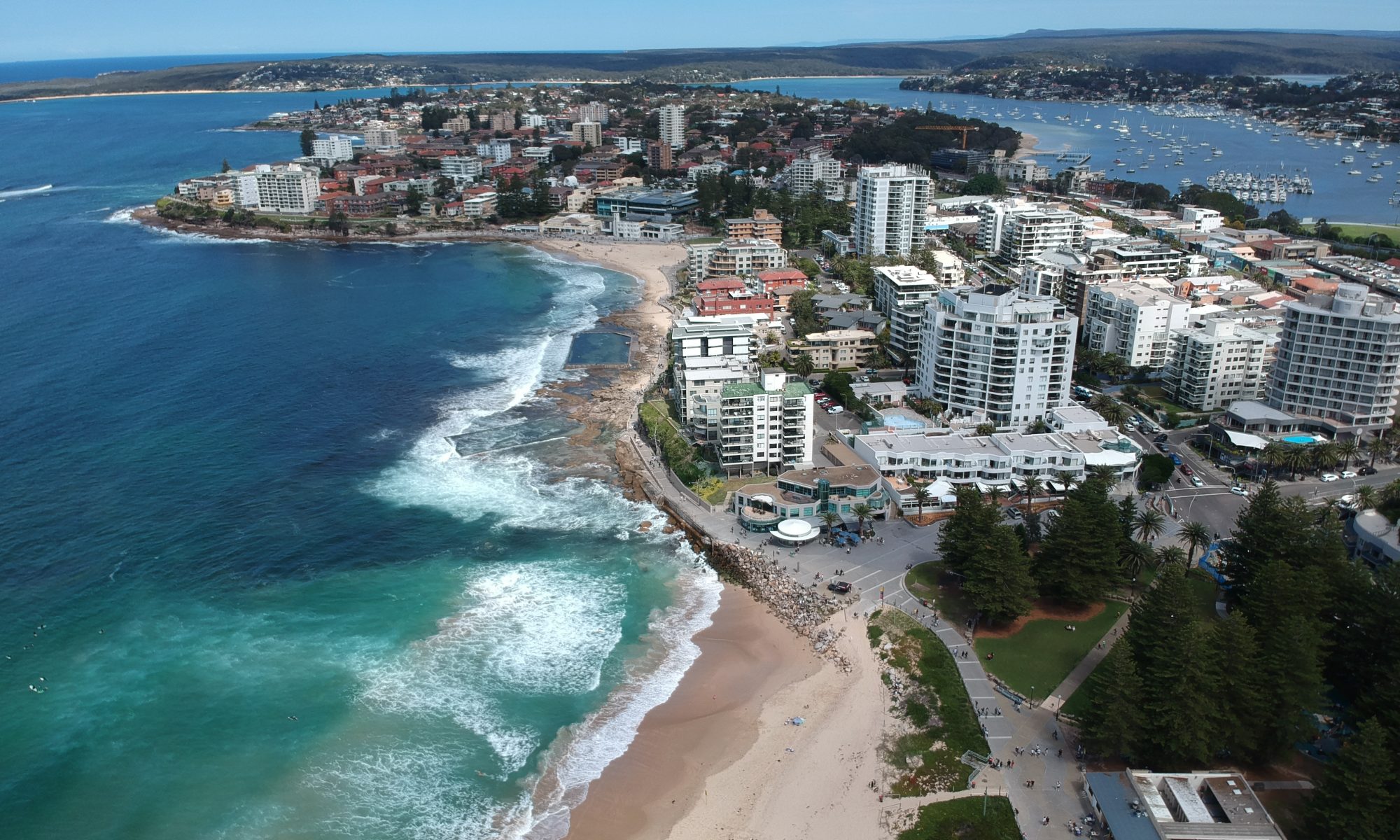
A contemporary waterfront pile, footsteps from the sands of Freshwater beach has just come on the market.

This 5-bedroom, 3-bathroom, 3-car parking residence designed by award-winning architecture firm Brewster Hjorth spans three levels and maximises its coastal appeal through the use of raw timbers, off-form concrete, copper adornments and glazed glass doors and facades to soak in the incredible views.

The first-floor homes the open-plan kitchen, living and dining areas and is privy to high-ceiling and a glazed façade that overlooks the ocean. It’s also here that timber features of Spotted gum, Ebony and Oregon come to the fore.

The kitchen is replete with Marblo resin benchtops, stainless steel side benches alongside Gaggenau and Miele appliances. Also on this floor is the butler’s pantry, which offers temperature-controlled wine storage, a bathroom and a home office that can be converted into a guest room with a murphy bed.

Downstairs sees the bulk of the bedrooms, all of which enjoy built-in robes, alongside a home cinema, laundry, bathroom and storage room.

The master suite sits alone on the top floor and is privy to a walk-in-robe, ensuite and its own rooftop courtyard.

Also on the top level is the deck which offers panoramic watery views and is the ideal entertaining space with its own outdoor kitchen.

Further,  two private rear courtyards are lined with a tropical garden, while a hot and cold outdoor shower is ideal for a post-swim rinse off.

Throughout the home sees a combination of terrazzo and timber flooring, which is all heated underfoot while a keypad entry and Sonos surround system round out the tech features.

Settled in the sought-after retreat of Freshwater Basin, the residence is a short stroll to Freshwater Village and Harbord Diggers and an easy walk to Manly beach.

The listing is with Clarke & Humel Property’s Michael Clarke (+61 402 425 486) and Mike Dunn +61 409 317 335). 48 Ocean View Road Freshwater, NSW, price guide, $10million.

Clarkeandhumel.com.au

This article was originally published by Robb Report ANZ

Rocket Stock Is the New Meme Trade. Move Over, GameStop.

Rocket

The individual investors that powered GameStop Corp.’s meteoric rise have a new target: Rocket Cos., the parent company of Quicken Loans.

Shares of the mortgage lender surged 28% since the end of last week. Nearly 377 million shares traded hands on Tuesday alone, more than a 10-fold increase from the previous day. After surging 71% on Tuesday, the stock lost some steam on Wednesday, falling 33%, or $13.59, to $28.01.

Like GameStop, Rocket is heavily shorted. As of this week, 46% of its shares available for trading were being shorted by investors betting the price would fall, according to S3 Partners, a data-analytics firm. That was up from about 33% in late January and 17% in mid-September, according to FactSet.

Trading of Rocket shares was halted several times this week because of its volatility.

Individual investors on WallStreetBets, the Reddit community that gave birth to GameStop’s rise, have been encouraging each other to buy the stock in recent days and sharing evidence of their own massive gains. They have relished in the company’s name——Rocket——an apt one for their goal of higher prices.

“The $RKT is fueled and ready for liftoff,” one user wrote early this week.

The company stock symbol, RKT, was mentioned in nearly 16,000 Reddit comments on Tuesday, according to data from TopStonks.com, a website that tracks equities mentioned on Reddit. That is up from just over 6,000 on Monday and less than 1,000 on most days last week.

Rocket announced last week it would pay a one-time dividend of $1.11 per share later this month, citing its “highly profitable and capital light business model.” Some investors saw the move as a way to fend off short sellers. Short sellers are obliged to pay any dividends to the broker they borrowed shares from.

The company’s excess capital at the end of the fourth quarter made the dividend possible, Rocket CEO Jay Farner said at a conference Wednesday morning.

“We were pretty proud to be able to offer that to our shareholders,” Mr Farner said. “We think more of dividends as special dividends because we want that flexibility to make the right investment for the long-term growth of the organisation.”

Rocket has other upsides. Rising mortgage rates are boosting earning potential for mortgage lenders just as the crucial spring home-selling season kicks off. The average rate on the 30-year fixed-rate mortgage rose to 2.97% recently, its highest level since August.

Detroit-based Rocket is the largest mortgage lender in the U.S., according to research firm Inside Mortgage Finance. Its $323 billion in home loans in 2020 easily surpassed the $221 billion originated by its closest competitor, Wells Fargo & Co. Its large size and strong brand—it ran two Super Bowl commercials—set it apart from other non-bank lenders.

Before Rocket’s blastoff, shares of nonbank mortgage lenders had done little to impress investors in recent months. Some of the lenders that listed their shares on the public market in recent months significantly downsized their offerings. Some never made it to market because of tepid investor interest.

Shares of Rocket hadn’t strayed too far from their listing price of $18 in the seven months since the company’s IPO. The stock soared to more than $31 in its first month but quickly returned to near $20.

The first sign of liftoff came late last week, when Rocket reported impressive fourth-quarter results. Shares rose almost 10% on Friday. The news of a sizable dividend prompted Rocket’s initial jump in stock price, said KBW analyst Bose George.

“The initial move made some sense, but since then, fundamentals haven’t been driving it,” Mr George said. “It’s other factors that we have a harder time assessing.”

Shortly before its public-market debut last summer, Rocket announced an ambitious expansion target: cornering 25% of the mortgage market over the next decade. Its market share currently stands at about a third of that, according to Inside Mortgage Finance.

Rocket said last week that its mortgage originations more than doubled in 2020. It said it expects continued high origination levels despite weakening margins.

The amount lenders earn when they sell each loan has started to drop. Quicken’s gain-on-sale margin was 4.41% in the fourth quarter, down from the third quarter but well above the 3.41% it recorded a year earlier. It expects its first-quarter margin to be between 3.6% and 3.9%.

Cleveland Cavaliers owner Dan Gilbert helped found Quicken Loans in the 1980s and still holds the majority of its shares.

Ali Habhab has watched the stock’s recent ride with interest but doesn’t plan to sell his shares any time soon. Mr. Habhab, who is 25 years old, instead hopes his returns will bring him closer to his goal of retiring at 40. He bought 1,000 shares in Rocket shortly after the company’s IPO in August.

Mr. Habhab, who works in automotive manufacturing, said he was familiar with Quicken Loans long before parent company Rocket decided to go public. Mr. Habhab lives in Detroit, where Rocket is based, and has friends who started careers at the company or one of its subsidiaries.

“With all that factored in, it was a no-brainer to put some of my money where it belongs and where it will grow,” Mr Habhab said.

Another major nonbank mortgage lender, UWM Holdings Corp. is up 27% so far this week.

Jeffrey Epstein’s New York Townhouse to Sell for Roughly US$50 Million

Epstein New York

The New York City townhouse of the late financier and convicted sex offender Jeffrey Epstein is in contract to sell for roughly US$50 million, according to two people familiar with the transaction. If the deal closes, the townhouse would be among the most expensive homes to sell in New York over the past year.

The property had been on the market for just seven months, a reasonably quick turnaround for a townhouse with such a high-price tag, especially given the property’s connection to Mr Epstein, these people said. However, it sold at a significant discount to its original asking price; it came on the market for $88 million in July, and the price was later lowered to $65 million.

The property was the most valuable of Mr Epstein’s extensive property portfolio, which also included homes in Paris, New Mexico and Florida. Mr Epstein’s home in Palm Beach is in contract to sell to developer Todd Michael Glaser for an undisclosed sum, The Wall Street Journal reported in November, though the deal hasn’t yet closed.

Listed by Adam Modlin of Modlin Group, the Neoclassical Upper East Side townhouse dates to the 1930s, when it was commissioned by Herbert N. Straus, an heir to the Macy’s department store fortune. It was later used as a school and was formerly owned by Leslie Wexner, the billionaire retail tycoon and a onetime close associate of Mr Epstein.

Mr Epstein paid $20 million for it in 1998, according to a person familiar with the situation.

The house spans about 28,000 square feet across seven floors and has oak entry doors, imported French limestone with carvings, sculptural figures and ornamental ironwork.

Mr Epstein died by suicide in jail in 2019, before he could stand trial on federal sex-trafficking charges. The proceeds of the sale are slated to go to his estate, which has created a compensation fund to adjudicate claims from Mr Epstein’s alleged victims.

XPeng To Offer Cheaper Batteries. The EV Industry Continues to Mature.

Xpeng

Batteries and battery- management systems are to an electric vehicle what a high-quality internal combustion engine is to a gasoline-powered car, so battery decisions can make or break an EV maker. Chinese EV maker XPeng is making a battery decision it hopes will give it a leg up on the competition.

XPeng (ticker: XPEV) is going to start selling LFP-battery-powered electric vehicles soon. China’s Ministry of Industrial Information & Technology recently announced that XPeng was using LFP batteries in vehicles.

LFP is short for lithium-iron-phosphate. Iron is the “F” in that acronym because its elemental symbol is “Fe.” Lithium-iron-phosphate batteries are a little cheaper than top-of-the line lithium-ion batteries, which contain elements such as cobalt and nickel.

LFP batteries are more cost-effective, but with a trade-off. They don’t pack quite as much punch as their more expensive cousins, so the range of the cars that use them is affected.

XPeng, in this case, probably doesn’t mind because most drivers don’t need 482 kilometres, or even 320 kilometres, of daily range. The benefit of a lower purchase cost, for many car buyers, far exceeds the downside of a lower per-charge range. The company will continue to offer vehicles with top-of-the line lithium-ion batteries as well.

It’s an interesting decision for investors to ponder. Offering different batteries in an EV is a little like offering different engines in traditional automobiles. In traditional cars, however, engine options are usually tied to horsepower and speed. In the case of EVs, battery options are more about range.

Billions of dollars are being invested in the EV industry to come up with more powerful, longer-lasting batteries. QuantumScape (QS), for instance, is working on revolutionary solid-state battery technology. QuantumScape doesn’t have sales yet, but it is one of the most valuable automotive suppliers in the world. That’s how important batteries are to the EV industry.

QuantumScape’s batteries will, holders of the stock hope, be less expensive for the same range as existing technology. Commercial offerings are years down the road, though. XPeng’s move is another way to offer less expensive EVs today.

A lower- end XPeng model P7 costs about 230,000 yuan, or about $35,000. With LFP batteries, that price might drop 20,000 to 30,000 yuan, or perhaps $3,000 to $5,000. XPeng declined to comment on new pricing for EVs with the less expensive batteries, but noted that the information will come out soon.

It feels like a sound strategic move and one that investors can expect other EV makers to copy. Car buyers are still learning how to buy EVs. Range and cost, compared with traditional cars, can be a mystery. As options such as LFP batteries proliferate, buyers will begin to feel more comfortable comparing EV models, just like they do when selecting what engine they want in their automobile.

XPeng stock was up 3.3% in premarket trading. S&P 500 and Dow Jones Industrial Average futures were up about 0.5%.

The rise might not be due to the batteries, though. XPeng stock has been on a wild ride lately. Shares dropped 11% Tuesday after investors digested news that deliveries in February were lower than in January. February, however, was affected by the Lunar New Year holiday. Monthly deliveries at Li Auto (LI) and NIO (NIO) dipped as well.

Year to date, XPeng share are down about 26% after finishing 2020 up almost 200% from the stock’s $15 initial public offering price.

How Much Is Tesla Software Worth? A Lot.

Tesla

A second broker has taken a shot at valuing Tesla’s software business. The conclusion, good news for the company and for other carmakers, is that Tesla software is worth a lot.

UBS analyst Patrick Hummel took a look at some of the value hidden away in Tesla (ticker: TSLA). The idea that some might still be undiscovered within the world’s most valuable automaker, whose stock has trounced the competition, might seem oxymoronic. But bulls believe Tesla is more than just a car company, given that it sells solar panels, insurance, and importantly, software.

Hummell isn’t a full Tesla bull. He rates shares at Hold and has a target of $730 for the share price. He believes other automakers will have some success ramping up sales volumes for EVs, but that “Tesla remains the undisputed tech leader, most notably in software.”

At his price target. well above the stock’s current level of about $686, Tesla would be worth roughly $700 billion. He values the car business at roughly $200 billion, leaving about $500 billion for everything else.

“The lion’s share of this value can be generated by software, mainly autonomous driving,” wrote Hummell in a Wednesday report. “Out of $20 [billion operating profit] we expect Tesla to generate in 2025, $9 [billion] should already be software-driven.”

That almost half of profit would come from software by 2025 is surprising. Most of that would be from Tesla’s autonomous-driving package, called full self-driving mode, which sells for $10,000 today. To make more money, Tesla could improve the rate at which consumers choose that option, as well as potentially offering it via a monthly subscription.

Hummell isn’t the only one that values Tesla software highly. Morgan Stanley analyst Adam Jonas has taken a sum-of-the-parts approach to valuing Tesla stock, looking at the different businesses separately. He values Tesla’s software and services business at roughly $250 billion.

That’s lower than Hummell’s call, but Jonas still rates Tesla stock at Buy, with a target of $880 for the share price. Jonas believes the Tesla car business is more valuable than Hummell does, valuing it at roughly $350 billion.

All the value and profit coming from software isn’t just a benefit to Tesla. Other auto makers plan similar products. Ford Motor (F) already plans to offer products related to its fleet of commercial vehicles around the globe. General Motors (GM) still has On Star. And Tesla peer NIO (NIO) is considering the idea of selling its autonomous-driving software as a subscription.

The theoretical valuation discussions about hidden assets, however, weren’t helping Tesla stock Wednesday. Shares were down about 0.6% in midday trading. in line with the S&P 500. The Dow Jones Industrial Average was up about 0.1%.

The stock is down about 15% over the past couple of weeks, but is still more than 350% higher over the past year.

The World Added 412 Billionaires in 2020, Bringing the Total to 3,288

Billionaires
The world added 412 billionaires last year, bringing the total to a record 3,288, despite the disruption caused by Covid-19, according to the Hurun Global Rich List 2021 released Tuesday.

The billionaires’ combined wealth rose 32% year over year to US$14.7 trillion, a sum that falls between the GDP of the world’s two biggest economies, the U.S. (with US$19.5 trillion) and China (with $12.2 trillion).

“A stock market boom, driven partly by quantitative easing, and flurry of new listings have minted eight new dollar billionaires a week for the past year,” Rupert Hoogewerf, Hurun Report chairman and chief researcher, said in a statement. “The world has never seen this much wealth created in just one year, much more than perhaps could have been expected for a year so badly disrupted by Covid-19.”

Three individuals added more than $50 billion in a single year, led by Tesla’s Elon Musk who added US$151 billion and climbed to the top spot of the Hurun Global Rich List with a net worth of US$197 billion. Amazon’s Jeff Bezos dropped to the second place, despite his wealth growing US$50 billion last year to a total of US$189 billion.

Colin Zheng Huang of Pinduoduo, China’s e-commerce giant, also saw his net worth grow more than $50 billion to US$69 billion, earning him the title of 19th richest billionaire in the world.

China jumped way ahead of the U.S. with 1,058 billionaires, up 259 from a year ago. The U.S. added 70 billionaires to take the total to 696 billionaires, according to the report, which calculates the billionaires’ wealth based on market data as of Jan. 15.

Other key findings in the report include:

  • Five people have more than US$100 billion, including Musk, Bezos, LVMH’s Bernard Arnault (US$114 billion), Bill Gates (US$110 billion), and Facebook’s Mark Zuckerberg (US$101 billion);
  • California-based Austin Russell of car sensor maker Luminar Technologies was the youngest self-made billionaire, at 25 years old, with US$3.5 billion;
  • Beijing had the largest number of billionaires, with 145; Shanghai (113) overtook New York (112) as the runner-up. Six of the top 10 cities with the highest concentration of billionaires were in China;
  • Healthcare and real estate tied as the main source of wealth for the world’s billionaires, each accounting for 8.7% of total billionaire wealth;
  • There were 231 self-made female billionaires, an increase of 51 from a year ago. China dominated with 69% of the world’s self-made women billionaires.

Last year saw a net addition of 17 cryptocurrency billionaires, who derived their wealth from holding currency tokens. Blockchain also had 17 billionaires, whose wealth was predominantly from crypto exchanges, according to the report.

“We are currently right in the heart of a new industrial revolution, with the ABCDEs—that is AI, blockchain, cloud, data, and e-commerce—creating new opportunities for entrepreneurs and leading to a concentration of wealth and economic power on a scale never seen before,” Hoogewerf said in the report.

Apartment Building Approvals Fall 40 Per Cent

Apartment Construction

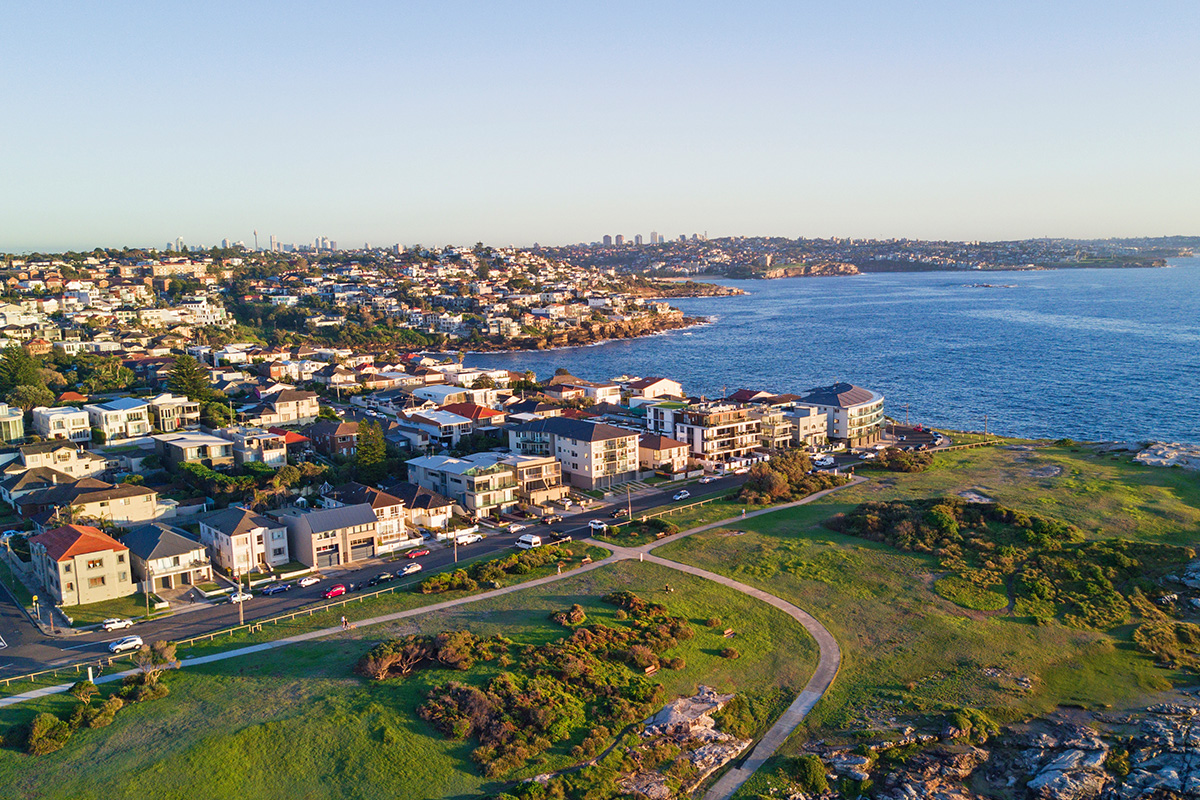
Building approvals for apartments and townhouses were down 40 per cent at the end of January, according to data from the Australian Bureau of Statistics, signalling a significant slowing of the high-density sector.

The data indicated the lowest non-house building approval rate since January 2012, with the number of dwellings approved falling 19.4% in January. Private house dwelling approval rates were down 12 per cent.

“Despite the fall, private house approvals remain 38 per cent higher than in January 2020,” said Daniel Rossi, Director of Construction Statistics at the ABS.

“The surge in Homebuilder applications at the end of 2020, as well as the extension of the program to March, will continue to provide support for private house approvals in the coming months.”

Total dwelling approvals fell across all states in January; Queensland (33.3 per cent), Tasmania (24.8 per cent), New South Wales (23.2 per cent), Victoria (13.0 per cent), Western Australia (4.1 per cent) and South Australia (0.5 per cent).

Approvals for private sector houses also fell across all states in January; New South Wales (19.0 per cent), Queensland (19.0 per cent), Victoria (8.4 per cent), South Australia (3.7 per cent) and Western Australia (0.9 per cent).

Housing Finance Values Reach Record Highs

Mortgage

The value of new loan commitments for housing has grown for the eighth consecutive month, reaching another record high across the country according to statistics from the Australian Bureau of Statistics’ January 2021 Lending to Households and Business figures and the Real Estate Institute of Australia (REIA).

The report shows that new loan commitments for owner-occupier housing rose 10.5% in January and follows a 44.3% rise for the past 12 months. A rise was seen in all states and territories, with the exception of the Norther Territory.

Further, the value of new loan commitments to owner-occupiers rose 10.9% which marks the largest monthly increase since August 2020.

According to Adrian Kelly, President of the Real Estate Institute of Australia: “The number of owner-occupier first home buyer loan commitments increased by 9.6 per cent for the month and is 70.8 per cent higher than twelve months earlier. This is the highest level since May 2009, when the Commonwealth Government’s response to the GFC included the temporary increase in the first home-owner grant.”

Owner-occupier first home buyer loan commitments accounted for 36.5 per cent of all owner occupier commitments excluding refinancing.

Further, investors had also increased their activity with loans also increasing for the eighth consecutive month.

“The value of loan commitments for investor housing increasing by 9.4 per cent for the month, the largest rise since September 2016, and 22.7 per cent for the year on the back of improving rental market conditions. The largest increase in the value of new loan commitments to investors was in Victoria with an increase of 12.9 per cent in January,” added Mr Kelly.

Cruise Stocks Get Upgraded by Macquarie, Because Covid’s Worst Is in the Past

Cruise Lines

Macquarie Research has upgraded the cruise stocks to Outperform, asserting that “most negative catalysts are in the rear-view mirror.”

Based on valuation, Paul Golding and Charles Yu of Macquarie wrote that they see the most upside in Norwegian Cruise Line Holdings (ticker: NCLH), followed by Carnival (CCL), and Royal Caribbean Group (RCL). They upgraded the stocks from Neutral.

Shares for Norwegian were at $31 and change Tuesday morning, up 4.6% in early trading, while Royal Caribbean and Carnival were also each up more than 4%.

The cruise operators have for the most part been unable to have any sailings for about a year due to the pandemic. A key question is when sailings in and out of U.S. reports will resume. The Centers for Disease Control and Prevention issued a conditional sail order last October, but U.S. sailings haven’t resumed. The cruise companies have suspended their U.S. sailings well into the spring.

Golding and Yu wrote that “technical instructions from the CDC are also forthcoming and could drive more confidence.”

In an email to Barron’s early last month, a CDC representative wrote: “Future orders and technical instructions will address additional activities to help cruise lines prepare for and return to passenger operations in a manner that mitigates COVID-19 risk among passengers, crew members, including simulated voyages, certification for conditional sailing, and restricted voyages.”

Although still well below their pre-pandemic levels in early 2020, the cruise stocks have been moving up as investors get more confident about a reopening of the economy. As of Monday’s close, the stocks of all three companies were up by at least 15% year to date.

Besides forthcoming guidance from the CDC, macro catalysts for the cruise companies include “an expectation of sufficient vaccine efficacy for consumers to feel comfortable engaging in leisure activities.”

“While shares have bounced quite a way off their 1-[year] lows, and barring recession or a sector rerating, the catalysts should trend more positive from here into summer,” they wrote.

The research note points out that Carnival’s announcement last month that it had closed on a $3.5 billion senior unsecured debt offering “bodes well” for its liquidity situation and for the industry’s. “It demonstrates the potential for the group to continue to fund operations even if the suspension gets drawn out,” they noted.

Separately, Carnival announced last month that it had priced an offering for its 40.5 million shares of common stock at $25.10. That adds up to about $1 billion of additional capital, one of various steps the company has taken to shore up its liquidity as its ships sit idle and it burns through hundreds of millions of dollars every month.