Page 86 – Kanebridge News

Australia’s Interest Rates Kept On Hold

Reserve Bank

Today, the RBA has passed down its decision to keep Australia’s interest rates on hold at the historic low of 0.1 per cent.

The decision comes despite growth in the Australian property market and the global economic outlook appearing more favourable.

The statement highlighted the importance of low rates to support the rebuilding of the economy and support the supply of credit to both households and business balance sheets.

“Lending rates for most borrowers are at record lows and housing prices across Australia have increased recently,” said Governor of Monetary Policy Decision Philip Lowe.

“Housing credit growth to owner-occupiers has picked up, but investor and business credit growth remain weak. Lending standards remain sound and it is important that they remain so in an environment of rising housing prices and low-interest rates.”‘

The decision has also taken into account the global economic outlook in the wake of COVID-19 and the successful rollout of vaccines.

“The outlook for the global economy has improved over recent months due to the ongoing rollout of vaccines. While the path ahead is likely to remain bumpy and uneven, there are better prospects for a sustained recovery than there were a few months ago,” added Dr Lowe.

Closer to home, economic recovery is well underway with unemployment declining to 6.4 per cent alongside strong retail spending and most households and businesses that had deferred loan repayments having now recommenced payments.

The recovery is expected to continue with the GDP expected to return to its end-2019 level by the middle of this year

The Reserve Bank remains committed to the 3-year yield target and has doubled the bond-buying program last month by extending it for a further 20 weeks.

Perth Sale Listings Hit 10-Year Low

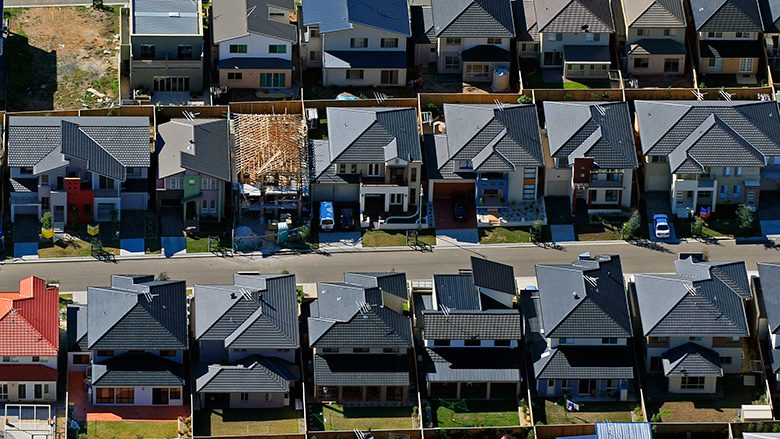
Perth Houses

Perth’s sale listings dropped to a 10-year low in February, with reiwa.com counting 7,899 listings at the end of the month.

This marks the seventh consecutive month of declining listings numbers in Perth according to REIWA President Damian Collins.

“In the span of a year, listings have dropped 36.5 per cent to now sit below 8,000 for the first time in about a decade. Buyers are very active in the market and soaking up stock at a rapid pace,” Mr Collins said.

Data from reiwa.com shows that the median sale price in Perth in February was $490,000.

“There were 50 Perth suburbs that saw their median sale price increase in February,” Mr Collins said.

“The suburbs with the biggest increase were East Fremantle (up 5.7 per cent), South Yunderup (up 5.2 per cent), Seville Grove (up three per cent), Cloverdale (up 2.7 per cent) and Ballajura (up 2.5 per cent).”

“Yes, property prices have increased in the last six months, but they remain below what they were five years ago so there are still good deals to be had.”

Further, data collected by reiwa.com shows the median time to sell a property was 21 days in February, which was on par with January, but some 25 days faster than it was in February of 2020. According to Mr Collins, houses in Perth haven’t sold that fast since 2006.

Perth’s rental market saw only 2,839 properties listed for rent at the end of February, according to reiwa.com data.

“This marks the sixth consecutive month we’ve seen listings sit below 3,000. Perth desperately needs an influx of rental stock in the market to provide renters with more housing options,” Mr Collins said.

Perth’s median rent price held at the five year high of $400 per week in February, which is on par with January and $40 more per week than February 2020.

“reiwa.com data shows 258 Perth suburbs saw an increase in rent during February.”

To compound the issue there were 186 Perth suburbs that recorded an increase in leasing activity during the month. It took a median of 19 days for a lessor to find a tenant for their property in February.

“Median leasing days are the lowest they have been since June 2013. Like we are seeing in the sales market, with so few available listings, tenants are having to act very quickly to secure a rental,” Mr Collins said.

Zoom Video Zooms Higher As Earnings Again Top Estimates

Zoom

Zoom Video Communications posted better-than-expected results for its fiscal fourth quarter, ended Jan. 31, and stronger-than-expected guidance, driving the stock sharply higher in after-hours trading.

The video conferencing company, a prime beneficiary of the Covid-19 pandemic as many workers and students stayed at home for the last year, reported revenue for the quarter of US$882.5 million, up 369% from a year earlier, with adjusted profits of US$365.4 million, or $1.22 a share. Under generally accepted accounting principles or GAAP, the company earned US$256.1 million, or 87 cents a share.

Zoom shares, which had rallied 9.7% to $409.66 in Monday’s regular session, gained another 9% in late trading to $446.63.

For the full year, Zoom had revenue of $2.65 billion, up 326%, with non-GAAP profits of $995.7 million, or $3.34 a share. The company finished the year with $4.2 billion in cash and short-term investments.

Zoom had projected revenue for the quarter of $806 million to $811 million, with non-GAAP profits of 77 to 79 cents a share. Management has predicted full-year revenue of between $2.575 billion and $2.58 billion, with non-GAAP profits of $2.85 to $2.87 a share.

The consensus call on Wall Street was for January quarter revenue of $811.8 million, with non-GAAP profits of 79 cents a share.

The company said it had 467,000 customers with more than 10 employees, up 33,400 from a year ago. Enterprise customers, those with annual revenue above $100,000, rose 355 to 1,644. Zoom Phone customers increased 269% year-over-year to 10,700.

The company’s financial guidance was higher than Wall Street expected, but still underlines the fact that growth will slow considerably from here as the world begins to get past the pandemic.

For the April quarter, Zoom is projecting revenue of $900 million to $905 million, with non-GAAP profits of 95 to 97 cents a share. The Street had been projecting revenue of $804.8 billion and profits of 72 cents a share.

For the full year ending in January 2022, the company expects revenue of $3.76 billion to $3.78 billion, up 42% from the previous year at the midpoint of the range, with non-GAAP profits of $3.59 to $3.65 a share.

The Street previously had been projecting fiscal year January 2022 revenue of $3.52 billion with non-GAAP profits of $2.96 a share.

“The fourth quarter marked a strong finish to an unprecedented year for Zoom,” CEO and founder Eric Yuan said in a statement. “As we enter [fiscal year] 2022, we believe we are well-positioned for strong growth with our innovative video communications platform, on which our customers can build, run, and grow their businesses; our globally recognized brand; and a team ever focused on delivering happiness to our customers.”

Piper Sandler analyst James Fish noted in a brief research note published Monday after earnings that results came in above expectation on all metrics and that the full-year guidance suggested “the market dynamics remain strong” in cloud-based communications.

Clearance Rates Hit New Highs In Sydney

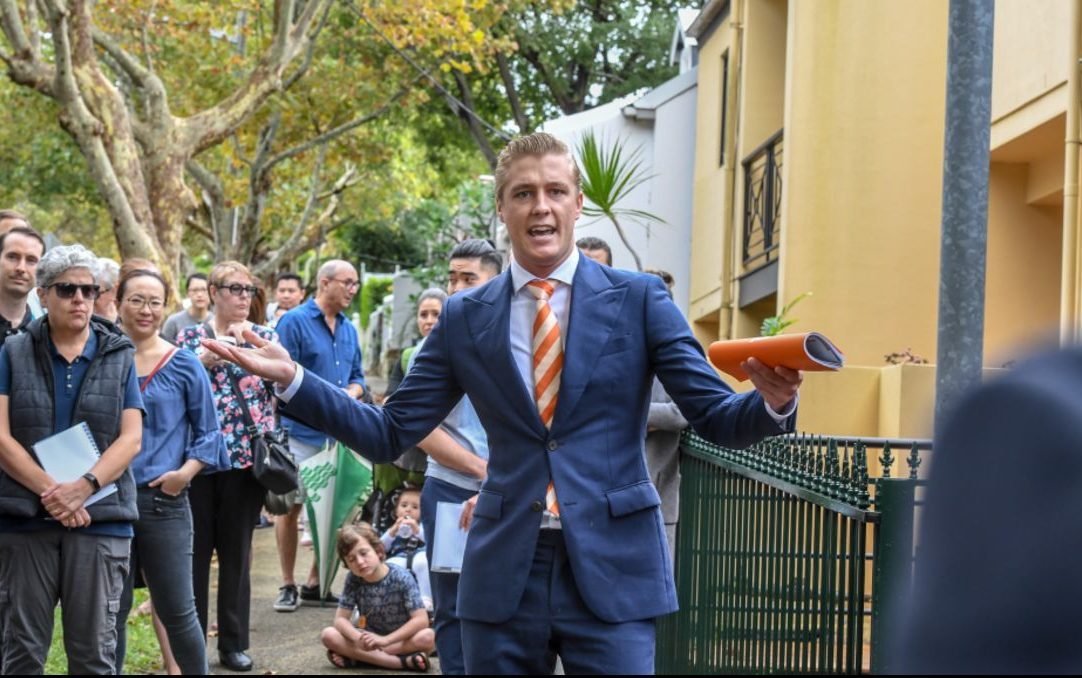
Covering off the last weekend of summer, clearance rates from around the country’s top markets were high this weekend, as Sydney reported a record weekend clearance rate of 90.0% – higher than the previous weekend’s 87.3% and the 85.8% reported for the same weekend last year.

Sydney recorded a median price for houses sold at auction on the weekend of $1,645,000, lower than last weekend’s $1,692,500 but 14.2% higher than the $1,440,000 recorded over the same weekend last year.

Sydney’s Central Coast, North West, Northern Beaches and Upper North Shore fared best, with the city’s West performing weakest with an albeit solid 82.1%. Units cleared slightly below that of houses at 88.9%.

Melbourne also continued to recover from its recent lockdown reporting its highest clearance rate for three weeks of 82.0%, higher than the previous weekend’s figure of 79.6% and the 80.4% reported over the same weekend last year with a median price of $1,002,500.

Encouragingly for Melbourne, auction numbers again increased sharply to 1211 compared to the previous weekend’s 1004. However, listing numbers have still fallen from last year’s figures of 1384 for the same weekend last year.

Sydney featured 734 auctions this weekend compared to last year’s 911.

Around the country, Brisbane saw a clearance rate of 73.4%, down from last week’s 83.0% but up on last year’s 65.8%. Adelaide was reasonably steady at 85% from last week’s 87.5% and up on last year’s 71.1% while Canberra was also consistent performing at 85.9% from last week’s 85.2% and up from 70.3.%

Data powered by Dr Andrew Wilson of MyHousingMarket.com.au


Green Hydrogen Plant In Saudi Desert Aims To Amp Up Clean Power

Can a multibillion-dollar project in the Saudi desert jump-start the demand for green hydrogen, an elusive energy source that could help eliminate carbon emissions from vehicles, power plants and heavy industry?

The allure of hydrogen is undeniable. Unlike oil and natural gas, it doesn’t emit carbon dioxide and other greenhouse gases when burned. It’s more easily stored than electricity generated by wind turbines and solar farms, and it can be transported by ship or pipeline. Green hydrogen, which is produced using renewable energy sources, is especially attractive as a fuel. It’s made from water rather than methane or other hydrocarbons.

But those who foresee a green hydrogen future face a quandary: The high cost of producing the odourless, colourless, flammable gas can be mitigated only by large-scale projects, which in turn make economic sense only if there is a widespread market for green hydrogen. That doesn’t yet exist.

In Neom, a planned megacity of the future now taking shape in northwestern Saudi Arabia, the investors behind the green hydrogen project think they can deliver the chicken and the egg.

The initiative—a joint venture of Neom, U.S. chemical company Air Products & Chemicals Inc., and Saudi Arabia’s ACWA Power—will invest $5 billion to build what will be the world’s largest green hydrogen production facility. Another $2 billion will be invested in distribution infrastructure in consumer markets around the world, primarily to fuel industrial vehicles and public buses.

Plans call for the sprawling facility, which isn’t yet under construction, to produce 650 tons of green hydrogen a day starting in 2025. The facility’s output will dwarf that of a green hydrogen plant in Québec that produces about nine tons a day, making it the largest such facility in the world. The Neom project exemplifies the Kingdom’s ambitious plan to diversify away from oil and natural gas and showcase Neom as a global hub for technology and green energy.

One of Neom’s main advantages in what could become a global race to develop green hydrogen is that the city’s location along the Red Sea possesses world-class solar and wind power, according to Peter Terium, head of Neom’s energy sector. Solar will power the plant during the day, wind at night, he says.

It isn’t easy to find a site with strong enough wind and sun, as well as proximity to a port, Mr. Terium says. “Otherwise, we wouldn’t be the first to announce an investment of this size,” he says.

Other countries are following suit. Australia, for example, has expedited the approval of a $36 billion project in the Outback in the western part of the country that will generate 26,000 megawatts of renewable electricity to be used to power the green hydrogen production.

Most hydrogen made for commercial use is so-called grey hydrogen, which is produced by splitting the hydrocarbon molecules in coal or natural gas. This process emits carbon. Green hydrogen, on the other hand, emits no carbon because it relies upon a process called electrolysis, in which electricity is used to strip hydrogen atoms from water molecules.

Air Products is the world’s largest producer of hydrogen, most of which now is derived from fossil fuels. But through its involvement with Neom, the Allentown, Pa.-based corporation is betting big that many countries will pay a premium for green hydrogen to meet carbon reduction targets, according to chief executive Seifi Ghasemi.

The Neom project aims to produce enough hydrogen to fuel about 20,000 buses a day. But rather than being piped or shipped to end users as gaseous or liquid hydrogen, the hydrogen will first be converted into ammonia, which is denser and therefore more economical to ship. After being sent by boat to Asia, the U.S. and Europe, the ammonia will be converted back into hydrogen before being sent to filling stations built by Air Products.

“The only thing [the customer] has to do is buy fuel cell vehicles to use the hydrogen,” Mr. Ghasemi says. “Hydrogen will become, 30 years from now, like oil is today.”

It’s a bold prediction that would require significant changes to the way we use fuel and electric power. Not all experts see that happening because of the sheer cost and magnitude of redesigning energy infrastructure around the world. That would require changing everything from vehicles to household applications.

Such a world would look markedly different. Filling stations would dispense hydrogen instead of gasoline. Hydrogen could be piped into homes to feed heaters and gas stoves. And unlike wind or solar, it could provide a steady supply of electricity for large power users, such as data centres and manufacturing hubs, when the wind doesn’t blow and the sun doesn’t shine.

If it can be scaled, green hydrogen could also help solve several big challenges in a lower-carbon economy: powering heavy-duty trucks and ships without reliance on giant batteries, providing round-the-clock electricity to supplement intermittent supplies from wind and solar and decarbonizing heavy industrial processes including steel and concrete manufacturing.

Julio Friedmann, a senior research scholar at Columbia University, says green hydrogen’s diverse applications could help it become the “Swiss Army knife” of the green energy economy, as states and countries pledge to reach net-zero carbon emissions in the coming decades.

Among energy nerds, hydrogen has long been the butt of a joke: It’s the fuel of the future, and probably always will be. The most abundant element in the universe, hydrogen has seen rounds of hype before, most recently in the early 2000s, when it was promoted as a transportation fuel amid fears about declining reserves of fossil fuels.

Some investors remain deeply sceptical of hydrogen, citing its high cost and the inevitable challenges of building infrastructure necessary to deploy it at scale. Kerrisdale Capital, a New York-based investment firm, is shorting shares in a fuel-cell maker whose share price has skyrocketed this year alongside other fuel-cell and alternative-energy stocks in the hope that the companies will be big players in a “hydrogen economy.” Fuel cells use chemical reactions to produce electricity from hydrogen and oxygen.

“The ‘hydrogen economy’ will never happen,” the firm wrote in a research note. “Hydrogen energy will have only very niche use cases.”

Increased regulation of greenhouse gases, growing investor pressure on companies to reduce carbon emissions and technological advances have many thinking the hydrogen hype is real this time. Management consulting firm McKinsey & Co. estimates that hydrogen could account for 14% of power used in the U.S. by 2050, from next to nothing today.

Another factor in the heightened interest in green hydrogen is the steep decline in the price of renewable energy, which Mr. Friedmann says now accounts for 50% to 70% of the cost of green hydrogen. The cost of building wind and solar farms has fallen in recent years as technology costs have declined and more projects are built at scale. Wind and solar now rival natural gas as the lowest-cost means of power generation.

“You are going to see a lot of countries and states going after hydrogen,” Mr. Friedmann says.

Along with the Neom partners, other investors big and small are betting that green hydrogen is finally positioned to realize its full potential. Global expenditures on hydrogen projects are projected to top $400 billion between now and 2030, followed by more than $2 trillion in spending from 2030 to 2050, investment bank Evercore ISI estimates.

Some auto makers, including Toyota Motor Corp. and Honda Motor Co., are developing vehicles with hydrogen fuel cells, which convert the fuel into electricity.

Several major utility companies, meanwhile, are looking into running power plants on hydrogen instead of natural gas, which is now the nation’s primary fuel for electricity generation. Unlike wind and solar farms, gas plants can run all the time, or fire up quickly to meet peak demand.

The Los Angeles Department of Water and Power, the nation’s largest municipal utility, is spearheading a $1.9-billion effort to convert a coal-fired power plant in Utah to run on natural gas and hydrogen produced with wind and solar power.

In northwestern New Mexico, developers are planning to spend up to $2 billion on a hydrogen-fueled power plant to serve electricity customers throughout the West starting in 2024. The Libertad Power Project, as the plant initiative is known, will use so-called blue hydrogen, which is produced by carbon-capture technology, before transitioning to green hydrogen as it becomes cheaper and more widely available. Carbon capture involves catching the carbon atoms upon production and storing them so they can’t enter the atmosphere.

For all its promise, green hydrogen faces many hurdles. These include the intermittence of solar and wind power and the high cost of electrolyzers, complex systems that traditionally have required large capital investments but which are now falling in price. Despite declines in the cost of renewable energy, green hydrogen production plants will need high utilisation rates, or almost round-the-clock power, to make them profitable.

Hydrogen is hard to store in gaseous form and is expensive to liquefy, which is why the Neom project plans to convert it to ammonia for transport. It can also weaken metal on contact, making it difficult to transport via pipeline unless it is blended with natural gas or other substances.

Columbia’s Mr. Friedmann says the barriers to widespread use of green hydrogen are related not to technology but to infrastructure. Governments and companies will need to invest heavily in power grids, ports, pipelines and fueling stations that can accommodate hydrogen. The costs of doing that will be borne across the global economy if governments implement sound public policy to drive market investment, he says.

Stocks Are Already Responding To Post-Covid Pent-Up Demand. What You Need to Know.

Stocks and Covid

The narrative that Covid-19 vaccine inoculations will enable reopenings and a normalised economy has begun to play out. And while stocks have been down of late, the decline is actually a positive signal about the economy.

The hope has been that, as the roll-out of vaccines goes on, government restrictions will be lifted, and small businesses will rehire workers. The question mark, in addition to whether vaccinations will stop the pandemic, has been whether the economy will be healthy enough to bounce back.

After all, shops can only rehire if they have the cash, and consumers—many of whom are out of work—can only spend if they have money. Yet the trillions of dollars the government continues to spend to support the economy, including jobless benefits and direct stimulus checks, have provided a major boon for household cash savings.

The groundwork has been laid, it seems, for the demand the economy suddenly lost during the pandemic to come back just as fast.

At the same time, daily inoculations in America through January were many times higher than in December. The pace has remained brisk, with more than 65 million doses administered so far, according to the Centers for Disease Control and Prevention. States have indeed been reopening.

Economic data shows the improvement.

The unemployment rate is 6.3%, down from close to 15% at the depth of the pandemic and down 0.4 percentage point in January. Jobs are coming back, even if the labor-market recovery is uneven at times. Household incomes rose 10% in January from December.

As people grow more confident about their job prospects and safety, they are spending some of the cash they have accumulated. Retail sales rose more than 5% month over month in January. Companies are anticipating strong demand: Orders for durable goods rose more than 3% for January, more than triple the amount economists expected.

In short, reopenings are working for the economy and consumers are already unleashing pent-up demand. Economists expect gross domestic product to increase in the mid-single digits in percentage terms for 2021, a gain that would bring economic activity back to near the 2019 level. Economists at RBC Capital Markets wrote in a recent note that 9% growth for the year is conceivable.

On the surface, the stock market hasn’t seemed to reflect optimism. The S&P 500 is down more than 3% since Feb. 12. That is when interest rates begin their most recent pop higher, which makes the risk of owning stocks less attractive.

But growth stocks—a haven for investors during much of last year’s market turmoil—have been leading the decline. Those stocks are more sensitive to changes in rates and they are less influenced by economic growth than value stocks are.

The rising rates reflect changes that benefit value stocks: increasing expectations for inflation and better demand for goods and services. The Vanguard S&P 500 Value Index exchange-traded fund (VOOV) is flat since Feb. 12.

The strong economic trends are young. The most important factor now is how effective vaccines will be against new virus strains.

Luxurious Slice Of The Sunshine Coast

Set on the dazzling Noosa River comes a world-class development of three luxurious apartments inspired by the idyllic climes of the Sunshine Coast.

On the market is the largest of the three, a ground floor residence offering 445sqm.

Here, exquisite craftsmanship and contemporary design meet in an intelligent layout that boasts expansive terraces and free-flowing living spaces throughout the 3-bedroom, 3-bathroom 2-car garage residence.

The work of multi-award-winning designer Chris Clout, the home sees natural light feature prominently with lofty ceiling heights and multiple, seamless connections to the outdoors. Elsewhere, wide eaves maximise the use of the wrap-around terraces while expansive outdoor entertaining spaces further elevates the offering.

Inside a considered, coastal palette is delivered by oak flooring and the use of timber fixtures alongside porcelain tiles, a stone finished kitchen and bathrooms – fitted with European appliance and bespoke joinery throughout.

The master suite proves a decadent retreat replete with a private balcony, large walk-in robe and luxurious stone and timber ensuite.

The residence is privy to a stunning horizon pool, while the park-like landscaped gardens highlight Noosaville’s sub-tropical appeal. The oversized terrace makes al-fresco entertaining effortless.

A basement offers secure parking while the complex is home to a gym, sauna and powder room.

The address is close by to the Sunshine Coast’s favourite cafes and bars, with a ferry stop to Hastings Street, Noosa Main Beach and Noosa Marina nearby.

The listing is currently with David Connolly (+61 438 259 956) and Lisa McKenzie (+61 417 776 361) of Century 21 Connolly Hay Group.
1/217-219 Gympie Terrace, Noosaville, $6million; Century21noosa.com


INSIDE VICTORIAN COUPLE’S DESIGNER RETIREMENT RETREAT

Large Parsons Home

Australian retirees William and Catherine Parsons have settled down in a frontline beach house on the country’s south coast, about a 90-minute drive from Melbourne.

They took the long way home.

Retirees Catherine and William Parsons demolished their previous family home before completing their new beach house in 2019.

Leon Schoots for The Wall Street Journal

Back in 1995, Mr. Parsons, now a 71-year-old retired airline pilot, and his wife, 57, a retired nurse, spent $258,000 on a 1/7th-acre lot on a windy bluff on the, leading to the Port of Melbourne.

Their original plan was to raise their two daughters in a new 371sqm villa, completed in 1998, but faulty construction, they said, culminated in the home’s demolition in 2016. That fiasco paved the way for a $2.1 million do-over with new architects and new builders.

For several years the family endured makeshift living arrangements, including homeschooling their children, now adults, during extended overland trips on four continents, or “road schooling,” as Ms Parsons likes to call it.

Finally, in the autumn of 2019, the couple moved into a new 353sqm, four-bedroom home.

A dark-hue kitchen offers a respite from sunny days on Australia’s southern coast.

Leon Schoots for The Wall Street Journal

The three-story house has a concrete-and-eucalyptus facade sealed against potentially heavy winds and corrosive salt spray. The second floor has a sheltered terrace and pool area accessible from the split-level open living and dining area that highlights ocean views.

The couple make the most of the site, says Mr Parsons, with the help of poured-concrete walls and double-glaze windows. “We’re extremely exposed,” he says, “but the new house is rock solid. With the doors and windows closed, we can just hear the ocean. When they’re open, it’s like a train going past.”

Known for ideal surfing and hang-gliding conditions, the couple’s stretch of peninsula is a dunescape. They went for a wild look with $71,000 in landscaping, opting for low-maintenance indigenous species and a naturally planted roof garden.

The couple worked with Auhaus Architecture, a Melbourne studio specialising in upscale single-family homes. Kate Fitzpatrick, an Auhaus principal, estimates it costs an extra $160,000 to $200,000 to build on their site rather than on a sheltered inland lot. Benjamin Stibbard, her fellow Auhaus principal, says that the peninsula’s predominant southern winds, blowing most days off the ocean, can cause “rain that is horizontal,” adding that the house is “as waterproof as a bathtub.”

The peninsula can also have hot sunny spells in January and February, with temperatures well over 100 degrees. The couple spent $412,000 on concrete, and their double-thick walls help keep the house cool in summer and warm in winter.

The main section of the house includes a top-floor master suite and lower-level granny flat, while an adjoining single-storey wing, separated from the rest of the house by the $79,000 pool area and reached by a first-floor corridor, has bedrooms for their visiting daughters, as well as a music room and a yoga deck.

The shower in the master bath has a skylight.

Leon Schoots for The Wall Street Journal

To navigate the main portion of the house, the couple spent $52,000 on an elevator—an upgrade, jokes Ms Parsons, of the previous home’s dumbwaiter. But their major splurge, they say, was a spiral staircase.

“I have always had a thing for staircases,” says Ms Parsons of the $87,000 set of stairs, which has a looming sculptural presence when viewed from the pool and terrace.

The interior of the home tends to rely on dark elements, including eucalyptus panelling, but the staircase itself is painted gleaming white—at her architects’ suggestion, says Ms Parsons.

She might have opted for the original battered-silver of the unpainted steel, she says, but the white, she decided, “looks elegant.” On the whole, it “takes away the brutality” of the bare concrete walls that show traces of the wood forms used to shape them on site.

The kitchen has a hushed quality due to blue-green Japanese tiles, which give the back wall a dark iridescence. Left over from the master bathroom, one of four in the home, the single-glaze tiles were a last-minute substitute for a continuation of the veined white marble used for a countertop.

“The sun can be glaring in summer,” says Ms Parsons, “but there is something so lovely and soothing about looking at the kitchen—it’s like looking into a rock pool.”

One of two bedrooms reserved for the couple’s adult daughters.

Leon Schoots for The Wall Street Journal

The kitchen cost nearly $111,000, with $46,000 spent on a suite of American appliances from Wolf and Sub-Zero.

The staircase led to a second splurge: the placement of an antique piano that Mr Parsons inherited from his grandparents. Too big for the winding stairs, it was moved into the children’s wing with a crane while the house was still under construction.

“It was our first piece of furniture,” says Mr Parsons of the 19th-century upright, made in Dresden, Germany. Mr Parsons plays mainly classical music, while his daughters when visiting from college, may join in on the flute, guitar or ukulele. The plentiful concrete boosts the acoustics.

Settled into their new home at last, the couple have an easier time visiting nearby fellow retirees: Mr Parsons’ parents. “My father is 102 and my mother is 100,” he says, “and they’re still going strong.”

The exposed lot provides rousing ocean views but also exposes the home to harsh conditions.

Leon Schoots for The Wall Street Journal

Australian Prime Property Market Continues To Surge

Australian Prime Property

Luxury residential price growth was consistent across Australia in 2020, but strongest in smaller cities, with greater growth forecast for 2021, according to the results of the Prime International Residential Index (PIRI 100) in the forthcoming edition of Knight Frank’s The Wealth Report 2021.

The PIRI 100, which tracks luxury residential prices across the world’s top 100 residential markets found five Australian cities – Perth, Gold Coast, Brisbane, Sydney and Melbourne – were ranked in the top 65 for luxury residential market performance over the past year.

It’s smaller cities that shone in 2020, with Perth coming in as the top performer at number 24 with 3.6% annual growth, the Gold Coast following at 36 with 3.2% annual growth and Brisbane at 44 with 2.5% growth. Sydney and Melbourne both held up well in what was a tumultuous year for the global market, with the Harbour city coming in 56 (1.1%) and Melbourne 63 at (0.9%).

“In 2020, 29 per cent of locations saw prices decline year-on-year, up from 21 per cent in 2019, however, five markets also registered double-digit price growth in 2020, compared with just two the previous year,” said Knight Frank’s head of residential research Australia, Michelle Ciesielski.

“Australia’s luxury residential property market fared well, with three of the five cities included in the PIRI 100 recording growth greater than the global average, and in the case of Perth, nearly doubling it,” Ciesielski added.

Knight Frank Data
Courtesy: Knight Frank.

The future of the prime market looks bright with the Knight Frank report forecasting luxury residential property prices in Perth, the Gold Coast and Sydney to rise by three per cent over 2021, while Brisbane is predicted for a two per cent rise and Melbourne to grow at a slower one per cent.

The forecast comes off the back of demand for luxury property in Australia continuing to be strong,  boosted by the ongoing pandemic and the continuing return of expats.

“Property prices in Perth are coming off the back of several years of price decline, but recently population growth has improved with prospering mining activity and resilient commodity prices, and this has led to a strong rebound in the residential market,” said Shayne Harris, national head of residential, Knight Frank.

“In Sydney, it’s the super-prime property market – those sales exceeding $10 million – which is driving up the overall prime performance as we see our ultra-wealthy clients upgrading the family’s main residence and buying new holiday homes as international travel is likely to remain subdued in the coming years.”


2021: The Unexpected Is Expected

OPINION

For savvy investors, including property and mortgage investors, the new year traditionally starts by reading bold economic and property predictions penned by favourite fund managers and economists attempting to predict what lies ahead.

If 2020 taught us anything, it was to expect the unexpected. And while 2021 will be a continuation of the emotional roller coaster ride experienced the past 12 months, the difference is that the unexpected is now the expected.

It took me over a decade to truly appreciate and understand a quote from an old economics professor: “Economic forecasting is like trying to predict tomorrow’s weather whilst taking into account how people will collectively feel on that day”. There’s a big difference between economic forecasting and commentating, and those who are bold enough to forecast are (sadly) rarely right.

Despite uncertainty, Australia continues to earn its title as the The Lucky Country via leading virus control and a stable economy. The IMF’s latest predictions claim our economy will be powering towards 5.2% GDP growth this year and 4.1% GDP in 2022, much to the envy for the rest of the world. Despite what can be seen as one of the most significant trade wars in Australia’s history, the ongoing stoush with China, our aggregate exports are steadily growing, predominately off the back of mining.

Remarkably, there’s been no government support for continuing immigration during the pandemic — which traditionally is a significant economic driver— and my mind truly boggles as to how this is playing out.

When it comes to the Australian property market, we need to remember it was less than eight months ago that the general consensus of most respected economists and property commentators was that property would fall in excess of 10% – 20%. Some banks even predicted declines of up to 30%. Today, the RBA believes house values could increase by up to 30% over the next three years (so much for expert economic commentators).

Despite the overall positive property euphoria, we must not become complacent with the apparent advent of continued unabated growth and unwittingly underestimate the ‘iceberg effect’ – because we still don’t know what else could be lurking below the surface.

Iceberg Effect

No one can be quite sure of the quantum of zombie companies still feeding off the Government’s life support which is due to abruptly end this March. Moreover, once the bank moratorium is over, banks will surely begin recovering on delinquent loans. And we are yet to see the full ramifications of both of these unfolding events.

We believe that the possible negative aspects of the aforementioned events have been significantly mitigated due to the Government’s generous support measures and swift actions enabling us to enjoy our current and favourable set of economic circumstances.

Prime Minister Scott Morrison last week announced that 90% of the jobs lost during the darkest hour of the pandemic have been clawed back — thus allowing our free markets to take over the economic recovery without further government support. Interestingly, we are now experiencing a tsunami of capital flow through our financial markets.

Despite current rhetoric, as a commercial mortgage fund manager, we need to look deeper than the high-level property headlines. For commercial mortgage funds managers to engage longterm success, they need to be consistent and disciplined in their risk and credit assessments.This ensures maximisation of capital preservation can be maintained and our investors (including SMSF trustees) can rely upon the consistency of regular stable monthly income distributions.

And so to some quick fire market insights …

Regional Property

Despite a large spike in local migration from Sydney and Melbourne to regional areas, our view has not changed on the risk in lending in regional areas. Just as quickly as the prices and demand have gone up, they can as easily revert due to an exodus of people back to the metropo areas once the COVID-19 crisis abates and the physiological desire to work face-to-face, rather than through Zoom, may once again prevail. The second reason is linked to regional areas having lower restrictions on creating new housing supply. In regional areas, undersupply of properties could turn to oversupply in a relatively short period of time as it doesn’t have the same land constrains as the metro areas of Sydney, Melbourne and Brisbane.

Commercial and Industrial

According to this week’s data, the inner-city vacancy rates are 8.6% — essentially double last quarter’s figures with the delivery of further supply expected in 2021. This was not unexpected due to the additional restrictions on both businesses and landlords as well as the weakening, but still prevailing, negative stigma of working in the city. To add insult to injury, many multi-national corporations have loosened work from home policies and are slowly giving up commercial space in the city. Despite this negative trend, we remain optimistic that this will reverse over time, however as it might take years, investors should be prudent on the gearing of investments secured against this asset class.

House v Unit

Most of the positive property headlines focus on houses prices rather than the entire residential property market, which prompts a question about price trends for units? Corelogic recently published that the difference between house and unit prices has never been wider with this gap only continuing to expand.

In saying this, there are a number of contributing factors to consider:


  • Most units are concentrated in close proximity to the city and highly populated areas, which proved to be less desirable during COVID-19.


  • Investors make up the largest segment of unit purchases as they favour apartments over houses, due to ease of management and cost. Property Investment activity is at one of the lowest levels for over 10 years.


  • Due to Covid-19 we’re short approximately 500,000 people who are normally short to medium term renters — a direct correlation to the lack of overseas students and tourists.


  • Owner-occupiers are the predominate buyers in the current market and their requirements are different to those of the investor set, that is, they want larger apartments. Due to the lack of supply of this specific product, owner-occupier buyers are turning to houses as an alternative.


  • The Federal Government’s current $2billion Home Builder scheme is artificially increasing demand for houses through generous incentives on offer, the take up of which has far exceeded expectations.

Despite all the odds, including decreasing demand, unit prices remain resilient. We believe that unit prices, which normally lag behind house prices, will catch up in the long term and eventually the gap will shorten.

Mortgage Investment Opportunity

Msquared Capital has identified a number of emerging gaps in the commercial lending market which has enabled us to introduce investors to unique opportunities.

Business owners who’ve been temporally impacted by COVID-19 are now requiring commercial funding and banks have been slow to adapt and are still trying to wrap their heads around how to provide businesses with the right access to cashflow during COVID-19.  These business operators typically have quality real estate to offer as security and this creates a specific opportunity for our investors right now.

With the RBA recently making a strong public commitment that interest rates will remain unchanged until 2024, both business and consumer confidence around obtaining appropriate finance is high. On the flip side, those investors who have historically relied upon bank term deposits to provide them with a good regular income stream are losing out with TD rates hovering around a meagre 0.75%pa.. Accordingly, it’s a great time for those investors to look at alternate investments, including a registered first mortgage loan to a small business borrower (with target rates of return currently between 6.50%p.a. and 8.00% p.a).


Paul Miron has more than 20 years experience in banking and commercial finance. After rising to senior positions for various Big Four banks, he started his own financial services business in 2004.

M2 Capital

msqcapital.com