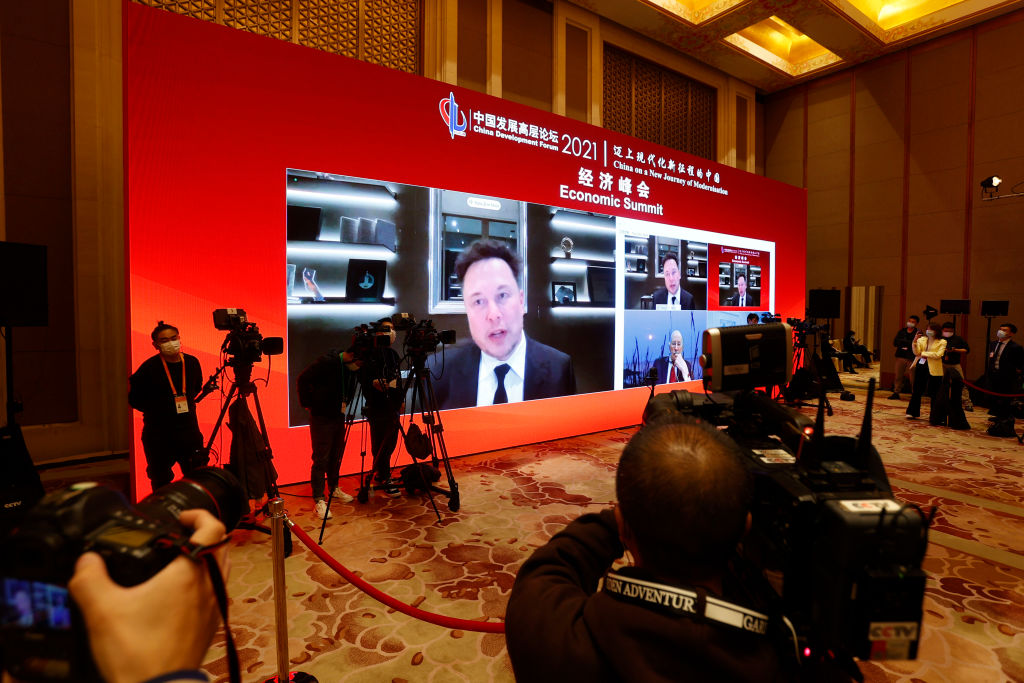
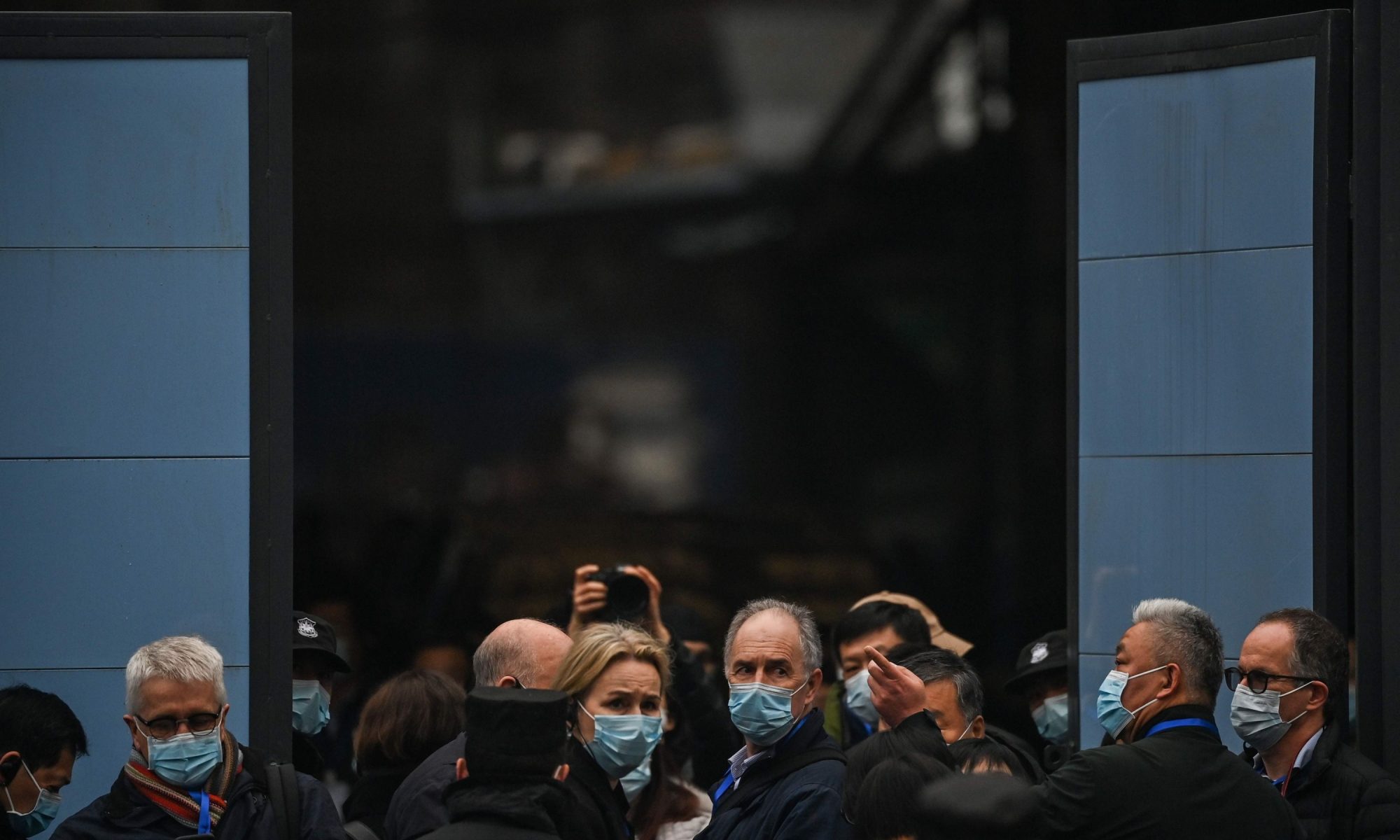
WUHAN, China—More than a dozen foreign scientists led by the World Health Organization gathered with Chinese counterparts last month to vote on the question: How did the Covid-19 pandemic start?
The show of hands came after a four-week joint study in the city where the first cases were identified, a mission many hoped would provide some clarity to a world craving answers.
For a while, it appeared to. The vote’s results captured headlines: The virus probably jumped to humans from an animal; further research was needed on whether it spread on frozen food; a lab leak was “extremely unlikely.”
A month on, however, as the WHO-led team finalizes its full report on the Wuhan mission, a Wall Street Journal investigation has uncovered fresh details about the team’s formation and constraints that reveal how little power it had to conduct a thorough, impartial examination—and call into question the clarity its findings appeared to provide.
China resisted international pressure for an investigation it saw as an attempt to assign blame, delayed the probe for months, secured veto rights over participants and insisted its scope encompass other countries as well, the Journal found.
Meanwhile, the Trump administration’s early assertions that the virus may have come from a Chinese laboratory soured diplomatic efforts to press China to allow a more rigorous probe. Many scientists view a lab accident as an unlikely cause of the pandemic, arguing the chances are greater that it jumped to humans and began spreading in nature. Then, the administration began withdrawing from the WHO, making it harder to rally allies. A Trump spokeswoman declined to comment.
The WHO asked the U.S. to recommend government experts for the team, but it didn’t contact the three that Washington put forward, according to current and former U.S. officials. Another U.S. scientist was selected for the team. Beijing hasn’t publicly identified most Chinese participants or shared critical raw data on the first confirmed cases and possible earlier ones.
U.S. officials said they asked, unsuccessfully, for the WHO to consult its governing body on negotiations with China over details of the probe, and said Washington lacked clarity on how the international team was recruited. The team members said they didn’t have the mandate, expertise and access to investigate a potential lab leak. And the team reached its verdict on . 8 in a show of hands with Chinese counterparts, many of whom report to a government that had already ruled out a lab accident and which has suggested the pandemic began outside China.
WHO spokesman Tarik Jasarevic said China didn’t weigh in on the agency’s selection of team members or object to any who had been chosen. The mission was mandated to design and recommend scientific studies, not to do an investigation, let alone a forensic audit of laboratories, WHO officials said. The WHO normally negotiates the terms of such missions with a host government directly, without other member states, Mr. Jasarevic said.
The upshot: What should have been a timely collaborative scientific inquiry has become slower, harder and more opaque. The world now risks never finding an answer to the virus’s origins.
Finding that answer is critical. Knowing how a new virus emerged helps scientists and policy makers devise ways to prevent a recurrence or another pandemic, and it can unlock clues about viral evolution that help in developing drugs and vaccines. It would also help satisfy human desire to know what unleashed a virus that has now killed more than 2.6 million people.
The team’s report, which will describe its findings and make recommendations for further study, is expected to be published next week, after Chinese counterparts review it and make possible changes, according to team members and the WHO.
China’s foreign ministry didn’t respond to requests for comment other than to say none of its officials were in the expert group. The national health commission didn’t respond to requests for comment and declined to make Liang Wannian, the head of the Chinese team in Wuhan, available for an interview. In recent weeks, the Chinese government has said it is cooperating with the WHO and that the Wuhan mission was part of a collaborative study, not an investigation, stressing that its report has to be approved by Chinese participants.
Chinese officials and scientists have argued the virus may have entered China via frozen food. Many independent researchers consider that hypothesis unlikely. Beijing has asked the WHO to conduct similar missions in other countries. The WHO hasn’t announced plans for missions to other countries.
Among scientists, there is little dispute that the international team performed valuable research. Many of the Chinese scientists involved worked hard to prepare data and analysis, members of the WHO-led team said. “They’ve done quite a lot of work,” said Peter Ben Embarek, who led the team. “I’m impressed with the amount of studies they’ve done.”
The mission returned with a much clearer sense of how widely the virus was already spreading in December 2019—clues that could help pinpoint when the pandemic began. Some scientists are confident that future studies will reveal the source.
Even so, the probe is stoking U.S.-China tensions. The Biden administration has questioned how the team reached its conclusions, urging Beijing to release all relevant data and saying any report should be independent of Chinese government intervention. Chinese officials have called for a probe on U.S. soil, suggesting the virus was spreading there in late 2019.
The WHO doesn’t have the regulatory teeth to force governments to disclose information. It can’t send disease experts to investigate an outbreak unless a government invites it.
Those challenges are particularly acute when dealing with a Chinese government that is increasingly influential within the United Nations system yet suppresses information reflecting badly on the ruling Communist Party. The WHO is overseen by U.N. member states, which mostly aren’t eager to pick quarrels with Beijing.
“The WHO should have the ability to march in and investigate something that is affecting the world,” said Kenneth Bernard, senior political adviser to a previous WHO director-general and a biodefense and health security official under Presidents Bill Clinton and George W. Bush. He now advises companies and the U.S. government on biosecurity issues. “If they can’t really investigate outbreaks, then you’re just left with whatever the government tells you.”
Poor start
In the best of circumstances, such investigations are complex and can take years. When outbreaks begin, most countries focus on controlling them, rather than probing origins.
The WHO publicly accused China of being uncooperative during the 2003 epidemic of SARS—severe acute respiratory syndrome, caused by a coronavirus—after officials initially covered up the outbreak’s extent. It took another decade for scientists to ascertain that the coronavirus behind that disease originated in bats in southwest China.
The search for Covid-19’s origins got off to a poor start when a disinfection company that local officials hired sprayed down Wuhan’s Huanan seafood market, which was linked to many early cases in December 2019. Witnesses said there were live animals at the market, including wildlife, but authorities said they found only frozen specimens and none tested positive for the virus.
On Jan. 23, 2020, a WHO emergency committee recommended that a WHO-led group of scientists should “review and support efforts to investigate the animal source of the outbreak.” China’s disease-control agency chief declared the same day that he suspected the virus came from a wild animal at the market and that identifying the beast was “only a matter of time.”
The Journal reconstructed how the probe unfolded over the following year based on interviews with members of the WHO-led mission to Wuhan and with WHO staff, current and former government officials, and diplomats from the U.S., Europe and the developing world, along with independent scientists and others familiar with the effort.
Tedros Adhanom Ghebreyesus, the WHO’s director-general, discussed the matter with President Xi Jinping in a January 28 meeting. The next month, a WHO-led team, including two U.S. government experts, visited China.
Local officials appeared committed to a search and described work they had under way, according to people on that trip. But no studies emerged over the following weeks.
The virus had become a politically sensitive issue for Beijing, given an outpouring of public outrage over the government’s initial handling of the crisis.
In April, then-President Donald Trump asserted that the virus had likely come from a Wuhan lab. Chinese officials responded that it might have come from the U.S. That month, Australia became the first country to call publicly for an independent investigation into how the pandemic began, prompting a furious Chinese response. Beijing later imposed restrictions on imports of Australian wine, a move Australian and other foreign officials saw as retribution.
The more time that passed, many scientists warned, the harder it would be to trace the source.
European governments, hoping to broker a compromise, drafted a resolution calling for an independent evaluation to be put to a vote in the World Health Assembly, the WHO’s decision-making body.
China pushed hard in backroom negotiations with member states to block and then delay a probe, according to former senior U.S. officials.
“They were negotiating over every comma,” said one of the officials. The resolution adopted in May didn’t specify a time frame. Some countries wanted to say the inquiry should get under way immediately, but China objected, the official said.
Ten days later, Mr. Trump announced the U.S. would leave the WHO. Yet American officials still wanted to help shape the inquiry and had an avenue: The U.S. had a seat on the U.N. organization’s governing executive board until 2021. But the board, which includes representatives from 34 governments, wasn’t brought in to consult on negotiating the terms of research.
Instead, the WHO hashed out those details directly with China. U.S. officials had urged the WHO to consult with the board, due to the human and economic toll of the pandemic, a U.S. official said. “It was a unique scenario,” the official said. “The normal way of doing business was not appropriate.”
But America’s allies were reluctant to join in, another U.S. official said.
Consulting the board “would have hugely strengthened the WHO’s hand politically,” said Lawrence Gostin, faculty director of the O’Neill Institute for National and Global Health Law at Georgetown University, who has advised the WHO on international health law.
In July, the U.S. ambassador to the WHO, Andrew Bremberg, arrived at its glass-tower headquarters with a letter formalizing America’s yearlong legal process of leaving the agency. But there was still time to mend the relationship, Mr. Bremberg said he told Dr. Tedros and the WHO’s health emergencies chief, Mike Ryan.
Dr. Ryan asked: Would the U.S. let American government officials join the origins team that the WHO was convening? Some of the world’s leading disease-investigation experts work for U.S. agencies.
“Absolutely,” Mr. Bremberg said he replied.
Dr. Ryan didn’t reply to requests for comment. Dr. Tedros didn’t respond to requests for comment submitted through a spokesman.
That month, two WHO officials spent three weeks in China, negotiating the terms of the Chinese part of the inquiry. By July’s end, they had agreed on a “terms of references” document laying out short-term and long-term goals. A key point: Any work in China would be part of a global study that could lead to probes in other countries.
It didn’t call for full laboratory inspections, or mention a potential laboratory accident, and it gave China veto power over who would join the team.
Appeal for experts
The WHO on Aug. 17 appealed for experts to join the international team. The U.S. Department of Health and Human Services sent names of three candidates to the WHO through the State Department. They included a virologist who is an expert on viruses that require study in high-security laboratories; a senior veterinarian; and a medical epidemiologist leading a program in global health security.
WHO staffers reviewed about 40 résumés, the agency’s Mr. Jasarevic said. None of the experts Washington recommended received a call, said U.S. officials.
“These candidates’ CVs were included in the pool of CVs evaluated,” said Mr. Jasarevic. “Unfortunately, we could not take all in the team.”
U.S. allies were concerned about what appeared to be an opaque selection process, but the U.S. struggled to get them to say so publicly or to pressure the WHO. European allies, particularly Germany, were worried about antagonizing China, a trading partner vital to their economic recovery, according to officials from several Western governments familiar with discussions. The German government didn’t respond to requests for comment.
The team comprised 10 scientists and five WHO experts, along with two representatives of the U.N.’s Food and Agriculture Organization and two from the World Organization for Animal Health, a Paris-based international organization promoting animal disease control.
The team’s leader, Dr. Ben Embarek, is a Danish WHO veteran of 20 years who was posted to China from 2009 to 2011 and is one of the WHO’s top experts on zoonotic diseases, which originate in animals and spill over to infect humans. The team included leading specialists in animal health, epidemiology and virology, and government experts from Germany, Russia and Japan.
It included one scientist from the U.S.: Peter Daszak, a zoologist and president of EcoHealth Alliance, a New York-based nonprofit.
Dr. Daszak had experience hunting for the origins of emerging human viruses in animals, including 16 years working with researchers in China. He was on a team that pinpointed bats as the source of the coronavirus behind SARS.
Some U.S. officials and scientists were concerned some of his nonprofit’s work in China posed a conflict of interest. EcoHealth had in past years provided funding to the Wuhan Institute of Virology as part of a grant from the U.S. National Institutes of Health. The WIV is at the center of assertions by the Trump administration that the pandemic virus could have come from a lab, and Dr. Daszak had publicly dismissed the possibility.
In applying for a spot on the team, Dr. Daszak said, he described his expertise and provided a conflict-of-interest statement to the WHO including his work with the WIV. “I’m known to WHO, and I’m known for my work on this,” he told the Journal. “I recognized the historical importance of it and the value I would be able to bring to it.”
The WHO’s Mr. Jasarevic said Dr. Daszak’s expertise in studying bats and zoonotic diseases was “good experience for the team” and didn’t pose a conflict of interest.
On Jan. 5, several members began their journeys, but Chinese officials that day told the WHO final permission hadn’t yet been granted. At least one member had to turn around mid-trip.
“I am very disappointed in this news,” said Dr. Tedros in a news conference, a rare example of the WHO chief publicly criticizing Beijing. Six days later, Beijing announced the team would arrive in Wuhan on Jan. 14.
As members prepared to fly from Singapore that day, Chinese officials blocked two from boarding after they tested positive for Covid-19 antibodies. Both had tested negative in multiple PCR tests.
Restricted in Wuhan
The remaining 13, on arrival in Wuhan, began two weeks’ quarantine, confined to hotel rooms where they slept, ate, worked and worked out. Some jogged miles inside their rooms.
They had daily videoconferences with Chinese counterparts, who gave presentations on the work they had done—vital information that some scientists and foreign officials tracking the mission said could easily have been shared before the team arrived.
On Jan. 28, a year to the day from the WHO director-general’s meeting with President Xi, they were cleared to begin field visits and face-to-face meetings with Chinese counterparts. For the remainder of the trip, they were restricted mainly to one part of a hotel due to more quarantine rules and forced to eat separately from Chinese counterparts—preventing the kind of informal conversations team members said were often the most fruitful in such efforts. Their contact with anyone outside the team was limited.
It soon became evident to foreign officials and scientists tracking the mission that the team’s itinerary was partly designed to bolster China’s official narrative that the government moved swiftly to control the virus. The team’s first visit was to a hospital where they met a doctor Beijing feted as the first to raise alarms through official channels about an outbreak of unknown pneumonia. The next day, after another hospital visit, the team went to an exhibition commemorating Chinese authorities’ early “decisive victory in the battle” against the virus, paying tribute to President Xi’s leadership.
On day three, the team visited the Huanan market and another wholesale market to see the kind of cold-storage facilities through which Beijing says the virus can spread. Such visits helped build trust with Chinese authorities, team members said.
“People think you can just waltz into a country, any country, and say ‘I want to see the books,’ ” said Dominic Dwyer, an Australian microbiologist on the team who took part in the WHO’s SARS investigation. “I don’t think diplomacy works that way.”
In between the field visits, team members said they held valuable face-to-face meetings with Chinese counterparts in which they grilled them on the information presented to the team. The team was able to visit every site it asked to see, including three laboratories, and review more aggregated data than China had shared in the previous year, team members said.
China has said it shared information gathered by more than 1,000 Chinese experts, who since July had trawled through medical records of 76,000 patients from more than 200 medical institutions in Wuhan, as well as test results from more than 50,000 animal samples.
Team members said it became clear to them that Chinese authorities would mostly present only their data analysis, not the raw numbers. And they hadn’t completed some short-term tasks the team had hoped for, including detailed studies of blood samples from before December 2019 and compiling a definitive list of animals sold at the Huanan market.
Among the 30 to 60 Chinese participants were nonscientists, including foreign-ministry officials, team members said. China’s team leader has said his team included 17 experts. The Chinese foreign ministry said none of its officials were in the expert group.
A heated exchange during one meeting touched on the pivotal question of how widely the virus spread around Wuhan before the first confirmed case, who Chinese officials say got sick on Dec. 8, 2019.
Chinese participants said that from the 76,000 medical records they examined, they had pinpointed 92 hospitalized patients from October, November and early December 2019 whose symptoms suggested they could have had Covid-19. None, however, had tested positive for antibodies, they said.
The international team was perplexed: The number seemed too small, they said. Covid-19’s primary symptoms—fever, a persistent cough—are common enough from other diseases that in a province of nearly 60 million people, vastly more cases should have been tested. Team members wanted to know what criteria had been used to select these 92 cases. And there were no connections between the patients, suggesting they had been infected in different places rather than one superspreading event.
And why did Chinese authorities test for antibodies only a few weeks before the team’s arrival, by which time they could have faded to undetectable levels?
The team pressed for immediate access to the raw, anonymized data on the 76,000 patients, which they thought could be filtered differently to identify something closer to 1,000 potential earlier Covid-19 infections. The Chinese side refused, team members said.
Chinese participants countered with research indicating the virus might have been circulating in other countries in late November and December, and suggested the WHO should study whether the pandemic originated outside China, team members said. The WHO hasn’t announced any plans for missions to other countries.
“Sometimes emotions have run really high,” Thea Fischer, a Danish epidemiologist on the international team, told reporters in Wuhan. “I am a scientist and I trust data….I don’t just trust what anyone tells me.”
More tension arose after a presentation by representatives of a Wuhan blood bank. Team members pressed them for samples from before December 2019, which they felt was the best way to test their hypothesis that the virus might have been spreading in China earlier and more widely than believed. Antibodies could still be detectable in frozen blood bank specimens.
“We said: Are you going to go back and look at older samples? And they said: Oh, well, there’s regulatory requirements about that,” said Dr. Dwyer. Many countries had legal protections for blood donors’ privacy but also mechanisms to allow access in emergencies, he recalled arguing.
“People are doing it around the world anyway, so there’s no reason why China couldn’t do it,” he added. “I mean, to me, that would have been a very sensible thing to have done earlier.”
Team members said they subsequently secured an assurance the blood samples could be tested later.
The team visited the Wuhan Institute of Virology on Feb. 3. The visit had been assembled after the team asked for one, and China set the terms. The international team spent about three hours there and met Shi Zhengli, the WIV scientist who specializes in bat coronaviruses and who has denied that SARS-CoV-2 came from her institute. Dr. Shi didn’t respond to requests for comment.
They were given presentations on the institute’s research, safety procedures, and the health of its staff, and were allowed to ask questions and visit its Biosecurity Level 4 laboratory where its most dangerous experiments are done, they said.
Dr. Fischer told reporters that the team examined the research profile of various WIV laboratories. They questioned staff about routine biosafety screening of personnel and absences of staff due to illness.
Dr. Daszak said he asked WIV researchers on the visit why a database of viruses the institute had publicly posted had been taken offline. Dr. Shi responded that the institute had had to take down the database—an Excel spreadsheet—after about 3,000 hacking attempts, Dr. Daszak said.
Show of hands
To help narrow down their conclusions, the team organized a show of hands on Feb. 8. Chinese participants sat at several rows of tables on one side of a hotel conference room with the international team facing them on the other.
The exercise focused on the four main hypotheses: Did the virus jump directly to a human from its animal reservoir? Did it spread via some intermediate animal? Was it transmitted via the food chain, especially frozen products? Did it come from a laboratory?
Each option was ranked according to a five-phrase scale: “extremely unlikely,” “unlikely,” “possible,” “likely,” and “very likely,” and participants proposed arguments for and against each before voting, team members said.
The decision to rank the lab theory as “extremely unlikely” was unanimous, they said. “I waited until everyone else had passed their opinion and then I passed mine,” Dr. Daszak said, “because of the sensitivities around my work with the Wuhan lab.”
At the news conference the next day, Dr. Ben Embarek announced the results.
The most likely hypothesis, he said: The virus spread from its original animal host, like a bat, to another animal, and then to humans. The team would focus future research on that.
Next in order of priority, it would also study the idea that the virus was spreading via the food chain, particularly frozen food, Dr. Ben Embarek said. It was possible that the virus jumped directly to humans from its original animal host, he said. It was “extremely unlikely” to have come from a lab and the team wouldn’t recommend further research on that idea, he said.
Dr. Liang, his Chinese counterpart, said at the news conference a laboratory origin was impossible because no such virus was being stored in China at the time. “If there is no existence of this virus,” he said, “there will be no way that this virus would be leaked.”
After leaving Wuhan, some international team members qualified their verdict on the laboratory. They lacked the authority, expertise or access to conduct a full examination of the WIV or any other research facility, several said publicly or to the Journal.
Several said that they hadn’t been able to see the raw data or original safety, personnel, experiment and animal-breeding logs—which many other scientists say are necessary elements of a full investigation.
“It’s just a great coup by China,” said Daniel Lucey, a clinical professor of medicine at the Geisel School of Medicine at Dartmouth who also teaches at Georgetown University.
A thorough investigation of a potential lab leak would require experts with forensic skills similar to those who do weapons or biowarfare inspections, scientists including Dr. Dwyer said.
“We didn’t see the actual data there,” Dr. Dwyer said. “It would be nice to have seen that, particularly around the testing of their staff and so on. But that didn’t come through. They could still provide that.”