
Art World Players Rethink The Auction Marketplace
A new peer-to-peer digital platform lets high-end collectors buy and sell without the middleman.

By Kelly Crow
Thu, May 6, 2021 4:35pm 3 min
3 min
3 min


A new peer-to-peer digital platform lets high-end collectors buy and sell without the middleman.
3 min
Collectors have long enlisted dealers or auction houses to help resell their art holdings because such insiders typically have up-to-date pricing data and access to potential buyers.
Now, in the latest challenge to the art world’s status quo, a team led by former Sotheby’s rainmaker Adam Chinn plans to launch a peer-to-peer digital marketplace later this month that will invite collectors to sell high-end art to each other, directly and anonymously. Listings in an early version of the site, called LiveArt Market, include an Andy Warhol “Rorschach” from 1984 valued around US$200,000 and Jack Pierson’s 2009 sign, “Glory,” valued around US$85,000.
The move comes as all sorts of art-world players rethink the traditional ways art gets traded online, from former Christie’s auctioneer Loïc Gouzer’s Fair Warning auction app to the proliferation of digital platforms selling NFT artworks. Even as the art world’s attention increasingly pivots back to in-person art events including fairs, online sales of luxury goods remain robust and some top industry dealmakers see a bigger market opportunity in finding fresh ways to sell art to collectors accustomed to shopping for art online.
“Collectors go to gatekeepers because they need pricing info, but we want to put collectors in control,” said Mr Chinn, Sotheby’s former chief operating officer. Late last year, he teamed up with artificial intelligence experts and former auction specialists like George O’Dell to buy and retool Live Auction Art, then an auction-tracking data site. The new owners have now equipped the site, renamed LiveArt, with machine-learning technology so it can analyze auction data and give users free, real-time estimates of their collection’s likely market value. The key to success will be convincing collectors that LiveArt’s pricing and provenance services are as reliable as those collectors would get from the auction houses.
The architect behind the tech is Boris Pevzner, a graduate of MIT known for creating and selling several companies that use AI-driven algorithms, including one that resolves freight-shipping issues and another that manages art collections, Collectrium, that he sold to Christie’s in 2015.
Starting later this month, LiveArt will add the marketplace component to double as an online platform for private art sales. People can upload artworks and specify any details they want shared or kept from potential buyers, including their own identities. Once listed, an artificial intelligence bot on the site will help them sift offers or field questions from potential buyers—like bots on retailer sites already do—as well as mediate deal terms so both parties remain discreet, if they choose. Once under contract, the seller will be asked to ship the work to the company’s clearinghouse in Delaware, where conservators and former auction specialists will check its condition and vet provenance before sending it on to its buyer, Mr. Chinn said.
He added that LiveArt has hired a team of provenance researchers, including some from Phillips, to vet work and if there are provenance disputes between buyers and sellers, the site will offer mediation. (LiveArt only charges buyers a flat 10% fee for any sales versus the big auction houses which can charge more than 20%.)
Christie’s and Sotheby’s didn’t immediately comment on Mr. Chinn’s new venture.
New York art adviser Alex Glauber, who isn’t involved with the venture, said the matchmaking element of a peer-to-peer digital marketplace could “solve a practical problem” for collectors who want to sell middle-market pieces without paying steeper fees to an auction house or wrangling a gallery to promote their consignments ahead of the gallery’s own inventory or artists.
Mr. Glauber said he plans to upload a few pieces to test the experience before he suggests it to his clients. He said the challenge will lie in persuading a “critical mass” of sellers, who typically prize discretion, to reveal the art they’ve got in storage. “Even with all the security assurances, some people may be reluctant to push their pieces online,” he said. “It’s going to take some convincing.”
David Rogath, a Connecticut collector who owns pieces by David Hockney and René Magritte, said he also has no ties to the venture but said he has bought and sold plenty of art through Mr. Chinn during his tenure at Sotheby’s, so he’s intrigued by the platform. “I have things I want to sell and things I don’t want anyone outside my family to know I own, and Adam understands discretion is key,” Mr. Rogath said.
Mr. Rogath said he used LiveArt’s pricing tool to test the values for several works he’s owned over the years and said he found them accurate. Mr. Rogath also said the site appears to smooth out some “speed bumps” that have historically dissuaded top collectors from brokering major sales to each other, including the logistics of hiring third parties to research and vouchsafe a piece’s condition and authenticity. If a platform can take over those real-world hassles, he said, “For a collector, there’s an allure to cutting out the middle man.”
Reprinted by permission of The Wall Street Journal, Copyright 2021 Dow Jones & Company. Inc. All Rights Reserved Worldwide. Original date of publication: May 5, 2021
 Copyright 2020, Dow Jones & Company, Inc. All Rights Reserved Worldwide. LEARN MORE




BNW Developments has established a Sydney presence, joining Arada and Sobha Realty among the growing number of UAE developers pursuing Australian buyers and development opportunities.
The Australian leather house has opened an immersive four-day pop-up in Manhattan, unveiling its Bloom Collection and redefining what a product launch can look like.
Apple closed above a $5 trillion market valuation for the first time, capping Tim Cook’s 15-year tenure and setting a high bar for incoming CEO John Ternus, as the company faces growing pressure to strengthen its AI capabilities and sustain growth.
3 min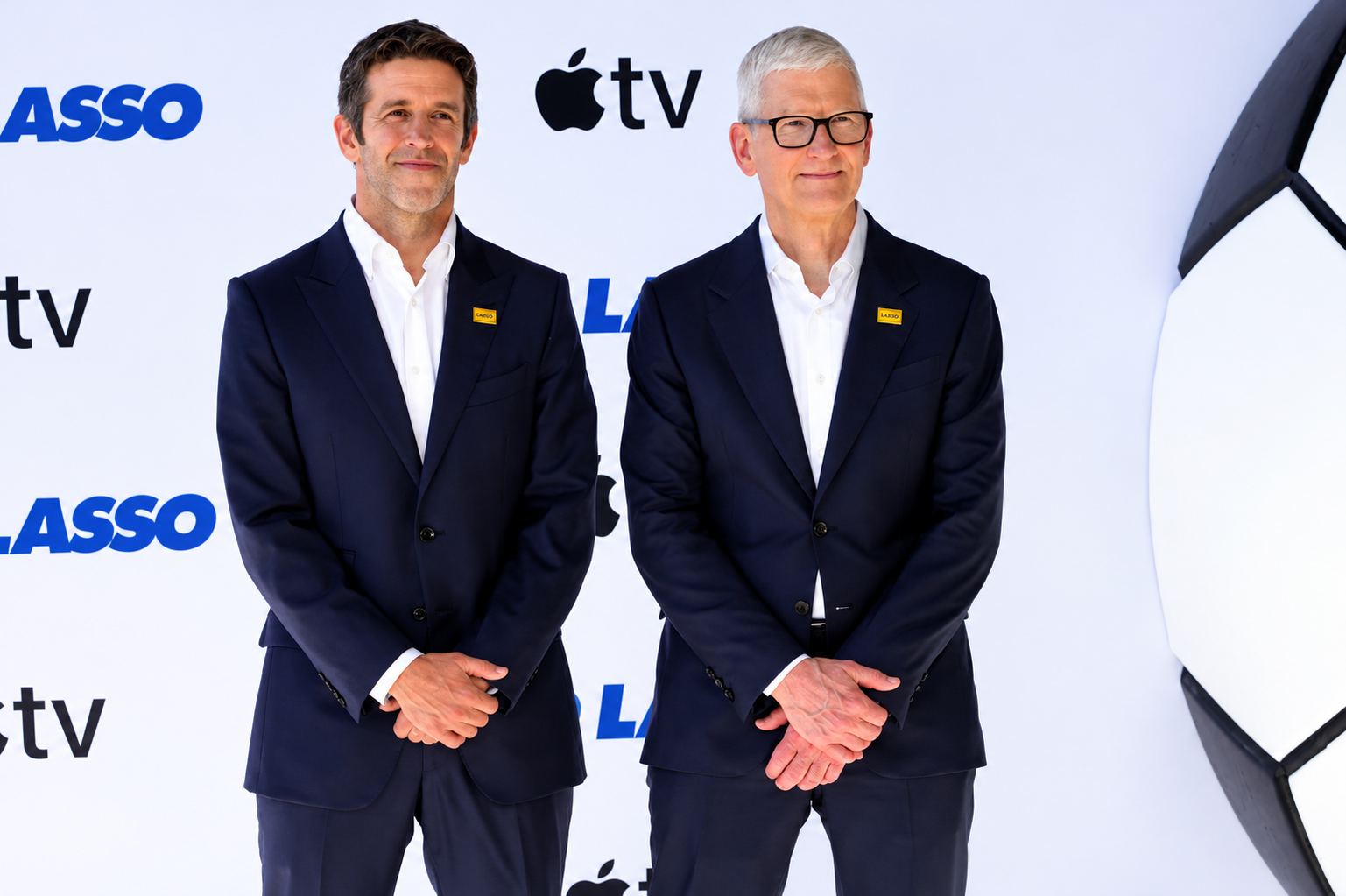
Apple AAPL 0.50%increase; became the second company to close above the $5 trillion mark on Wednesday, capping the Tim Cook era, and posing an implicit challenge to new Chief Executive John Ternus.
The iPhone-maker’s shares closed at a record, just enough to push the company’s market capitalization into territory that only chip colossus Nvidia occupies. Apple’s market value has surpassed $5 trillion six times previously during intraday trading, but it had never closed above that level, which it squeaked past on Wednesday, ending the day at $5.005 trillion according to Dow Jones Market Data.
Cook’s act will be tough to follow. During his 15-year tenure as CEO, which ended Aug. 31, Apple’s market capitalization multiplied by a factor of 13. He nearly quadrupled the number of iPhones sold annually. He grew its highly profitable services business from $10 billion annually to more than $100 billion. He launched the Apple Watch and AirPods, which together generate more than $30 billion a year. He poured Apple’s cash into more than $1 trillion worth of share buybacks and dividends.
Today, Apple shares trade at a premium compared with the overall S&P 500 even though the company’s revenue growth rate is slower than the index’s average. That is because the company’s shares are viewed as safe, and its business predictable, say analysts.
A key to Apple’s success under Cook is how it has limited capital spending, juicing the company’s returns for investors and greatly reducing the risks of its business. That has never been more apparent than during the AI build-out, when big tech rivals have rushed to spend gargantuan sums on data centers while Apple has focused on its core businesses making devices and selling high-margin services for them.
Apple investors are so confident in its business that they have driven up its shares despite big cost increases that threaten profit margins. The cost of memory and storage chips inside iPhones, Macs and iPads has skyrocketed as demand for those chips from data centers has led to shortages. Apple has responded by raising prices across its device lineup, including for older model iPhones that would typically get a price cut.
In theory, such a move could hurt Apple since iPhone buyers might wait longer to upgrade their devices. Yet since the first wave of price increases Apple shares have jumped 25%.
In part, that is because investors think Apple device buyers will pay the higher prices, enabling Apple to generate as much or more in total profits even if margins are down, said Bank of America analyst Wamsi Mohan. He added that Apple’s new foldable iPhone Duo is likely to be popular and that the new Siri AI will prompt iPhone upgrades.
AI has long been viewed as Apple’s Achilles’ heel. The company failed in its efforts to build its own frontier model, and it also allowed its Siri assistant to fall far behind rivals. ChatGPT revolutionized what smartphone users expect from chatbots.
Apple hopes to turn a corner with the new Siri AI. Built with Google’s help, Apple’s redesigned chatbot was released this fall. It still lags behind rival AI systems in key respects, though it has the advantage of being built directly into the device that many people already use, their iPhone. Apple also has access to more personal data, which could theoretically be used for compelling AI features, though new AI agents show the technology is advancing faster than Apple’s ability to keep up.
Tech rivals know how important it is to control the devices that people use to deliver their services. Perhaps most threatening to Apple, OpenAI is planning a family of AI-powered devices. It has poached hundreds of Apple employees to drive its device strategy. Apple responded in July by suing OpenAI, alleging it stole Apple trade secrets.
OpenAI has said it is “not aware of any evidence that this complaint has merit” and alleged in a new legal filing Wednesday that Apple poached one of its own employees who took confidential files with him. Apple said in response that it had found no evidence supporting the new allegation.
AI could be the battleground where Ternus makes his mark, either ushering in a new era of innovation and growth for Apple or finally losing its status as the company that has defined how people interact with computers.
