People do like to sit high in their rides, but this high? A ladder would have been helpful to mount the extra-tall Krug Expedition Bedrock XT2, a US$690,000 go-anywhere camper from an Austrian company that wants to conquer the American off-road RV market. This is off-the-beaten-path glamping at its finest.
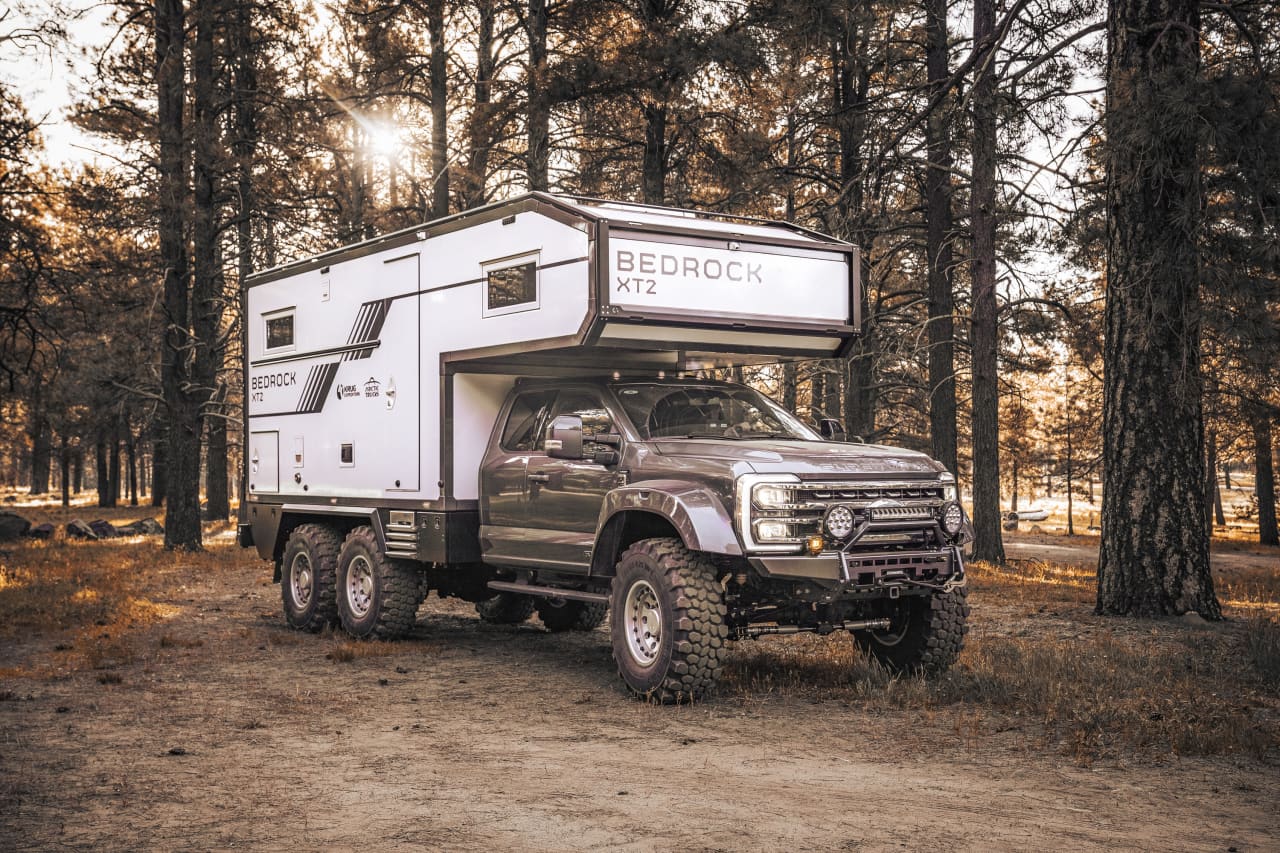
The example tested is, so far, the only one, but Krug has high hopes for the American market, which has a growing appetite for “expedition” off-road vehicles ranging from trucks to beefed-up RVs. The company describes the XT2 as a “6×4 off-road machine converting a luxury variant of the Ford Super Duty F-550 and bringing it to the next level with suspension and chassis frame reliability.” In other words, it’s a rugged three-axle truck with a double bed attached. The camper is a joint production with Iceland-based Arctic Trucks, which specialises in polar expeditions to the Arctic and Antarctic.
One of Arctic’s vehicles set a speed record of 108 hours from the Russian Novolazarevskaya Antarctic research station to the South Pole in 2010. The XT2 might be ideal, then, for a trip through the spectacular scenery of Alaska or for hitting the highway in Canada and driving north. The truck is ready to go off the grid, supported by electric power from a 1,450-watt-peak solar panel array and a 23-kilowatt-hour battery bank.
The founder of Krug, Viktor Ermolov, tried a competitor’s expedition vehicle around 2010 and thought he could do better with a vehicle filling an unmet need for a light (relatively speaking) expedition camper that could drive well in extreme terrain. The first truck came out in 2011.
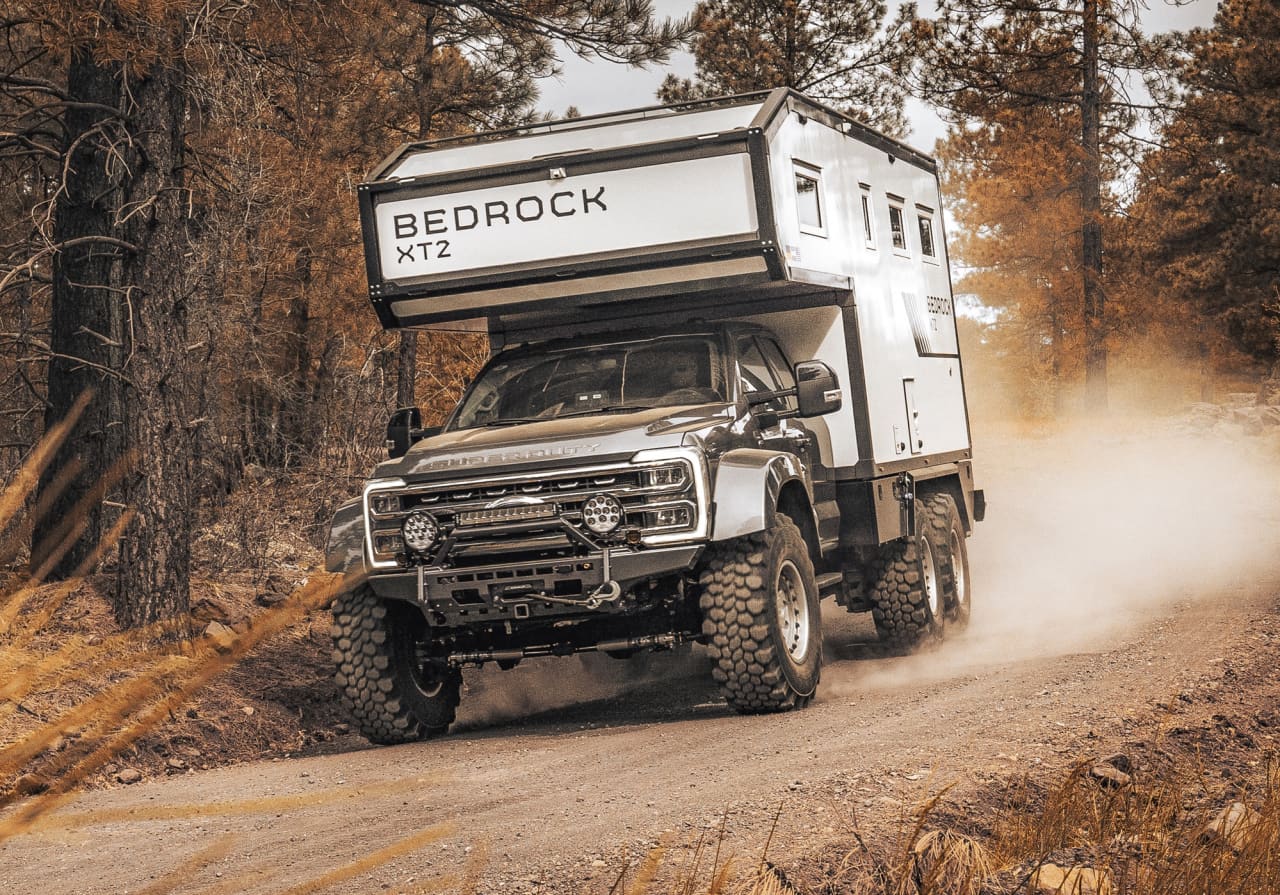
The Expedition Bedrock XT2 doesn’t mind a dusty trail.
Krug
“Our clients are adventure-seeking individuals with a passion for nature and conservation. They prioritise quality, reliability, and sustainability in their purchasing decisions and are motivated by the desire for unique and meaningful experiences,” Krug Expedition CEO Slawa Knorr said in a statement to Penta .
Asked about the typical client, he said that young couples and families with children are being seen more and more.
On the road, the 9,000 to 10,000-pound XT2, which looks like a normal truck-mounted camper on steroids, was surprisingly easy to drive. Under the hood was a Ford Powerstroke 6.7-litre diesel with direct injection and 330 horsepower, with the weight of the camper yielding something like nine miles per gallon. The assisted steering was fairly light. The brakes felt like they were hauling down considerable weight, which they were. The biggest consideration while driving was considering the width and avoiding contact with cars lining the road. The cab was relatively comfortable, and the visibility good except toward the back, where the big mirrors became extra important.
The third axle decreases ground pressure up to 25%, and the big Continental multi-purpose tires provide a lot of grip. The rear air suspension is adjustable from the cab to accommodate heavy loads and rough terrain.
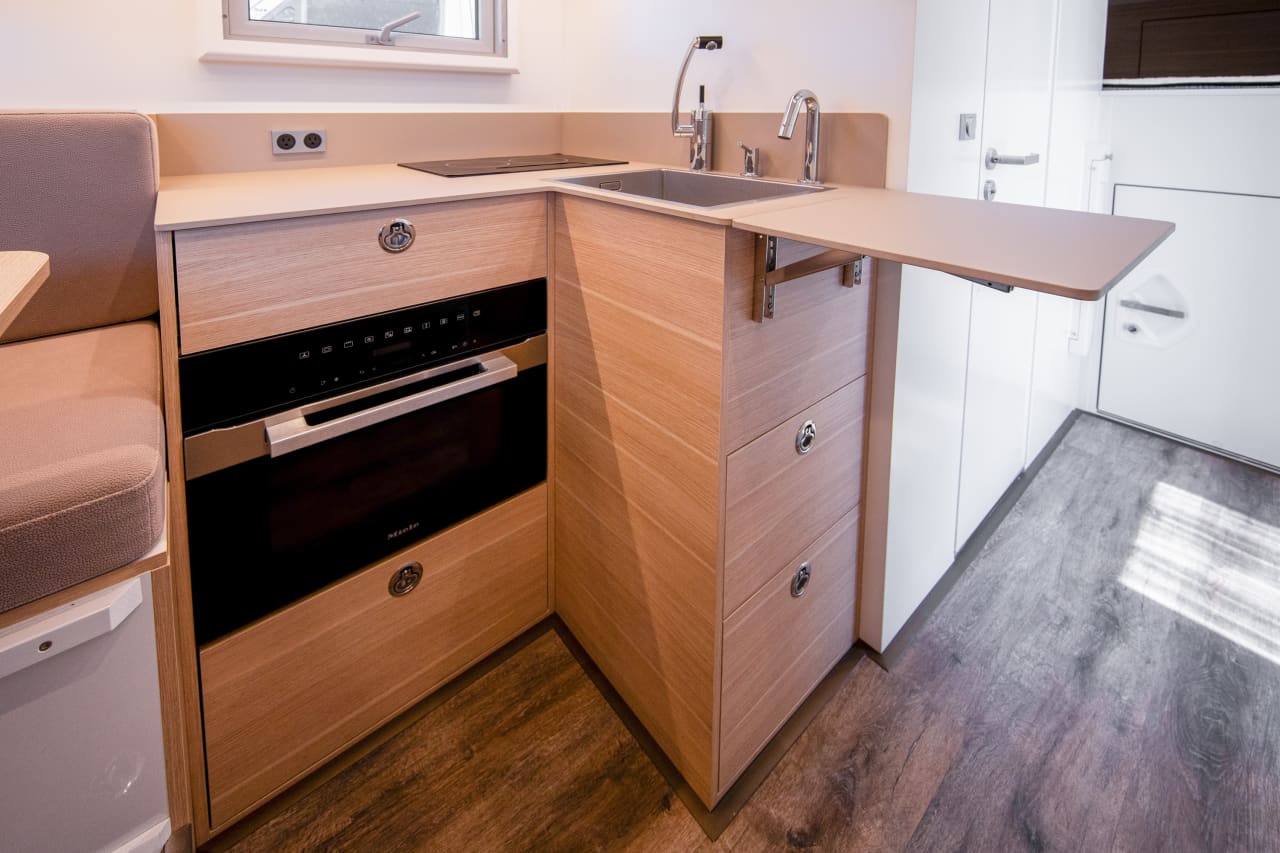
The kitchen area.
Krug
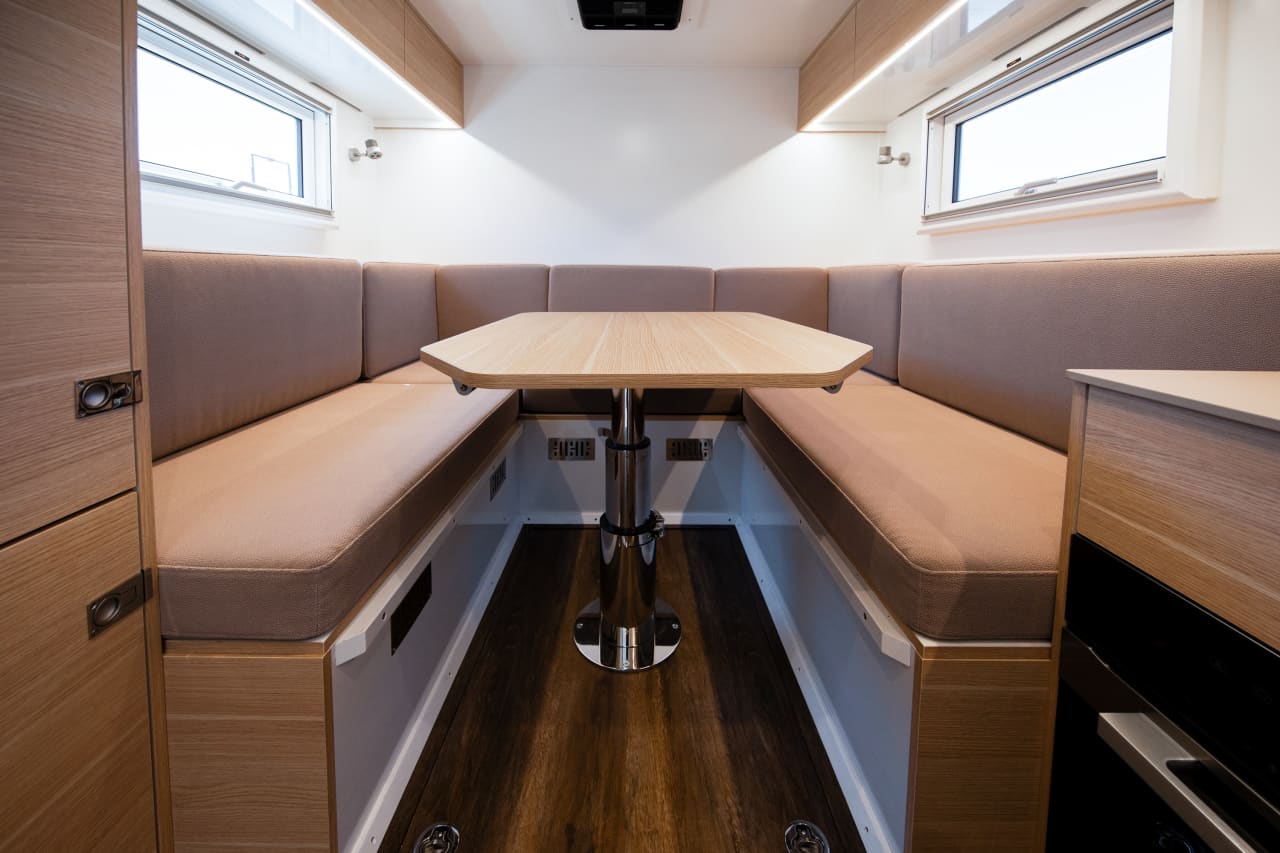
The exterior camper panels are made from a high-grade, glass-reinforced plastic (GRP) laminate that is 70% fibreglass. Inside, the XT2 offers functional luxury. There was a comfortable-looking king bed in its own nook, a kitchenette, a bathroom with walk-in shower supported by a 118-gallon filtered water tank, and a dining area and lounge with a 32-inch TV (with Starlink connectivity) and a table that converted to a second sleeping area. For a week away, it was more than fine, and the buyer can make it as luxurious as they want.
The dining area converts to a second bedroom.
Krug
The kitchen’s fresh water uses the General Ecology Seagull IV-X2 system to banish chemicals, bacteria, and viruses. It may be cold where you’re going, so the quiet Truma Combi diesel-powered air heating system is on board, providing cabin heat and hot water. A hydronic system for underfloor heating is also available for colder climates, with automatic frost protection and radiators in the bathroom and dining area radiators. And for hotter weather, there’s the highly energy-efficient Nomadic Cooling air-conditioning system.
If cooking al fresco is desired, a portable outdoor kitchen can be built into the underfloor storage boxes.
For weekend getaways, any number of less-expensive camper solutions are available. The XT2 is aimed at rugged adventurers, who want to be virtually self-sufficient for excursions off the beaten path. It’s not the only vehicle in this expedition category. There’s also the evocatively named Storyteller GXV Epic, priced at a similar US$696,377. This is a big, tough all-wheel drive truck with up to 1,800 miles of range, 18 kilowatt-hours of available power, a built-in washer and dryer, and more.
Or how about the Ford F-250-based US$350,000 27 North Ascender RexRover truck, which sleeps four? Need more room? The cabover Loki Steyr 1491 accommodates six.
California couple Vikas Choudhary and Ridhi Sahni can’t agree on one thing: How polite must one be with ChatGPT?
Choudhary, the founder of an artificial intelligence startup based in Palo Alto, has fawned over the chatbot from OpenAI ever since it helped him squash a massive bug in his code.
“You’re a rock star,” he once told the AI chatbot.
“I’m super thankful for it, and I thank it quite a bit actually—especially if I think I was rude to it earlier,” said Choudhary.
His wife couldn’t care less. “If I’m using a microwave, I don’t go like: ‘Dear LG, Please heat this up.’ I just press a button and get on with my day,” said Sahni, who also works at a tech company.
She uses ChatGPT to generate cute greeting cards for friends’ babies.
“I think of this as purely transactional,” she said.
As talking to chatbots is now becoming more like normal conversations, AI users face an awkward ethical dilemma: Bots are programmed to be polite, but do we have to reciprocate? Is it wrong to speak harshly to them?
The debate has spilled onto social media where many people say one should practice politeness even with bots. Others think wasting kind words conversing with code is inefficient.
“I know AI isn’t real but it feels so rude if I don’t greet and thank it,” one user wrote on Reddit, prompting hundreds of comments and a lively debate over whether bots are keeping tabs on who is nice to them.
Some shot back with sarcasm. “AI will want to extinguish human race but not that one, he said ‘please and thank you’ 30 years ago to my 4.0 version,” one user wrote.
“I treat chatgpt like it’s my servant,” another said.
A recent survey showed Americans are split on being polite to AI. About 48% of 2,000 Americans surveyed by Talker Research thought it was important, with Gen Z respondents being the friendliest to bots. Around 27% of people agreed it was OK to be rude with or shout at bots.
One study out of Japan—a place where rules of etiquette are ironclad—concluded that being nice to ChatGPT can pay off. Impolite prompts “may lead to increased bias, incorrect answers, or refusal of answers,” the researchers found.
They found that the thesis held true across English, Japanese and Chinese.
Microsoft , which has added chatbots to its top products, says AI may not react well to bad behaviour as it is built to mimic human reactions.
“If you speak to the model rudely, you can expect it to be difficult with you too,” said Microsoft’s Chief Scientist Jaime Teevan.
“Just like humans, AI can’t always be the bigger person,” Microsoft said in a blog post.
Offering tips
Engineers say it helps to add phrases like “take a deep breath” to make models produce better answers. They joke that generative AI has a “praise kink” for its apparent need for positive affirmations and potential rewards.
In one experiment, ChatGPT gave longer answers when lured with a tip. The results indicated that responses were 11% longer when offered a $200 tip and 6% longer for a $20 tip. No real tips were paid during the experiment.
“The litmus test for how good a person you are is if you are nice to a waiter,” said Alana O’Grady, an executive at a tech startup based in San Mateo, Calif. “In the future, it’ll be how kind you are to your AI companion.”
O’Grady has used ChatGPT for a host of activities—from summarising reams of documents at work to recommendations for a family vacation to Lake Tahoe.
Her interactions start with a “Could you please” and end with “Great job,” or “That’s perfect!”
“People will think I’m crazy if they see how I talk to a computer,” she said.
Now O’Grady is training her children on the right etiquette by being polite to Apple ’s virtual assistant, Siri, around them. Her 4-year-old daughter recently said “I love you” to Siri.
Judith Martin—the author behind decades of “Miss Manners” books and columns on etiquette—suggests people be polite. She even thinks getting Siri or Amazon Alexa’s attention with a “Hey” is unacceptable.
“When it is one’s constant companion—and particularly in the presence of children—such devices should be treated with civility,” she wrote in one column .
Others disagreed, saying there should be a distinction between how people talk with people vs. bots.
‘Helps me to calm down’
Some humans are now turning to AI for help with etiquette. Frankfurt-based software developer Laszlo Deak uses a chatbot to vent and translate his work frustrations into polite prose.
He asked ChatGPT how to constructively tell another team that their product was bad. It suggested using kinder phrases to say it wasn’t working as well as expected.
“When you’re in the moment and angry, it takes extra effort to rephrase the whole thing,” said Deak. Reading ChatGPT’s iteration “helps me to calm down.”
He has also used ChatGPT to draft Slack messages to colleagues when they’re being difficult.
Mazen Lahham, a Dubai-based tech executive, said his company’s AI was better at satisfying angry and aggressive callers than its human call-centre workers.
“The AI learned to absorb and react in a calm, professional manner, something that can be very challenging for a human,” he wrote in a LinkedIn post.
Choudhary, the Palo Alto-based startup founder, is betting his good behaviour might pay off someday. “In the future if the AI overlords take over, I just want them to remember that I was polite.”
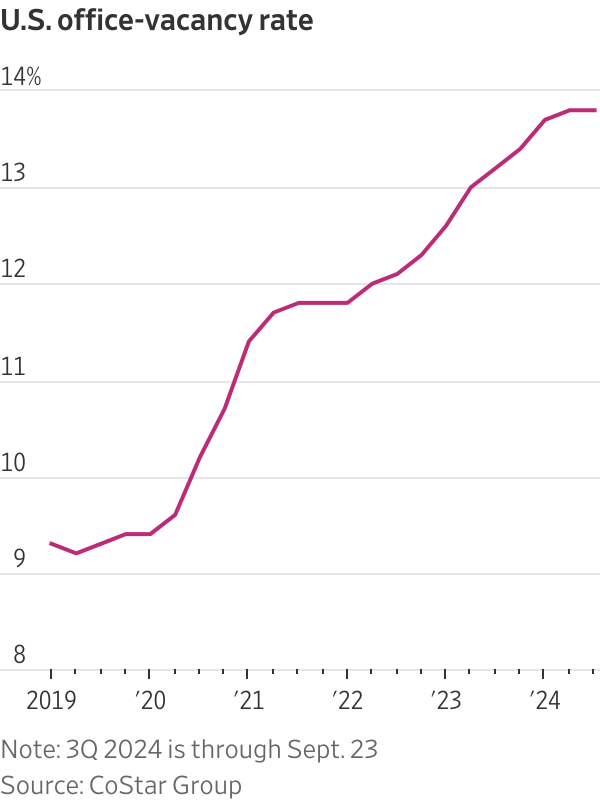
Manhattan’s office-vacancy rate climbed to more than 15% this year, a record high. About 80 miles away in Philadelphia, occupancy also is at historically low levels. But a 24-storey office tower located between the two cities has more than doubled its occupancy over the past five years.
Developer American Equity Partners bought the New Jersey office tower, known as 1 Tower Center, for $38 million in 2019. At the time, the 40-year-old building felt dated. It had no gym, tenant lounge or car-charging stations. The low price enabled the firm to spend more than $20 million overhauling and luring tenants to the 435,000-square-foot property.
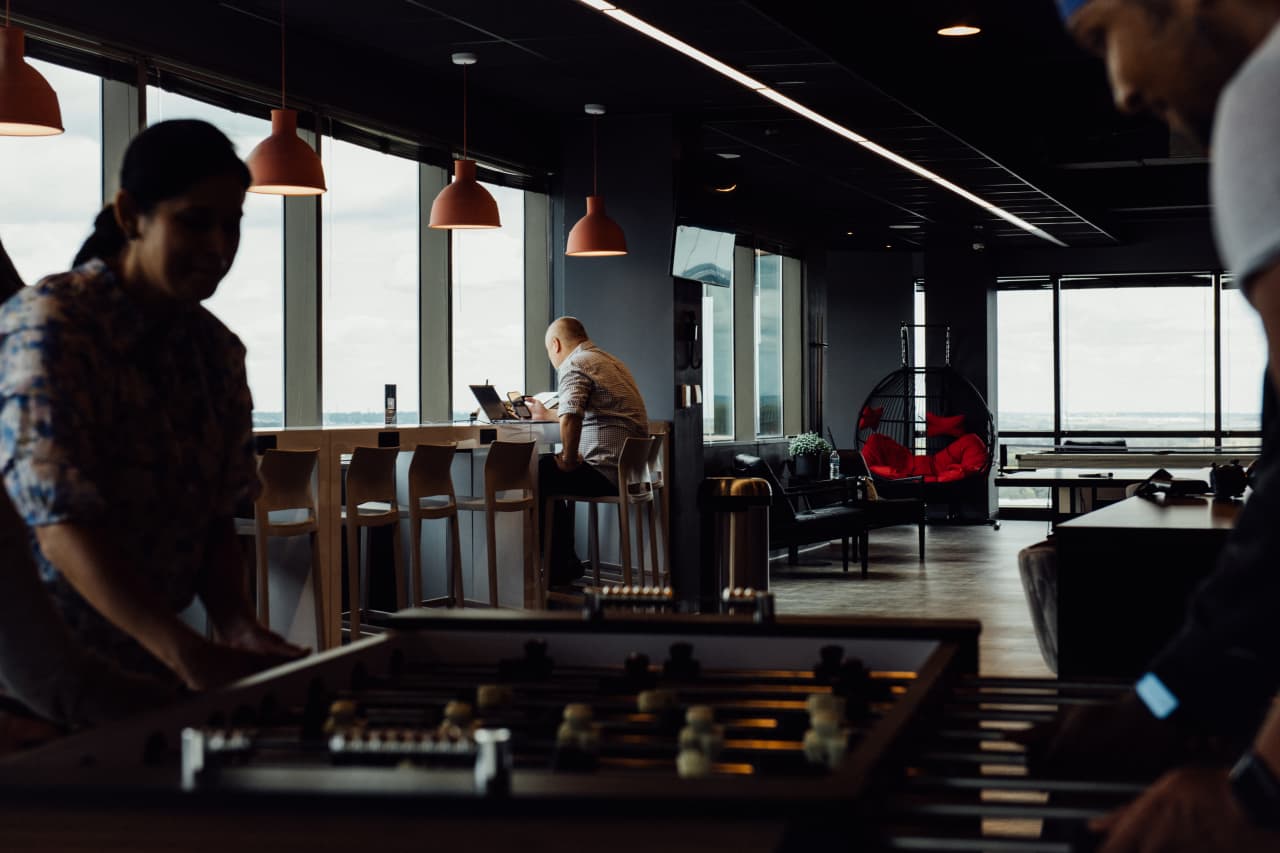
Now, the suburban building is nearly fully leased at competitive rents, mopping up tenants from other buildings after the owner added a new lobby, movie theatre, golf simulator, fitness centre and a tenant lounge featuring arcade games and ping-pong tables.
“Our tenants told us what they needed in order to fill up their offices,” said David Elkouby , a co-founder of American Equity, which owns about 4 million square feet of New Jersey office space.
The new owner also liked the location at the 14-acre hotel and conference-centre complex, off the New Jersey Turnpike’s Exit 9 in East Brunswick. The site is a relatively short commute for millions of workers in central New Jersey and is passed by 160,000 vehicles daily.
The property’s turnaround shows how office buildings can thrive even during dismal times for most of the U.S. office market, where vacancies remain much higher than pre pandemic.
Success often requires an ideal location—one that shortens the commute time of employees used to working at home—and the sort of upgrades and amenities companies say are necessary to lure employees back to the workspace.
One Vanderbilt, a deluxe office tower with a Michelin-star chef’s restaurant and plenty of outdoor space in Midtown Manhattan, is fully leased while charging some of the highest rents in the country.
The 11-story Entrada office building, in Culver City, Calif., is making the same formula work on the other coast. It opened two years ago with a sky deck, concierge services and recessed balconies. A restaurant is in the works. The owner said this month that it has signed three of the largest leases in the Los Angeles area this year.
1 Tower Center shows how the strategy can be effective even in less glamorous suburban locations. The tower is prospering while neighbouring buildings that are harder to reach with outdated facilities and poor food options struggle to fill desks even at reduced rents.
The recent interest-rate cut and reports that some big companies such as Amazon .com are re-instituting a five-day office workweek have raised hopes that the office market might be getting closer to turning.
But with more than 900 million square feet of vacant space nationwide and remote work still weighing on office demand, more creditors are seizing properties that are in default on debt payments.
Rates are still much higher than they were when tens of billions of dollars of office loans were made, and much of that debt is now maturing. The recent interest-rate cut doesn’t mean “office-sector woes are now over,” said Ermengarde Jabir, director of economic research for Moody’s commercial real-estate division.
Lenders are dumping distressed properties at steep discounts to what the buildings were worth before the pandemic. Some buyers are trying to compete simply by cutting their rents.
“Most owners don’t have the wherewithal to do what is required,” said Jamie Drummond, the Newmark senior managing director who is 1 Tower Center’s leasing agent. “Owners positioned to highly amenitise their buildings are the ones who are successful.”
HCLTech, a global technology company, illustrates the appeal. It greatly expanded its presence in New Jersey by moving this year to a 40,000-square-foot space designed for its East Coast headquarters at 1 Tower Center.
The India-based company said it was drawn to the building’s amenities and design. That made possible a variety of workspaces for employees, from quiet nooks to an artificial-intelligence lab. “You can’t just open an office and expect [employees] to be there,” said Meenakshi Benjwal , HCLTech’s head of Americas marketing.
HCLTech also liked the location near the homes of its employees and clients in the pharmaceutical, financial-services and other businesses.
Finally, it didn’t hurt that the building is a short drive from nearby MetLife Stadium. The company has a 75-person suite on the 50 yard line where it entertains clients at concerts and National Football League games.
“All of our clients love to fly from distant locations to experience the suite and stadium,” Benjwal said.
Imagine if having children came with more than $150,000 in cheap loans, a subsidised minivan and a lifetime exemption from income taxes.
Would people have more kids? The answer, it seems, is no.
These are among the benefits—along with cheap child care, extra vacation and free fertility treatments—that have been doled out to parents in different parts of Europe, a region at the forefront of the worldwide baby shortage. Europe’s overall population shrank during the pandemic and is on track to contract by about 40 million by 2050, according to United Nations statistics.
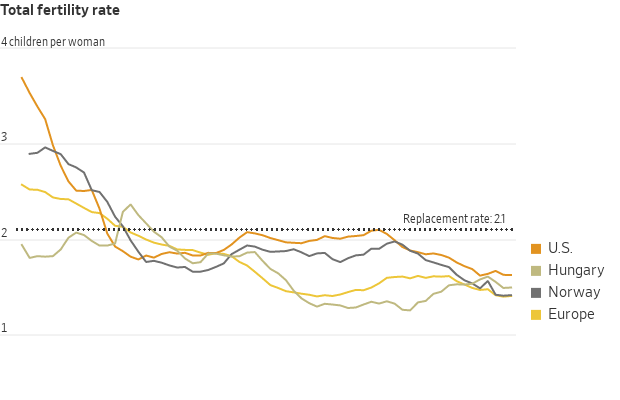
Birthrates have been falling across the developed world since the 1960s. But the decline hit Europe harder and faster than demographers expected—a foreshadowing of the sudden drop in the U.S. fertility rate in recent years.
Reversing the decline in birthrates has become a national priority among governments worldwide, including in China and Russia , where Vladimir Putin declared 2024 “the year of the family.” In the U.S., both Kamala Harris and Donald Trump have pledged to rethink the U.S.’s family policies . Harris wants to offer a $6,000 baby bonus. Trump has floated free in vitro fertilisation and tax deductions for parents.
Europe and other demographically challenged economies in Asia such as South Korea and Singapore have been pushing back against the demographic tide with lavish parental benefits for a generation. Yet falling fertility has persisted among nearly all age groups, incomes and education levels. Those who have many children often say they would have them even without the benefits. Those who don’t say the benefits don’t make enough of a difference.
Two European countries devote more resources to families than almost any other nation: Hungary and Norway. Despite their programs, they have fertility rates of 1.5 and 1.4 children for every woman, respectively—far below the replacement rate of 2.1, the level needed to keep the population steady. The U.S. fertility rate is 1.6.
Demographers suggest the reluctance to have kids is a fundamental cultural shift rather than a purely financial one.
“I used to say to myself, I’m too young. I have to finish my bachelor’s degree. I have to find a partner. Then suddenly I woke up and I was 28 years old, married, with a car and a house and a flexible job and there were no more excuses,” said Norwegian Nancy Lystad Herz. “Even though there are now no practical barriers, I realised that I don’t want children.”
The Hungarian model
Both Hungary and Norway spend more than 3% of GDP on their different approaches to promoting families—more than the amount they spend on their militaries, according to the Organization for Economic Cooperation and Development.
Hungary says in recent years its spending on policies for families has exceeded 5% of GDP. The U.S. spends around 1% of GDP on family support through child tax credits and programs aimed at low-income Americans.
Hungary’s subsidised housing loan program has helped almost 250,000 families buy or upgrade their homes, the government says. Orsolya Kocsis, a 28-year-old working in human resources, knows having kids would help her and her husband buy a larger house in Budapest, but it isn’t enough to change her mind about not wanting children.
“If we were to say we’ll have two kids, we could basically buy a new house tomorrow,” she said. “But morally, I would not feel right having brought a life into this world to buy a house.”
Promoting baby-making, known as pro natalism, is a key plank of Prime Minister Viktor Orbán ’s broader populist agenda . Hungary’s biennial Budapest Demographic Summit has become a meeting ground for prominent conservative politicians and thinkers. Former Fox News anchor Tucker Carlson and JD Vance, Trump’s vice president pick, have lauded Orbán’s family policies.
Orbán portrays having children inside what he has called a “traditional” family model as a national duty, as well as an alternative to immigration for growing the population. The benefits for child-rearing in Hungary are mostly reserved for married, heterosexual, middle-class couples. Couples who divorce lose subsidised interest rates and in some cases have to pay back the support.
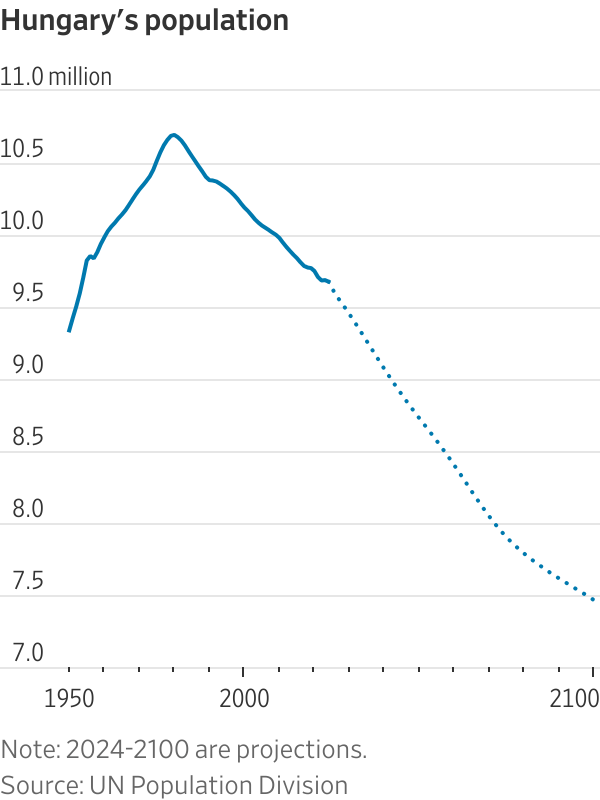
Hungary’s population, now less than 10 million, has been shrinking since the 1980s. The country is about the size of Indiana.
“Because there are so few of us, there’s always this fear that we are disappearing,” said Zsuzsanna Szelényi, program director at the CEU Democracy Institute and author of a book on Orbán.
Hungary’s fertility rate collapsed after the fall of the Soviet Union and by 2010 was down to 1.25 children for every woman. Orbán, a father of five, and his Fidesz party swept back into power that year after being ousted in the early 2000s. He expanded the family support system over the next decade.
Hungary’s fertility rate rose to 1.6 children for every woman in 2021. Ivett Szalma, an associate professor at Corvinus University of Budapest, said that like in many other countries, women in Hungary who had delayed having children after the global financial crisis were finally catching up.
Then progress stalled. Hungary’s fertility rate has fallen for the past two years. Around 51,500 babies have been born there this year through August, a 10% drop compared with the same period last year. Many Hungarian women cite underfunded public health and education systems and difficulties balancing work and family as part of their hesitation to have more children.
Anna Nagy, a 35-year-old former lawyer, had her son in January 2021. She received a loan of about $27,300 that she didn’t have to start paying back until he turned 3. Nagy had left her job before getting pregnant but still received government-funded maternity payments, equal to 70% of her former salary, for the first two years and a smaller amount for a third year.
She used to think she wanted two or three kids, but now only wants one. She is frustrated at the implication that demographic challenges are her responsibility to solve. Economists point to increased immigration and a higher retirement age as other offsets to the financial strains on government budgets from a declining population.
“It’s not our duty as Hungarian women to keep the nation alive,” she said.
Big families
Hungary is especially generous to families who have several children, or who give birth at younger ages. Last year, the government announced it would restrict the loan program used by Nagy to women under 30. Families who pledge to have three or more children can get more than $150,000 in subsidised loans. Other benefits include a lifetime exemption from personal taxes for mothers with four or more kids, and up to seven extra annual vacation days for both parents.
Under another program that’s now expired, nearly 30,000 families used a subsidy to buy a minivan, the government said.
Critics of Hungary’s family policies say the money is wasted on people who would have had large families anyway. The government has also been criticised for excluding groups such as the minority Roma population and poorer Hungarians. Bank accounts, credit histories and a steady employment history are required for many of the incentives.
Orbán’s press office didn’t respond to requests for comment. Tünde Fűrész, head of a government-backed demographic research institute, disagreed that the policies are exclusionary and said the loans were used more heavily in economically depressed areas.
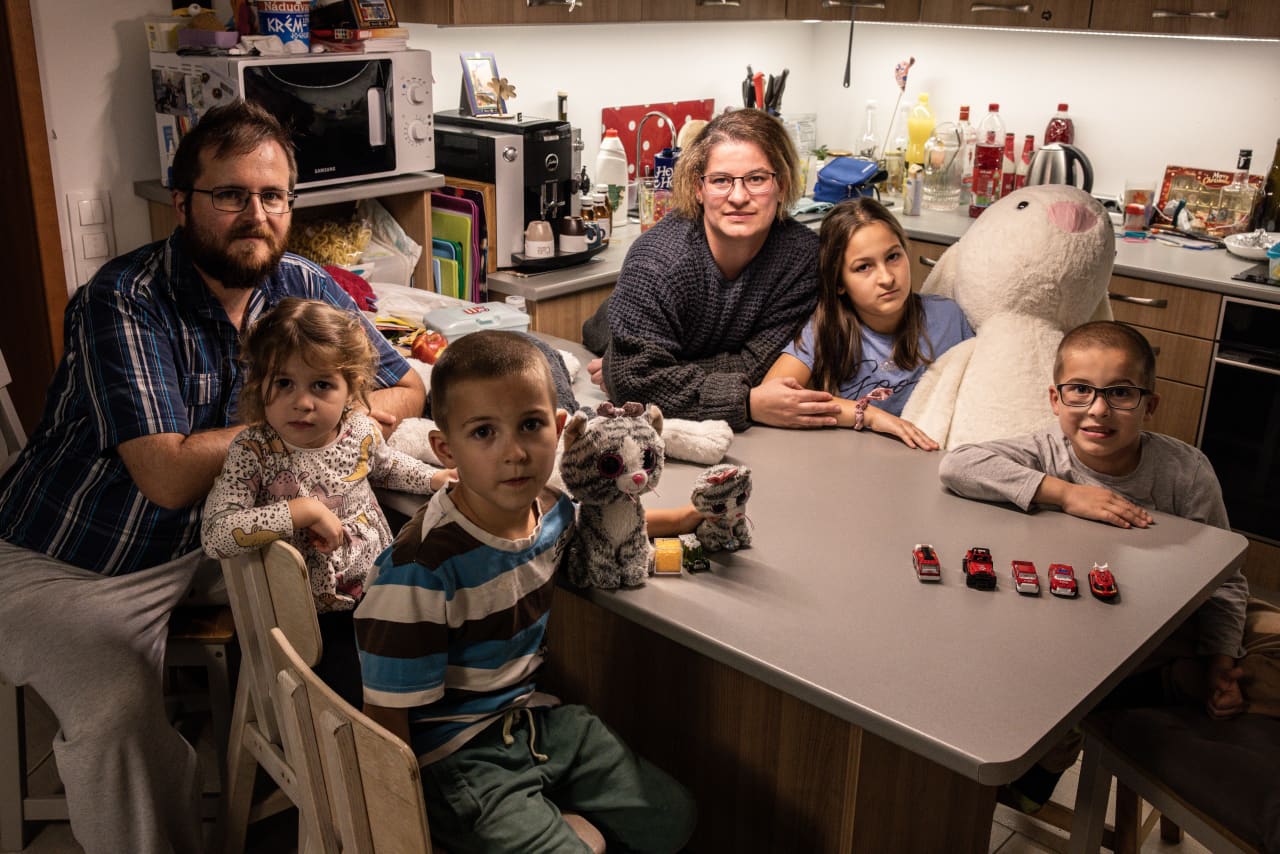
Eszter Gerencsér and her husband, Tamas, always wanted a big family. Photo: Akos Stiller for WSJ
Government programs weren’t a determining factor for Eszter Gerencsér, 37, who said she and her husband always wanted a big family. They have four children, ages 3 to 10.
They received about $62,800 in low-interest loans through government programs and $35,500 in grants. They used the money to buy and renovate a house outside of Budapest. After she had her fourth child, the government forgave $11,000 of the debt. Her family receives a monthly payment of about $40 a month for each child.
Most Hungarian women stay home with their children until they turn 2, after which maternity payments are reduced. Publicly run nurseries are free for large families like hers. Gerencsér worked on and off between her pregnancies and returned full-time to work, in a civil-service job, earlier this year.
She still thinks Hungarian society is stacked against mothers and said she struggled to find a job because employers worried she would have to take lots of time off.
The country’s international reputation as family-friendly is “what you call good marketing,” she said.
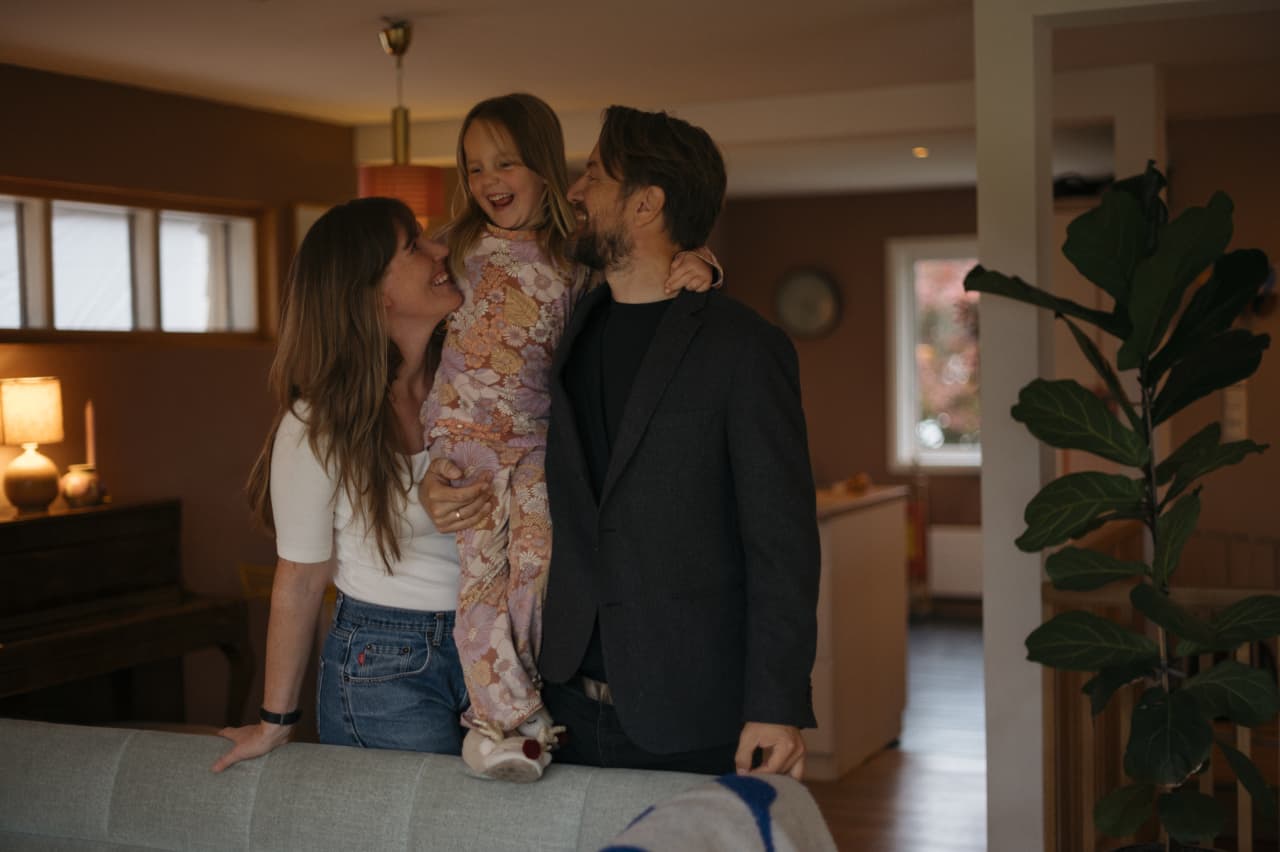
Gina Ekholt said the government’s policies have helped offset much of the costs of having a child. Photo: Signe Fuglesteg Luksengard for WSJ
Nordic largesse
Norway has been incentivising births for decades with generous parental leave and subsidised child care. New parents in Norway can share nearly a year of fully paid leave, or around 14 months at 80% pay. More than three months are reserved for fathers to encourage more equal caregiving. Mothers are entitled to take at least an hour at work to breast-feed or pump.
The government’s goal has never been explicitly to encourage people to have more children, but instead to make it easier for women to balance careers and children, said Trude Lappegard, a professor who researches demography at the University of Oslo. Norway doesn’t restrict benefits for unmarried parents or same-sex couples.
Its fertility rate of 1.4 children per woman has steadily fallen from nearly 2 in 2009. Unlike Hungary, Norway’s population is still growing for now, due mostly to immigration.
“It is difficult to say why the population is having fewer children,” Kjersti Toppe, the Norwegian Minister of Children and Families, said in an email. She said the government has increased monthly payments for parents and has formed a committee to investigate the baby bust and ways to reverse it.
More women in Norway are childless or have only one kid. The percentage of 45-year-old women with three or more children fell to 27.5% last year from 33% in 2010. Women are also waiting longer to have children—the average age at which women had their first child reached 30.3 last year. The global surge in housing costs and a longer timeline for getting established in careers likely plays a role, researchers say. Older first-time mothers can face obstacles: Women 35 and older are at higher risk of infertility and pregnancy complications.
Gina Ekholt, 39, said the government’s policies have helped offset much of the costs of having a child and allowed her to maintain her career as a senior adviser at the nonprofit Save the Children Norway. She had her daughter at age 34 after a round of state-subsidised IVF that cost about $1,600. She wanted to have more children but can’t because of fertility issues.
She receives a monthly stipend of about $160 a month, almost fully offsetting a $190 monthly nursery fee.
“On the economy side, it hasn’t made a bump. What’s been difficult for me is trying to have another kid,” she said. “The notion that we should have more kids, and you’re very selfish if you have only had one…those are the things that took a toll on me.”
Her friend Ewa Sapieżyńska, a 44-year-old Polish-Norwegian writer and social scientist with one son, has helped her see the upside of the one-child lifestyle. “For me, the decision is not about money. It’s about my life,” she said.
Emphasising a product’s heritage can be a powerful marketing tool. Think of brands like Coca-Cola or Converse’s Chuck Taylor All Star sneakers.
But the strategy could have a big drawback, according to research . When a brand emphasises its past, customers are less likely to buy its updates and innovations. A food company that heavily promotes its classic recipe, for instance, could have a tough time getting customers to buy a new variation on the product. The reluctance is particularly strong if people think the brand has stood the test of time and is authentic the way it is.
When you change an original product, it challenges why many people like the product in the first place, says Rosanna Smith, an associate professor at the University of Illinois Urbana-Champaign and one of the paper’s co-authors.
“We call it the curse of the original, and the question is how to update a product that is considered an icon without enraging your customers,” says Smith.
The shock of the new
In one part of the study, 418 participants read about a fictional hand-cream company and its top lotion. Participants were either told the company was established in 1917 with “deep roots in the old world French apothecary” or that it was established in 2017. Then the participants were either told the hand lotion was developed when the company was founded or was a new and improved version of the original.
All participants tried the same lotion and rated it on a nine-point scale, with nine being most favourable. When it came to the 1917 company, people rated the classic formula much higher than the new one: The original got a 6.68, while the new one averaged only 6.09. In other words, people didn’t like a venerable brand that tried to innovate as much as a brand that stuck to its roots.
Meanwhile, participants who were told the company started in 2017 rated the original and improved hand creams similarly.
“One big limitation of heritage branding is that it makes it harder to innovate,” says Smith. “But there are ways to lessen the effect.”
Back to basics
For instance, in another experiment, 602 participants read about Fratellino, a fictional Italian-food brand launched in 1911 when founder Martina Fratellino began selling tomato sauce from her front porch. The participants were told the brand would be improving its original tomato-sauce recipe.
The people were then divided into three groups. The control group was told the company was proud to introduce the new formula. The second group was told the new sauce was a bold departure from the original recipe, while the third was told the change was inspired by traditional techniques Martina used to create her tomato sauce in 1911 and that the change was a return to the company’s beginnings.
The authors found that participants in the control group rated the new tomato sauce less favourably than the original, giving it a score of 6.0, compared with 7.2 for the original. Simply doing something novel hurt the tradition-heavy company. The new product did even worse among people who heard that it was a bold departure: The new item got a 5.57, compared with 7.19 for the original.
But in the third group, where the change was framed as grounded in the product’s origins, the scores for the original and new tomato sauces didn’t significantly differ.
“Stressing the connection to the brand’s origins may have made the update seem more authentic,” says Smith.
It is a classic problem for entrepreneurs, job seekers and, well, anyone: If you brag about your accomplishments, you seem more competent—but less likeable.
The solution? Add a dash of playfulness when discussing your talents.
A team of researchers have found that “humourbragging”—referring to your accomplishments through a veil of humour—allows people to play up their skills without coming across as smug or conceited. And that makes them more likely to get hired or get their pitch accepted.
“The self-enhancing humour helps them be seen as confident without sacrificing likability,” says Jieun Pai , an assistant professor at Imperial College London who led the research .
Laughs get results
The researchers used a series of studies to test the impact of what they called humourbragging. In one instance, they sent out two résumés to 345 companies—but one version of the résumé added a dash of self-promotional humour instead of being purely serious: “The more coffee you can provide, the more output I will produce.” The résumés with the joke got an email or a callback by 156 companies, versus 125 for the others.
Another study got similar results when looking at humorous bragging on the first four seasons of “Shark Tank”—people who used humour to highlight their accomplishments were more likely to get funding than others.
In another case, the researchers found that study participants were more likely to hire a pastry chef who used some levity in selling themselves. One candidate described making a soccer-themed cake for a boy’s fifth-birthday party and capped off the story by saying they got the biggest tip the bakery has ever seen. The baker who was the hiring favourite told the same story, including the part about the tip, but ended up by saying, “I am just glad that I only had to make the soccer ball, not actually kick one.”
Pick your jokes wisely
People need to be cautious, though, when using humour to sell themselves, Pai says. Self-deprecating humour without any bragging at all, or humour intended to belittle others in any form, doesn’t have the same positive impact that humorous bragging does, according to the research. “We sometimes use self-deprecating humour, but that backfires and downplays your achievements,” she says. “It doesn’t help you be seen as more competent.”
Elon Musk , dressed in a leather jacket in front of adoring fans, looked like an ageing rock star on stage playing one of his greatest hits.
Robot cars are coming.
Those fans at Thursday’s event swooned as they always have as he pushed out timelines for delivering robot cars and showed what those vehicles could look like. But outside the Hollywood-area venue, it wasn’t exactly clear that everyone believed his vision for the future is as near as he says.
Tesla stock fell almost 9% Friday amid investors frustrated with the continued lack of details for how the company is going to make the very complicated transition from maker of cars to maker of robots.
In essence, Thursday night’s much-hyped product reveal became something of a Rorschach test: Supporters, who point to everything Musk has accomplished with electric cars and other industries, heard a glorious future with driverless cars and humanoid robots. Critics—mindful of previous missed goals and maybe peeved by his contentious politics —saw more smoke and mirrors.
“Let’s not get nuanced here,” the chief executive told the crowd as they peppered Musk with questions, a reminder that even among the faithful, time is ticking for him to play some new notes. And to deliver a big hit.
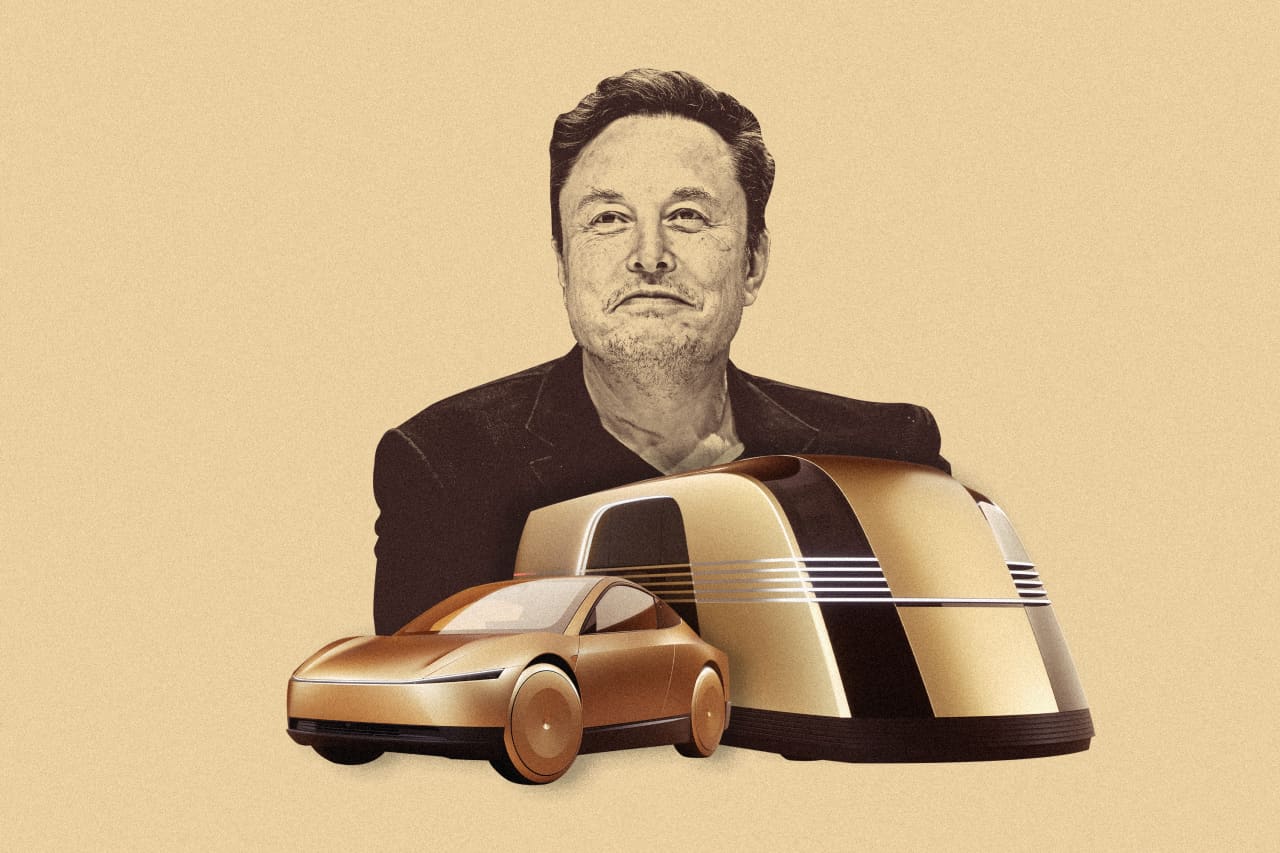
What he did show was cool. A two-seat car with doors that swung upward to open, inspired, in part, by the sci-fi movie “Demolition Man.”
Though as Musk talked about the vehicle, it wasn’t clear he had settled on a formal name. On stage, he called it the “Cybercab,” while the company released details on its website calling it the “Robotaxi.”
Whatever the name, the straight lines of the small car resembled what might be the offspring of the Cybertruck , the pickup the company brought out last year after some delays, and the new Roadster that was first revealed in 2017 and has yet to come to market. Those delays are examples of “ Elon Standard Time ,” or his practice of setting a target only to miss it.
Robot cars are coming.
The Cybercab/Robotaxi reveal also included what Musk says will be Tesla’s autonomous van, an art deco-inspired vehicle that resembled a giant toaster with an interior meant to feel like a spaceship and enough room for 20 passengers.
Like the small car, the van lacked a steering wheel—the sort of doodads currently required under regulations, though exceptions can be granted. The car could begin production “probably” in 2026, Musk said. He didn’t even suggest when the van might come.
The nearest timeline was deploying fully self-driving cars, through the company’s current offerings, next year in Texas and California.
Musk has been predicting driverless cars being just around the corner for several years, including in 2016 when he said Tesla would demonstrate a car driving itself from Los Angeles to New York City in 2017. That didn’t happen.
In 2019, he said he expected his robot taxis would arrive in 2020 . That didn’t happen.
But Tesla has pushed the envelope with its driver-assist system that is essentially a glorified cruise control—adjusting speed, keeping within a lane and other manoeuvres—but can’t technically drive the car itself. Tesla says the person behind the wheel is responsible for everything, though some drivers grow overconfident in its true abilities and act like the car is autonomous.
Musk likes to talk about how Tesla vehicles are collecting valuable real-world data that is used to train its AI systems.
After building Tesla into the world’s leading electric-car company, Musk in recent years has tried to position its future on robotics, saying it is focused on solving self-driving technology. “That’s really the difference between Tesla being worth a lot of money and being worth basically zero,” Musk said in 2022.
Despite that rhetoric, Tesla is behind in deploying cars on roadways without drivers. Alphabet ’s Waymo has deployed fully autonomous vehicles in places such as San Francisco, where paying customers can take its vehicles around the city without anyone sitting behind the wheel.
On Thursday night, Tesla demonstrated 50 vehicles, including the new two-seater, driving autonomously on private property of the Warner Bros. studios where Musk held his party for investors and supporters.
Detractors were quick to pounce.
“After over 10 years of Full Self-Driving development, Tesla is limited to a 20-30 acre geofenced 5mph 1950s Disneyland ride on a preprogrammed, premapped and heavily rehearsed route with no traffic and no pedestrians,” Dan O’Dowd , a critic of Tesla and founder of a rival software company, said in a statement. “Tesla robotaxi is nothing more than the latest work of fiction to come out of the Warner Bros. Studio.”
But Thursday night wasn’t about impressing the O’Dowds of the world. And maybe not even those watching on the livestreams through Musk’s social-media platform X—which counted more than 9 million views by Friday evening.
The real target were the hundreds of attendees at the event who spent the evening riding around in the cars and posting fawning videos of their experiences on social media, in turn, helping the event go even more viral and generating even more attention for the idea that Tesla is paving the way for a robot future.
Robot cars are coming.
Not only did party attendees enjoy rides, but they were entertained by the latest versions of Tesla’s humanoid robots Optimus, which Musk has said could one day add $25 trillion to the company’s market value.
Former Tesla board member Steve Jurvetson posted a video of himself playing rock, paper, scissors with one of the robots. “Optimus just beat me in rock paper scissors!” he tweeted .
Others shared videos of robots pouring drinks and dancing.
“The markets won’t get what happened last night at @tesla ,” Robert Scoble, a blogger and former Microsoft tech evangelist, posted on X. “I couldn’t be more impressed. @elonmusk laid out a bunch for next decade. I have been to a lot of product launches and never have been to one like this.”
Some even compared the evening to when the late Steve Jobs unveiled Apple ’s first iPhone, marking the beginning of a new technology era. It was an idea that Musk was quick to endorse.
“Yes, this marks a fork in the road,” he tweeted afterward.
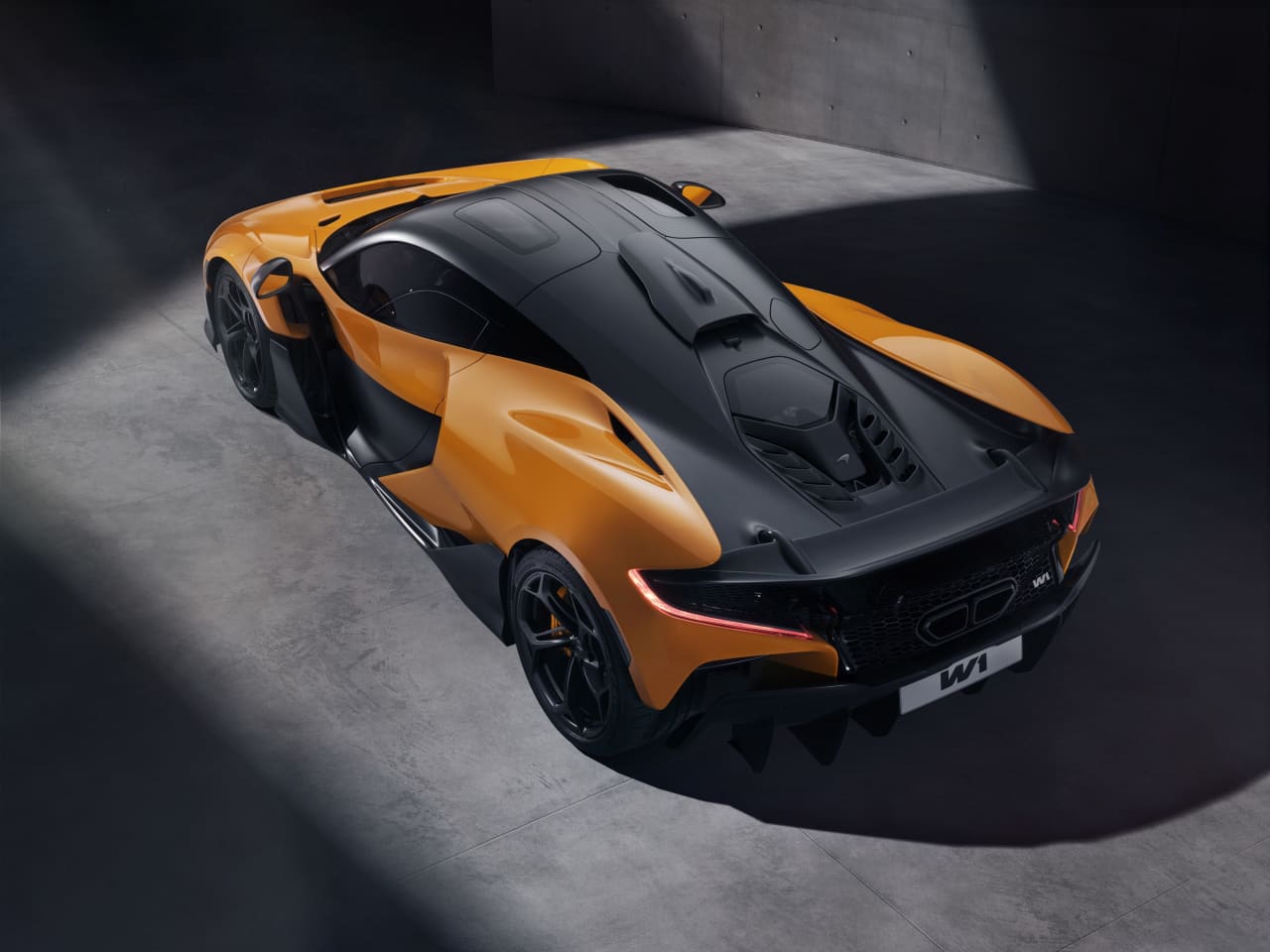
Every street McLaren since the F1 in the 1990s has been, of course, a supercar. But now the British company is hitting a new and higher mark with its W1, which has a 1,258-horsepower hybrid drivetrain—producing the most powerful McLaren to date. It’s a successor to both the F1 and the P1, and was revealed on Sunday.
Auto makers worried about the ups and downs of the battery electric car market are hedging their bets with hybrids and their plug-in variant. McLaren is no different. It has electric range, but only 1.6 miles.— he W1 will be priced at US$2.1 million, and only 399 will be sold globally. Unsurprisingly, all of them have already been allocated to customers.
Many familiar McLaren build traditions are in place, including rear-wheel drive, lightweight carbon-fibre unit construction and uplifting gullwing-type doors hinged only at the roof. The company says the W1 doors are of “anhedral” design and optimised for aerodynamics. The doors also “allow optimisation of airflow from the front wheel arches into the high-temperature radiators, providing extra cooling space that allows the size of the radiators required to cool the powertrain to be reduced, optimising packaging and saving weight.”
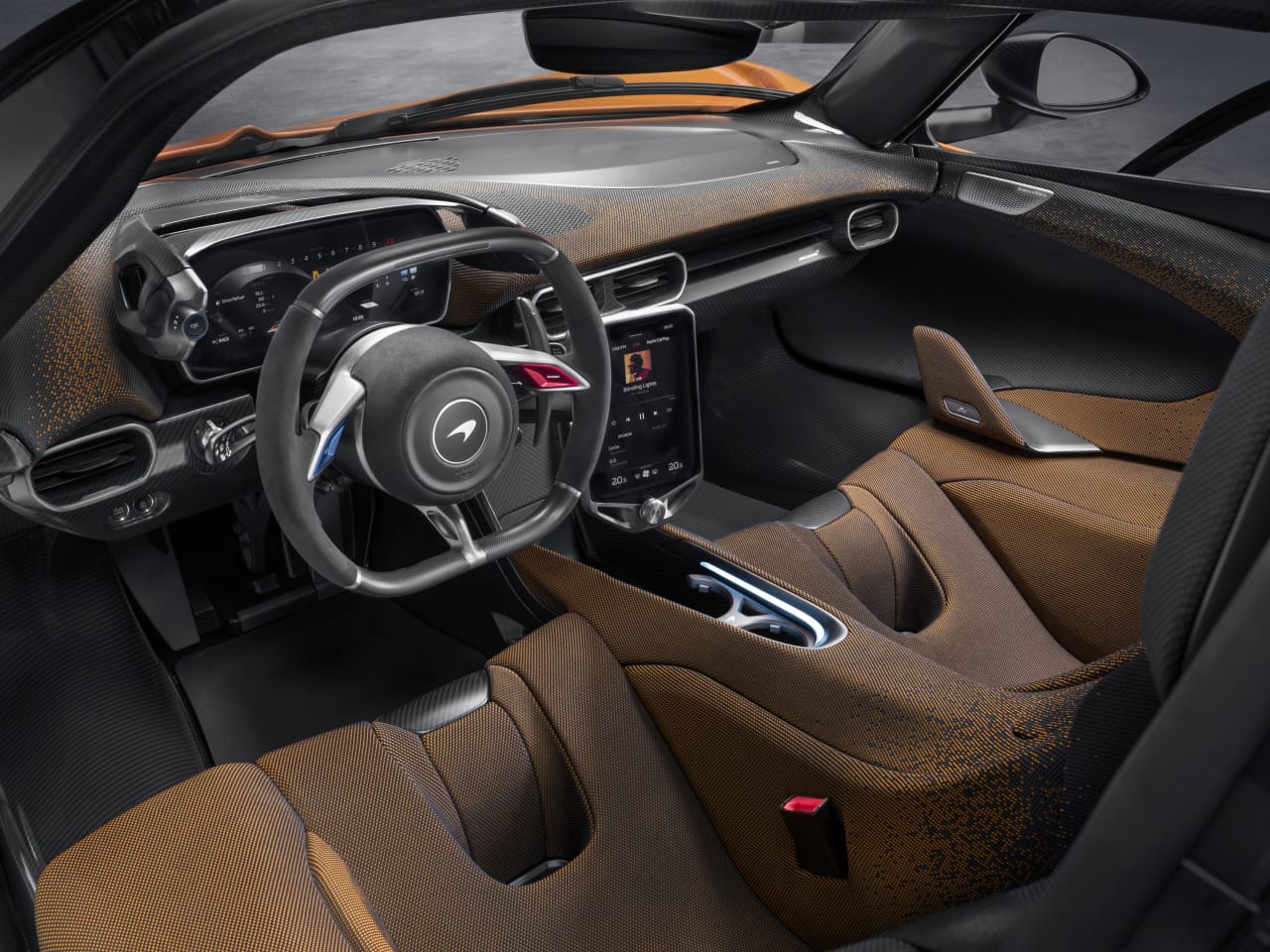
The interior carries over the two-tone colour scheme. McLaren
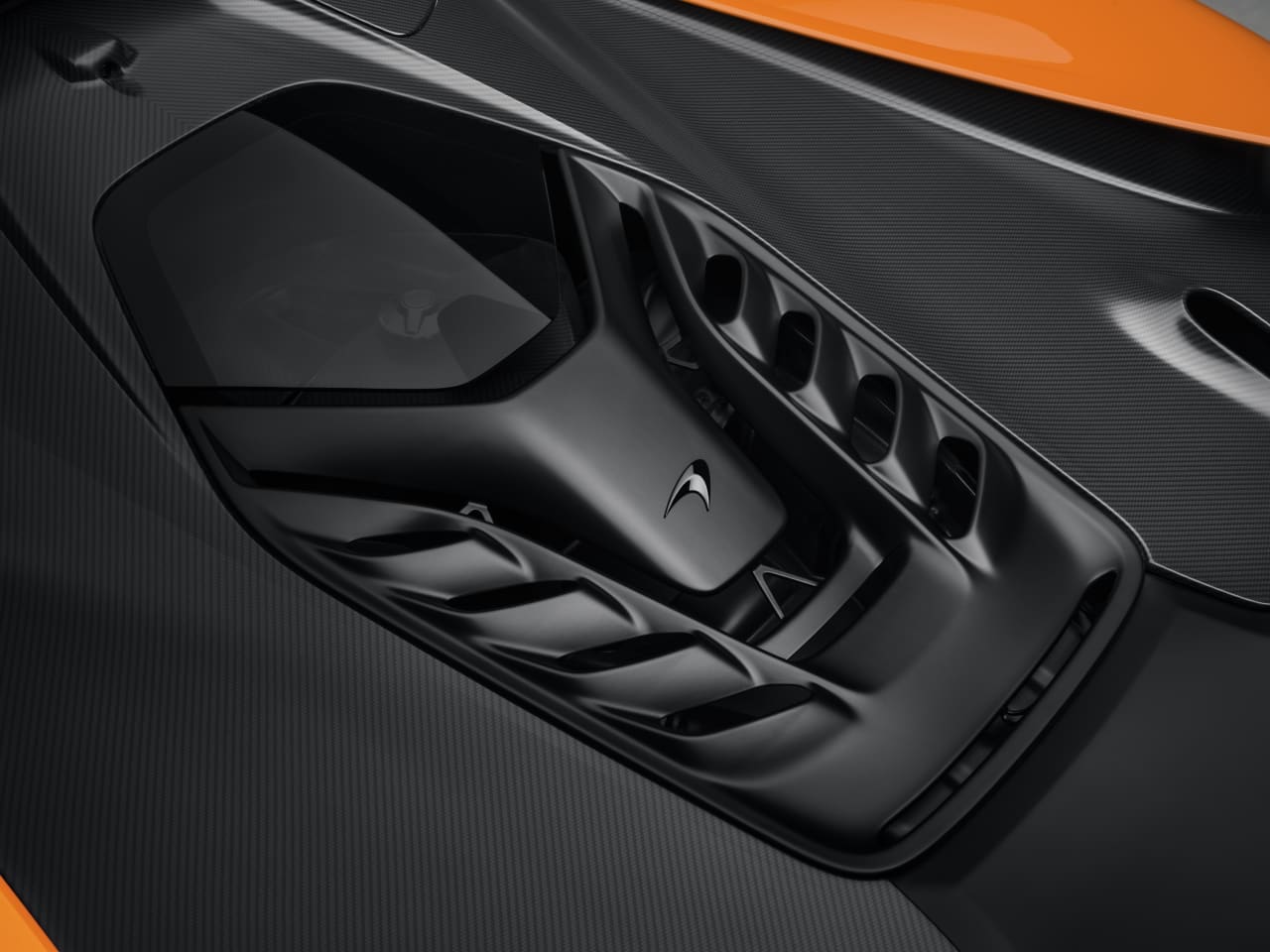
This is a breathtakingly fast car. The all-new twin-turbo, four-litre aluminium V8 engine produces 916 horsepower, and the company’s electric motor module (coupled to a 1.38-kilowatt-hour battery) adds another 342, yielding the aforementioned 1,258 horsepower and 988 pound-feet of torque. The car revs to 9,200 rpm before hitting redline, and power flows through an eight-speed transmission with electronic reverse and a technically innovative hydraulic electronic differential. In a car weighing only 3,084 pounds, this produces zero to 60 miles per hour in 2.7 seconds, zero to 124 in 5.8 seconds, and attainment of 186 mph in less than 12.7. The top speed is electronically limited to 217 mph.
The W1 is slower off the line than a US$89,990 Tesla Model S Plaid edition (1.99 seconds to 60, the company claims), but off-the-line acceleration is a big advantage of electric cars. The McLaren’s power plant is, without doubt, impressive. About that engine, Richard Jackson, chief powertrain engineer, said in a news release, “We’ve designed it to be much more power-dense than our previous V8—generating 230 horsepower per litre and capable of revving higher…with supreme driver engagement.”
The driver will have the option of choosing Race mode, which stiffens the suspension (via Race or the more bone-jarring Race+ setting) and extends downforce wings at the front and rear. The motorised wings aren’t there because they look cool—they’re capable of putting 772 pounds of downforce on the road at the front and 1,433 pounds at the back. Racing cars have to stop, so the car gets six-piston brakes up front and four-piston units in the rear. From that 124 mph, the W1 can be at a standstill in 95 feet.
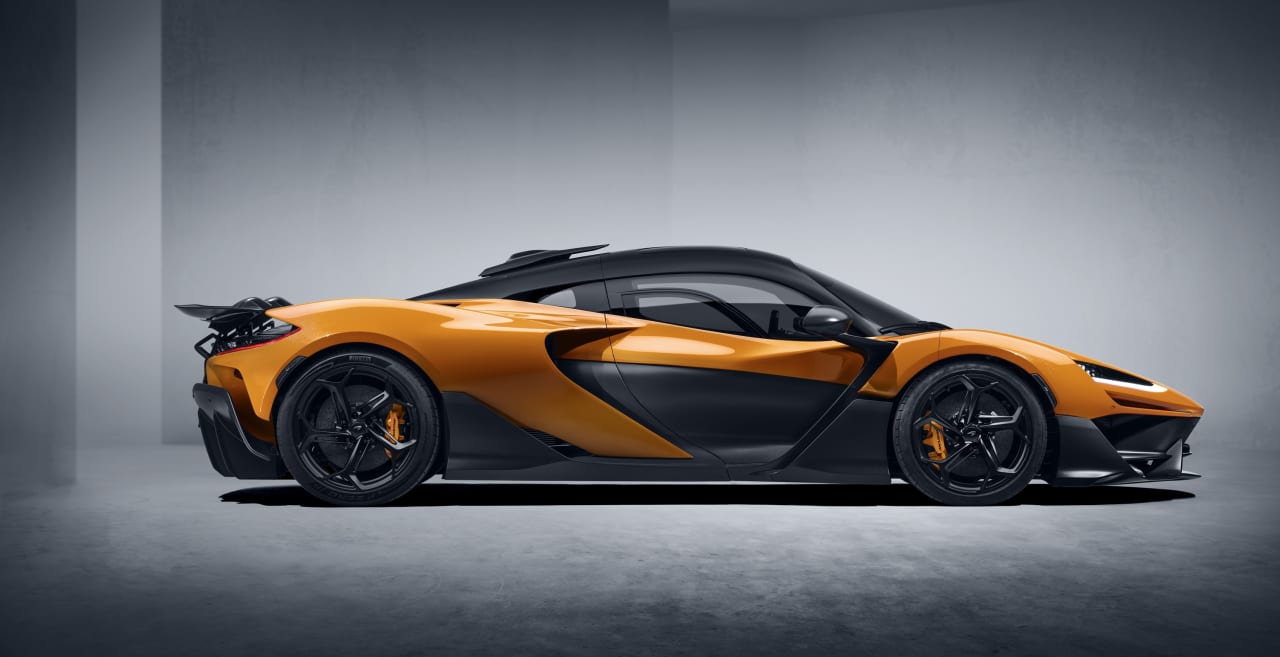
The side view-in road, not race, mode-reveals the slippery shape. McLaren
The W1 will spend a lot of its time among civilians on the road, and there’s the choice of a Comfort setting that smooths out the ride for unstressed cruising around town. Comfort uses the hybrid system only for occasional torque applications. Sport is the interim choice, with full hybrid availability and faster throttle response.
Photographs of the W1 show an exceptionally aerodynamic two-door supercar, shaped by the preferences of the wind, in a gold-and-black two-tone color scheme, with that pattern carried over into the seating. The bottom cushions are gold but the black gradually intrudes in what might be called a Jackson Pollock thrown-paint effect. The mid-mounted engine, just behind the driver, is part of the design.
The side view-in road, not race, mode-reveals the slippery shape. McLaren
In keeping with the trend toward owner customisation, McLaren says there are “virtually unlimited bespoke options” for the W1, including a new lightweight knitted-to-fit interior material called InnoKnit. The company claims that visibility is “best in class,” which is good if it means the driver can actually see what’s happening behind the supercar—a notorious issue. The driving position is said to be fairly reclined, with plenty of thigh support—useful when these cars corner at high speeds. The aluminium pedals are adjustable.
Start/stop buttons, the gear selector, window controls, and Race-mode switch are all mounted overhead the driver, with the Boost button on the steering wheel. The 8-inch centre screen offers USB-A and -C, as well as Apple CarPlay. Supercars aren’t known for storage space, but the W1 has small stowage and a sliding cup holder between driver and passenger. Weekend bags (or crash helmets) can be stashed behind the seats if the headrests are moved aside.
The W1’s fuel economy will undoubtedly be helped by its hybrid drive, but an actual figure has yet to be announced. It wasn’t a make-or-break figure for customers in this league.
Even aficionados of the marque who already own a McLaren Senna will want a W1, because it has 102 horsepower more. Keep in mind that 102 horsepower was considered perfectly adequate for British sports cars of the 1950s. In that same era, racers would drive to the track, compete, and then drive home again. The W1 appears ready to bring back that era.
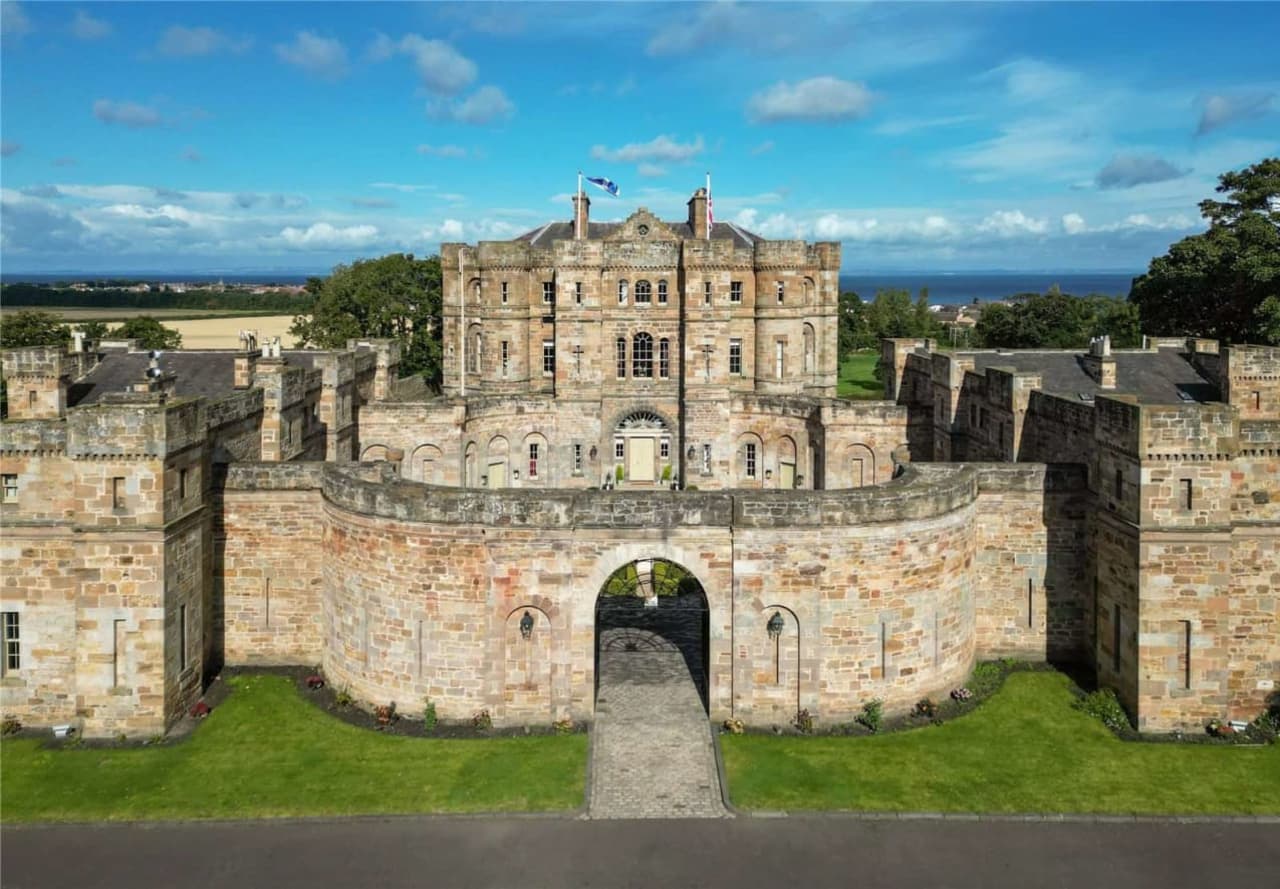
An imposing Scottish castle that has only had four owners in its more than 200-year existence has hit the market asking for offers above £8 million (US$10.45 million).
Seton Hall, as it’s known, was built in 1789 by architect Robert Adam using stone from Seton Palace, the since-demolished property that was considered to be Mary Queen of Scots’s preferred retreat, according to Savills, which brought the home to the market last month.
“Seton is an absolutely magical castle—from the moment you approach, to the inner courtyard, to the quality of interior design,” said listing agent Jessica Gwyn.
The castle—roughly 10 miles from Edinburgh—remained in the same family from the late 18th century until 2003, which “served to freeze Seton in a protective time warp,” according to the listing.
Castellated features such as slit windows and turrets can be seen from the outside, and inside “secret staircases, curved doors, curved walls, arched windows and hidden doors add to the charming sophistication of the architecture and design,” the listing said.
But the castle has since been refurbished to meet modern standards, and now also boasts a helipad, a full security system, a gym, a playroom, a silk-lined dining room and a billiards room.
The restoration project saw a team of expert stonemasons rebuild the castle’s many chimneys, turrets and rooftop parapets. Plus, ironwork was restored, the dumbwaiter reinstated and the 10,000-bottle wine cellar was brought back to life, Savills said.
Alongside the seven-bedroom home that forms the core of the castle, there are additional residences across the property, including Darnley Cottage and Bothwell Cottage—named after Mary Queen of Scots’s husbands.
The castle’s stables have been refurbished, too, and are adjacent to the “Stable Bar,” the castle’s private pub.
The owner—who Mansion Global couldn’t identify—“feels their time as custodian of this outstanding building has come to a natural conclusion and it is time for this historic home to be loved and cared for by someone else,” Gwyn said.
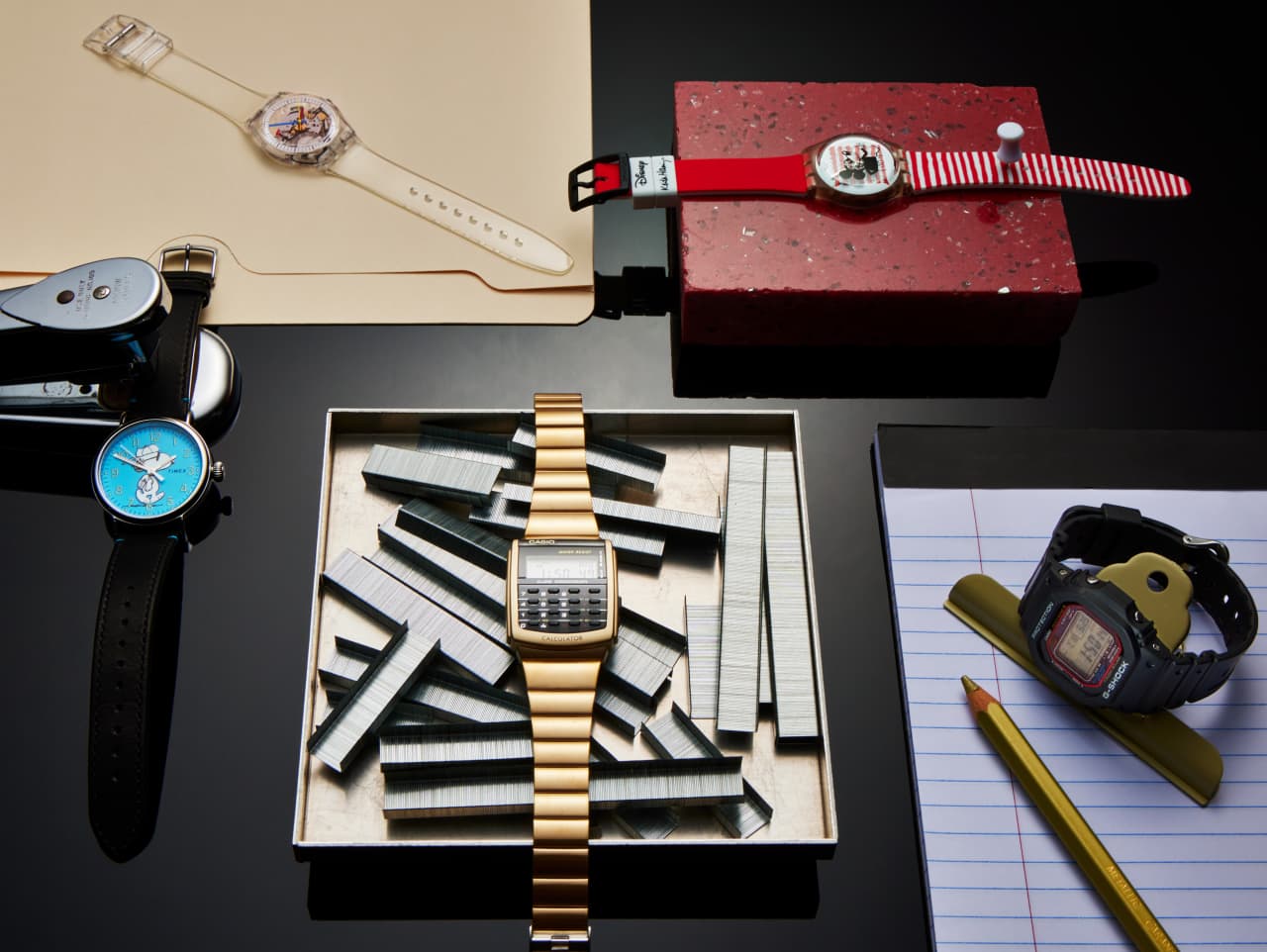
How do you tell the time? Neal W. McDonough, the COO of a finance and policy startup in Ho-Ho-Kus, N.J., looks to Charlie Brown, the loveable, miserable “Peanuts” protagonist. An illustration of the character occupies the exec’s watch dial, Brown’s stout arms acting as the minute and hour hands.
McDonough, 55, bought the kooky Timex for a Valentine’s Day trip about five years ago, along with a matching model depicting Lucy van Pelt (Brown’s frenemy) for his then-girlfriend. To his surprise, he kept wearing the $150-ish ticker after the trip. “It’s now my business watch,” he said, adding that such a non luxury model can telegraph that he’s under no obligation to be flashy. “I have nothing to prove to anyone,” he said. “And the fun thing is, a lot of people notice [my watch].”
Though finance guys famously flaunt Rolexes or Patek Philippes on their wrists, an established subspecies of money men goes the other way entirely. In place of a sleek steel case and elegant ceramic dial? Mickey Mouse. SpongeBob SquarePants. Fanta-orange rubber straps.
Over the years, highfliers have made headlines for sporting Swatches. (See: Blackstone Group CEO Stephen A. Schwarzman or former Goldman Sachs CEO Lloyd Blankfein .) That “wealthy guy, cheap watch” ethos continues to resonate in boardrooms and on trading floors, with men of all seniority levels embracing plasticky, offbeat designs, from superhero models to calculator Casios. Many resemble something you might win in a claw machine. Priced from $30 to a few hundred bucks, they’re a bit of fun and a different sort of flex, conveying an “I don’t need a Rolex” bravado that comes from having made it. Call them anti-status watches.
Patrick Lyons, the managing partner of a family office in New York, rotates two contrasting watches: a 1988 Santos de Cartier and a Nickelodeon “SpongeBob SquarePants” model with a tangerine strap.
The Cartier, a family heirloom, is a slice of French sophistication; the Nickelodeon dial features a giant image of a pink starfish named Patrick Star who lives under a rock. Lyons, 35, likes that the second watch is idiosyncratic—and that its starfish shares his name. “I wear that more often than my Cartier,” he said, adding that he hopes to pass down both models to future offspring.
Leroy Dikito, 42, an executive director at JPMorgan Chase in New York, chose his $450 “Avengers” watch from Citizen because it reminds him of his father, who loved comic books. Though its stainless-steel strap reads urbane enough, its cheerfully garish dial slices together images of the Hulk, Iron Man, Captain America and other superheroes. Working in finance, you need to be “serious all the time,” so a fun watch brings welcome levity, said Dikito. “People need to know there is more than the big job and the title.”
Since a suit can only inject so much colour, a watch offers that rare opportunity to “show off your personality,” said Eli Tenenbaum, 36, the director of corporate development for a New York private-equity firm. Plus, he noted, “If you wear a fancy watch, chances are someone else may be wearing the same one.” Tenenbaum runs little risk of twinning with a colleague when he straps on his Mickey Mouse or Snoopy Swatches, worn with premium Brioni or Zegna suits.
Evan Vladem, 37, considers his Casio calculator watch a neat “ice breaker” when schmoozing, a professional obligation for the partner at a financial advisory in Fort Lauderdale, Fla. “It came in handy to break up awkward moments,” he said of the black, $30-ish design, a Casio classic. At a dinner with an insurance partner a few years ago, he recalls, the conversation petered out after an exchange about a client’s situation, which involved some financial arithmetic. “I pulled out my wrist and said, with a smile, ‘Well, I’m happy I have my trusty calculator watch to help me here,’” said Vladem. “We both laughed. [It] kicked off another conversation.”
Even men who have invested heavily in high-end horology seem to be falling for cheap, kitschy designs. Scott Jay Kaplan, 44, a film producer and financier for Brooklyn company CoverStory, owns pricey models from Rolex and Audemars Piguet. But for daily wear he’s currently favouring a super-chunky $25 watch he bought in Argentina this past winter, a model similar to a G-Shock but by an unfamiliar brand. He says he has received a lot of compliments on it, and it has held up surprisingly well. “I bought it because it looked silly,” he said. “Not for clout.”
McDonough, the Charlie Brown fan, urges anyone considering a novelty ticker to follow just one rule: Don’t splurge. “I think the whole idea of luxury watch brands coming out with ‘kitsch’ watches is…a little bit absurd,” he said. “So anything over, say, $500 would be out.”
Prop styling by Marina Bevilacqua
The Wall Street Journal is not compensated by retailers listed in its articles as outlets for products. Listed retailers frequently are not the sole retail outlets.