ANGER DOES A LOT MORE DAMAGE TO YOUR BODY THAN YOU REALISE

Anger is bad for your health in more ways than you think.

Getting angry doesn’t just hurt our mental health , it’s also damaging to our hearts, brains and gastrointestinal systems, according to doctors and recent research. Of course, it’s a normal emotion that everyone feels—few of us stay serene when a driver cuts us off or a boss makes us stay late. But getting mad too often or for too long can cause problems.

There are ways to keep your anger from doing too much damage. Techniques like meditation can help, as can learning to express your anger in healthier ways.

One recent study looked at anger’s effects on the heart. It found that anger can raise the risk of heart attacks because it impairs the functioning of blood vessels, according to a May study in the Journal of the American Heart Association .

Researchers examined the impact of three different emotions on the heart: anger, anxiety and sadness. One participant group did a task that made them angry, another did a task that made them anxious, while a third did an exercise designed to induce sadness.

The scientists then tested the functioning of the blood vessels in each participant, using a blood pressure cuff to squeeze and release the blood flow in the arm. Those in the angry group had worse blood flow than those in the others; their blood vessels didn’t dilate as much.

“We speculate over time if you’re getting these chronic insults to your arteries because you get angry a lot, that will leave you at risk for having heart disease ,” says Dr. Daichi Shimbo, a professor of medicine at Columbia University and lead author of the study.

Your gastrointestinal system

Doctors are also gaining a better understanding of how anger affects your GI system.

When someone becomes angry, the body produces numerous proteins and hormones that increase inflammation in the body. Chronic inflammation can raise your risk of many diseases.

The body’s sympathetic nervous system—or “fight or flight” system—is also activated, which shunts blood away from the gut to major muscles, says Stephen Lupe, director of behavioural medicine at the Cleveland Clinic’s department of gastroenterology, hepatology and nutrition. This slows down movement in the GI tract, which can lead to problems like constipation.

In addition, the space in between cells in the lining of the intestines opens up, which allows more food and waste to go in those gaps, creating more inflammation that can fuel symptoms such as stomach pain, bloating or constipation.

Your brain

Anger can harm our cognitive functioning, says Joyce Tam, an assistant professor of psychiatry and behavioural sciences at Rush University Medical Center in Chicago. It involves the nerve cells in the prefrontal cortex, the front area of our brain that can affect attention, cognitive control and our ability to regulate emotions.

Anger can trigger the body to release stress hormones into the bloodstream. High levels of stress hormones can damage nerve cells in the brain’s prefrontal cortex and the hippocampus, says Tam.

Damage in the prefrontal cortex can affect decision-making, attention and executive function, she adds.

The hippocampus, meanwhile, is the main part of the brain used in memory. So when neurons are damaged, that can disrupt the ability to learn and retain information, says Tam.

What you can do about it

First, figure out if you’re angry too much or too often. There’s no hard and fast rule. But you may have cause for concern if you’re angry for more days than not, or for large portions of the day, says Antonia Seligowski, an assistant professor of psychiatry at Massachusetts General Hospital and Harvard Medical School, who studies the brain-heart connection.

Getting mad briefly is different than experiencing chronic anger, she says.

“If you have an angry conversation every now and again or you get upset every now and again, that’s within the normal human experience,” she says. “When a negative emotion is prolonged, when you’re really having a lot more of it and maybe more intensely, that’s where it’s bad for your health.”

Try mental-health exercises. Her group is looking at whether mental-health treatments, like certain types of talk therapy or breathing exercises, may also be able to improve some of the physical problems caused by anger.

Other doctors recommend anger-management strategies. Hypnosis, meditation and mindfulness can help, says the Cleveland Clinic’s Lupe. So too can changing the way you respond to anger.

Slow down your reactions. Try to notice how you feel and slow down your response, and then learn to express it. You also want to make sure you’re not suppressing the feeling, as that can backfire and exacerbate the emotion.

Instead of yelling at a family member when you’re angry or slamming something down, say, “I am angry because X, Y and Z, and therefore I don’t feel like eating with you or I need a hug or support,” suggests Lupe.

“Slow the process down,” he says.

Metallica’s European Tour Showcases Renewable-Energy Big Rigs—And Their Limits

Metallica, the band that blazed a trail for thrash metal with rugged guitar riffs and relentless drumbeats, is trying to do something similar for trucks powered by sustainable fuels.

The group, a rock music mainstay since their 1986 hit album “Master of Puppets,” is looking to burnish its bona fides on social issues by using rigs powered by fuels including biomethane and vegetable oil on its European tour this summer.

Working with European truck maker Iveco, the authors of songs including “Battery” and “Fuel” (sample lyric: “Fuel is pumping engines / Burning hard, loose and clean / And I burn, churning my direction / Quench my thirst with gasoline.”) aim to show that sustainable transportation in heavy-duty trucking is possible on European highways dotted with alternative-fuelling stations.

But the trucks’ limitations and the workarounds the band’s logistics providers are undertaking on the meticulously-planned 7,200-mile journey winding through the continent from Sweden to Spain also illustrate how far trucking is from using cleaner fuels in regular operations.

“You have limited options because of the lack of the infrastructure,” said Natasha Highcroft, a director of Suffolk, U.K.-based Transam Trucking, which provides logistics for Metallica and other bands. “We use alternative fuels as and when we can, as much as possible, but until the infrastructure is there it’s very difficult.”

The trucks run on natural gas, vegetable oil, electricity and hydrogen fuel cells, and will be hauling giant video screens, lighting and instruments across nine countries.

The workhorses of Metallica’s tour will be 10 heavy-duty trucks powered by renewable natural gas—such as methane from landfills—and four heavy-duty trucks running on biodiesel or hydrogenated vegetable oil. The trucks, dramatically decked out in Metallica’s fierce logo, can travel about 1,000 miles between refuelling.

Both fuels provide a significant reduction in emissions compared with regular diesel, although emissions experts say they aren’t nearly as clean as battery-electric or hydrogen fuel cell technologies.

The tour was due to kick off this week in Munich, Germany, and over the next two months will cover the continent from Italy and Spain in southern Europe to Denmark and Norway. The longest journey between shows, from Warsaw to Madrid, covers almost 1,800 miles.

Iveco, which is providing the eco-friendly trucks for Metallica’s tour, makes both battery-electric and hydrogen fuel cell big-rig engines, the types that governments in Europe and the U.S. are trying to press on truckers as soon as possible. But because of the lack of charging and fuelling stations on the long legs between gigs, the battery-electric and hydrogen trucks will be mostly for promotional use at concerts, said Gerrit Marx , chief executive of the Italian truck maker.

Marx said Iveco wants to highlight that renewable natural gas and hydrogenated vegetable oil are “more available and ready” than batteries and hydrogen while also being “way better than fossil diesel.”

Europe has hundreds of liquefied natural gas and hydrogenated vegetable oil, or HVO, refuelling stations. A representative for British energy major Shell , which is working with Iveco on the tour, said Metallica’s low-carbon journey wouldn’t have been possible even a couple of years ago.

Shell says its customers can access HVO in five European countries and renewable natural gas in Germany and in the Netherlands. That means that when low-carbon options aren’t available, the Iveco trucks will be fuelled with regular LNG and the HVO trucks will be fuelled with regular diesel.

A Shell representative said the Metallica tour will buy carbon credits to offset “unavoidable emissions“ generated by the low-emission trucks.

U.S. companies are also using renewable natural gas and biodiesel to reduce carbon emissions. But trucking specialists say the fuels aren’t available in sufficient quantities to power the world’s fleets, which is why regulators are pushing battery-electric and hydrogen fuel cell vehicles.

Trucking executives say the costs of operating those technologies are double or triple those of diesel and that they aren’t workable in a highly-competitive, low-margin industry like trucking.

Lars Stenqvist , chief technology officer at truck maker Volvo Group , said it is important that high-profile performers like Metallica amplify the capabilities of sustainable fuels.

Truckers will only adopt the technology when customers demand it, he said, so “This is music to my ears.”

Money Angst? You Might Consider a Financial Therapist

Do you worry a lot about higher food and gas bills? Fight with your spouse over spending splurges? Fear you’ll outlive your savings?

Some people seek to ease such money anxieties by hiring a financial therapist.

The goal of financial therapists ultimately is to help people make good financial decisions, typically by raising their clients’ awareness of how their emotions and unconscious beliefs have affected their sometimes messy experiences with money.

Needs for such help often arise following a job loss, bankruptcy or marital partner’s financial infidelity—when one spouse hides or misrepresents financial information from the other. Even something seemingly positive, such as getting a big inheritance or winning a lottery, can cause financial anxiety.

“Folks are craving help with financial well-being,’’ says Ashley Agnew , president of the Financial Therapy Association, a professional group launched in 2009.

Financial therapists tend to come from mental-health and financial-planning disciplines, and there are signs that their ranks are rising: The Financial Therapy Association has 430 members, up from 225 in 2015. Still, according to the group, fewer than 100 financial therapists have completed its certification process, introduced in 2019. You can be an association member without being certified by it.

The reason for the increased interest is clear: Many Americans are worried about their personal finances. In a survey of about 3,000 U.S. adults conducted last October by Fidelity Investments, more than one-third of respondents said they were in “worse financial shape” than in the previous year. Some 55% of those respondents blamed inflation and cost-of-living increases.

Similarly, 52% of 2,365 Americans polled for Bankrate.com  said money negatively affected their mental health in 2023. That is 10 percentage points higher than in 2022. Financially anxious and stressed individuals are less likely to plan for retirement, prior research has concluded.

Messy divorce

New York advisory firm Francis Financial hired financial therapist Allen Sakon last November to aid individual clients. Many are divorced or widowed women with complicated money problems.

Certain clients “don’t believe they have enough resources, even though objectively they do,” says Sakon, who is a certified financial therapist, financial planner and accountant. Meanwhile, others with limited means mistakenly believe “they can live as extravagantly as they want,’’ she says.

Sakon currently counsels a recently divorced woman who is struggling with her dramatically lower income and the imminent sale of the family’s suburban New York home. “Her world has been turned upside down” by a financially messy divorce, Sakon says.

Though the woman has stressful new money responsibilities, she long avoided financial decisions, according to Sakon. “A money-avoidant grown-up is typically someone who was excluded from money discussions as a child,” she says.

Sakon says she hopes to eventually help this client feel capable of making financial decisions based on her resources and the financial plan that Sakon created for her.

Nate Astle , a certified financial therapist in Kansas City, Mo., met nine times from May 2023 to February 2024 with Andrea and Gianluca Presti , a 30-something Texas couple who were having persistent spats over money. Andrea Presti , an email marketer, says she believed that “if we didn’t go to financial therapy, I was going to question our entire relationship and whether we could continue.”

The wife cites an argument over the possible purchase of an expensive new car to replace their decade-old vehicle as an example of the couple’s financial conflicts. They disagreed over whether to give up a car that still worked well.

The husband, Gianluca Presti, a music producer, says financial therapy taught him and his wife to communicate better through active listening. He says he stopped being the couple’s money gatekeeper, became more open-minded about spending—and agreed to pay up to $45,000 cash for a new car. “We have to be a team if we want to solve financial issues,” he now realises.

Astle helped the Prestis revamp their household budget as well. It now reflects each spouse’s interests by including expenditures, investments and savings.

Astle, who is also a marriage and family therapist, says he has seen his financial-therapy clients more than double to 43 since 2022.

Possible pitfalls

Still, there are possible pitfalls when hiring a financial therapist. One major drawback: Anyone can claim they are qualified to practice financial therapy.

No government agency regulates the young profession. Candidates for certification by the Financial Therapy Association must take online courses designed by the association covering financial and therapeutic techniques, counsel clients for 250 hours and pass a 100-question test. But you can call yourself a financial therapist and not be certified by the association.

Meanwhile, the cost of financial therapy varies widely—from $125 to $350 an hour, Agnew estimates. Insurance rarely covers the tab.

In addition, there is no broad evidence that financial therapy works well. No large-scale studies demonstrating the field’s effectiveness have been conducted.

Another potential downside is that financial therapists with mental-health backgrounds typically lack extensive financial-planning experience—and vice versa. It is wise to interview at least three financial therapists, experts suggest. Then, pick someone who admits the limits of their expertise.

“I am very upfront about my boundaries,” says practitioner Aja Evans , a licensed mental-health counsellor who isn’t certified in financial therapy. Evans adds that she failed the certification test but plans to take it again during 2024—and before she becomes Financial Therapy Association president in January.

She says she feels well-qualified to help clients recognise how their upbringing affects their money beliefs today. “But I am in no shape or form going to be advising you about your investments, money moves or creating a financial plan,” Evans says. For clients who want that assistance, she says, she refers them to certified financial planners and accountants she knows well.

Wasting Too Much Time on Your Phone? Tips to Regain Control—and Feel Better

We don’t always realise how many hours we’re spending on social media, racking up excessive screen time, and how it’s affecting us. Yet the act of online scrolling through news or other content that makes one feel sad, anxious, angry or worse, has become so common, it’s been given a name: doomscrolling .

Even if you’re not ready to delete your social media apps, you can  take control  of how you use them. Instead of simply letting yourself track catastrophes on X, feel FOMO while watching your friends hang out without you on Instagram, compare your bodies to those of dancing TikTokers, or feel professional jealousy toward former co-workers on LinkedIn, try these tips.

Change How You Engage

Michelle Mouhtis, a licensed therapist and social worker based in Red Bank, N.J., who specialises in counselling millennials, says passive scrolling can quickly land you in a “compare and despair” trap.

Her advice: Be more deliberate with your content consumption. Rather than doomscrolling to avoid emotions, or put off sleep, devote screen time to learning a new skill via YouTube, more information about a topic you care about or connecting with a new community.

Curate Your Content

Carefully consider how the accounts you follow affect you. If the content you’re seeing triggers envy or a sense that you don’t measure up, know that most social media apps allow you to mute people and certain topics, stopping them from appearing entirely or a lot less frequently. You don’t even have to unfriend someone to avoid their content.

Track Your Timing

Get familiar with your phone’s “Screen Time” features. Most phones will provide data on how you use them, including the number of times you pick them up each day. Both Apple and Android users can set limits on your screen time for specific apps in the settings.

Although you can override the prompt that pulls the plug and keep scrolling, Mouhtis said the alert still helps. “Having that added step, where you have to manually allow another 15 minutes slows you down.”

Delete, Delete, Delete

Just because you’ve downloaded an app once, doesn’t mean it has to be on your home screen forever. If you find that using any given app at specific times of the year (like the holidays) triggers unhealthy thought loops, delete it from your phone. You can always download it again.

For apps you decide to keep, Mouhtis recommends turning notifications off. Your “likes” will still be there even if you aren’t notified of them in real time. You can also turn off all notifications by using the “Do Not Disturb” function.

Put the Phone Down

Much of social media engagement—Instagram “likes,” LinkedIn shares and the ping of a DM notification—cause our brains to produce dopamine. The chemical is associated with temporary bursts of pleasure, says Mouhtis, unlike serotonin, which is linked to longer-lasting feelings of happiness.

To avoid the chase of that high, take on things that make it physically impossible to scroll. Offline activities like cooking, crocheting, biking and rollerblading suit this purpose, but even an episode of a TV show, Mouhtis points out, ends eventually, unlike your TikTok or Instagram feeds’ infinite scroll.

The Highest Paid CEOs of 2023

The chiefs of America’s biggest companies reached new pay heights in 2023 as stock awards swelled the value of compensation packages.

Half of the executives in a Wall Street Journal analysis made at least $15.7 million, a record for median CEO pay in the annual survey, with several making more than $50 million . Median pay for the same companies a year earlier was about $14.5 million .

Most of the executives received year-over-year raises of at least 9%—one in four got 25% or more—and most companies recorded annual shareholder returns of at least 13%, the Journal found in an analysis of data on more than 400 companies from MyLogIQ , a provider of public-company data and analysis. (See the full ranking below.)

Eight tech executives ranked among the 25 top earners, as did five each heading financial companies and media or entertainment companies.

Hock Tan , the highest-paid CEO in the Journal’s analysis at $162 million, has to stay on the job for five years and Broadcom ’s share price must reach certain targets after October 2025 to get the full value of most of his pay. Broadcom said the company has outperformed competitors under Tan, its CEO since 2006, and he won’t get more equity or cash bonuses for five years.

Pay for Nikesh Arora at Palo Alto Networks totalled $151 million, mostly in equity awards that included shares granted over three years.

Blackstone , where Steven Schwarzman made $120 million, said the company’s 83% total return surpassed U.S. asset managers last year and described its pay structure as aligning executive incentives with those of investors.

Christopher Winfrey of Charter Communications , the cable operator, received total pay valued at $89.1 million, largely in options and stock vesting over five years, and much of it only if the company’s shares rise 28% to 152% from when the grants were made.

A $30 million one-time retention and leadership award that vests over five years helped boost total pay for Fair Isaac ’s Will Lansing to $66 million. The company said its shareholder returns ranked among the top 1% of companies in the S&P 500 over the past decade.

Stock gains

Equity awards continued to make up the bulk of most executives’ pay, much of it structured to deliver more stock or options if the company meets financial or share-price performance over several years. That means the pay can lose considerable value if the company’s share price falls or operating targets are missed—or soar in value amid market and operating success.

Restricted stock awarded in early March last year to Jensen Huang , CEO of graphics-chip maker Nvidia , quadrupled in value through late January, to $107.5 million. Huang’s pay, originally reported at $34.2 million , included $26.7 million of restricted stock as valued at grant.

Under the terms of the award, Huang could receive 50% to 100% more shares than originally targeted if the company meets performance criteria, according to Nvidia’s proxy.

Nvidia’s share price tripled during the year.

Brian Niccol , CEO of restaurateur Chipotle Mexican Grill , received stock and options valued at $15.5 million when they were granted in February 2023 as part of a $22.5 million pay package. By the end of the year, that equity had more than tripled in value, to $52.2 million, the company said. Chipotle shares returned about 65% during 2023, and 18% a year over three years.

A Chipotle spokeswoman said the growth in Niccol’s equity-award value reflects the company’s strong share-price performance during the year. The company said the value Niccol ultimately realises depends on continued financial, operating and stock-market performance by the company.

Intel CEO Patrick Gelsinger ’s equity awards last year also more than tripled in value by year-end, to $39.3 million. The company said in its securities filings that austerity measures last year reduced Gelsinger’s salary by about 15% to $1.1 million, which in turn reduced his cash bonus target by about 15%, to $2.9 million.

Overall, median cash pay for CEOs, including salary and annual bonuses, remained flat at about $3.8 million.

Top performers

Pay for CEOs running the best- and worst-performing companies didn’t vary dramatically. Median total pay was $14.6 million for the 20% of CEOs whose companies recorded the worst returns compared with other companies in the same sector, and $15.7 million for CEOs at the best-performing companies.

Chip and computer hardware makers accounted for six of the 25 best-performing companies—including Nvidia, the top performer—while four were in the travel or transportation industries. Several of the top performers bounced back from one or more years of poor returns, often tied to the pandemic.

Royal Caribbean Group reported paying Jason Liberty $17.2 million and recorded a total return of 162% last year, after posting minus 36% in 2022 and minus 43% in 2020, when the cruise industry was battered by illness and travel bans. (The company posted a 3% return in 2021.) Ride-sharing giant Uber Technologies recorded a 149% return after posting returns of minus 41% in 2022 and minus 18% in 2021.

Chip maker Advanced Micro Devices , ranked seventh by one-year performance, was headed by Lisa Su , the second-highest-paid woman in the analysis, at just over $30 million, including nearly $28 million in restricted stock and options. The highest-paid woman, at $31.55 million, was Julie Sweet of consultant Accenture , which posted a one-year total return of about 14%.

Thirty-one women ran S&P 500 companies for the full year of 2023, up from around two dozen at the beginning of the decade. None ranked among the top 25 by pay. One other woman ran one of the 25 best performers: Jayshree Ullal at networking company Arista Networks , which posted a 94% return. Ullal’s pay totalled $15.56 million.

Bottom of the pack

Among the 25 worst-performing companies in the Journal analysis, nearly a third operated in the healthcare sector, including six pharmaceutical or biotech companies. They were joined by four utilities.

Pfizer said it didn’t pay bonuses to top executives last year after weak demand for Covid-related products led the company to miss financial targets. The $17.5 million equity award that made up most of CEO Albert Bourla ’s total pay last year is meant to recognize his leadership and give him an incentive to focus on long-term strategy, the company said.

Poor performance can slash the value of CEO equity awards. Covid-vaccine maker Moderna reported total pay of $17.1 million for CEO Stéphane Bancel last year, including $12.5 million in stock and option awards.

The value of those awards fell 42% to $7.3 million at year-end, the company’s proxy shows, as Moderna’s stock price tumbled about the same amount for the year. In addition, equity awards made to Bancel in prior years fell in value by about $167 million during 2023.

Those losses offset a net $945 million in new equity awards and increases in value reported for Bancel during the prior three years.

Moderna declined to comment.

Methodology

The Wall Street Journal used data from corporate proxy statements filed through May 16 by companies in the S&P 500 index with fiscal years ended after June 30, 2023. The data was collected by MyLogIQ, a provider of public-company data and analysis.

Aggregate pay and shareholder-return figures exclude companies that changed CEOs or fiscal-year-end dates during the year.

Pay reflects the value of equity awards at grant, as reported by companies. Total returns reflect stock-price change and dividends, in most cases calculated from the month end closest to the company’s fiscal-year end.

Sources: MyLogIQ (compensation); Institutional Shareholder Services, FactSet (shareholder return); Standard & Poor’s (industry groups); company filings (pay for select companies)

Scarlett Johansson Rebukes OpenAI Over ‘Eerily Similar’ ChatGPT Voice

Actress Scarlett Johansson criticised OpenAI over a ChatGPT voice she says is “eerily similar” to her own.

The tech company said Monday it was pausing use of the voice, known as Sky, so it could address questions about how it chose the ChatGPT voices. Many people online have drawn comparisons between Sky and Johansson, who voiced an artificial-intelligence assistant in the 2013 sci-fi romance “Her.” The actress said in a statement her closest friends couldn’t tell the difference.

Johansson said OpenAI Chief Executive Sam Altman wanted to hire her last year to provide her voice for ChatGPT’s current system. She declined. When the actress heard Sky, one of five voices the company offers for its AI tool, she said she was “shocked, angered and in disbelief” that Altman would use a voice so similar to hers.

Johansson said her lawyers asked Altman and OpenAI for more details on how they created Sky.

“In a time when we are all grappling with deepfakes and the protection of our own likeness, our own work, our own identities, I believe these are questions that deserve absolute clarity,” Johansson said.

The voice of Sky was never intended to resemble Johansson, Altman said in a statement Monday evening.

“We cast the voice actor behind Sky’s voice before any outreach to Ms. Johansson,” he said. “Out of respect for Ms. Johansson, we have paused using Sky’s voice in our products.”

In a blog post Sunday, the company said it picked the five voices from more than 400 submissions from actors, looking for voices that sounded timeless and were easy to listen to.

OpenAI said Sky was the natural voice of another actress whom it hired and wasn’t an imitation of Johansson. It wouldn’t name the actress, citing privacy reasons.

The conflict with Johansson adds to the challenges confronting OpenAI, which has been sued by authors, artists and media companies for allegedly using their material without permission or payment. It also serves as a distraction at a time when OpenAI is trying to highlight new products and move beyond its leadership crisis last fall, when the company’s then-board of directors fired Altman for failing to be “consistently candid.” Altman was quickly reinstated as CEO.

OpenAI announced an updated ChatGPT voice feature a week ago. It builds on a product released in September that allows users to talk to its AI tool instead of type and hear responses in five different voices. OpenAI said users can have a more humanlike conversation with the new version, which responds almost instantaneously and can switch quickly between emotional tones.

The updated feature is part of a new AI system , called GPT-4o. It is the company’s latest attempt to attract more users and dominate the market for generative AI technology. The feature will be available to users who pay for ChatGPT-Plus, which costs $20 a month.

At the announcement last week, Altman likened the voice feature to something only seen in movies.

The CEO said in a speech last year that he and other OpenAI executives found inspiration in “Her,” which starred Joaquin Phoenix as a lonely man who falls in love with the voice assistant Samantha, voiced by Johansson. OpenAI employees posted references to the movie on X after the May 13 voice announcement. Altman posted a one-word tweet : “her.”

—Deepa Seetharaman contributed to this article. 

We’re Spending Billions on This Work-From-Home Indulgence

Click. Scroll. Add to cart. Now toggle back to that Zoom meeting.

On our remote days, it turns out, we shop while we work. Researchers say it’s driving billions in online sales. There we all are, browsing everything from toothpaste to concert tickets while nodding along on a video call , keying in credit-card info in between dashing off emails to the boss.

Shopping away our entire workday is obviously a bad move. But indulging in a little isn’t going to tank productivity. We pause and procrastinate at the office, too, in ways that are acceptable there. At home, we gather around clothing reviews like we’re hanging out at the office water cooler, and tick errands off our list via Target.com.

With no one looking over our shoulders, we can puncture the monotony of another vanilla workday with the dopamine high of finding the perfect pair of shoes. Even if we might sometimes regret it.

“I wouldn’t have bought this stupid thing if it weren’t for All Hands,” Megan Morreale , a content marketer in New Jersey, thought to herself after purchasing an influencer’s branded candle during a companywide meeting. Bored or between calls, the 32-year-old scrolls Instagram, TikTok and YouTube. Days later, subpar art supplies or a viral dress that really doesn’t suit her land on her doorstep. Oh well.

“It’s a little bit of fun during the day,” she says, without the fear you’ll look like a slacker At the office, she would never. “All the guilt is completely gone when you work from home.”

A $375 billion boost

Our collective retail therapy adds up. New research from Stanford University, Northwestern University and the Mastercard Economics Institute, the payments company’s research arm, finds the pandemic prompted a rise in online shopping that’s persisted. Last year, for example, we spent $375 billion more than we would have otherwise, the report estimates.

The brunt of that bump is being driven by people working hybrid or fully remote schedules, says Nick Bloom , a Stanford economist and co-author. County-level data shows that in areas where work-from-home jobs are prevalent, online shopping is up, while it’s back to pre pandemic levels in places where more folks work in-person.

Along with walking the dog and getting a jump on dinner, workday shopping is a way to make efficient use of our time, Bloom says, and take advantage of the fact that we have more control over it at home.

“People just can’t work continuously without taking a break,” he says.

Get away without leaving your desk

At home, there’s freedom and time, but also often inertia.

“There’s no coffee break, there’s no somebody’s birthday,” says Ace Bhattacharjya , chief executive of a company that helps folks access their medical records.

Instead, there’s perusing a limited-edition sneaker drop, or collectible figurines on eBay, Bhattacharjya says, recalling some of his recent scrolling. Everything in stores looks the same these days, he finds, but online he can jump down a rabbit hole into random micro communities and inspiration. Turning his attention from the work on his computer monitor to e-commerce on his iPad Pro gives him a jolt of creativity and energy.

Besides, the lines between work and everything else have grown hazy. Bhattacharjya’s hours bleed into the weekends. That can feel like permission to wedge some personal stuff into the workweek.

Ooh, a sale!

Weekly online spending peaks from 10 a.m. to 1 p.m. on Fridays , as the workweek slows to its languorous end, data from Adobe shows. More than a quarter of women surveyed last year by shopping portal Rakuten said they typically shop online during work hours. For Gen Z, the share was 41%.

Jenny Hirschey , who runs an Instagram jewellery shop from St. Paul, Minn., was surprised to find about 80% of her sales are made during the workday.

“I get comments all the time like, ‘I’m running to a meeting but this heart charm is mine! Sold! I’ll pay you in 30 minutes,’” she says.

Big retailers have noticed the trend, too, says Liza Amlani , a retail consultant and adviser based in Toronto who’s worked with companies like Under Armour and Lands’ End.

Some of her clients are timing things like product drops and marketing emails around noon or 3 p.m.

“We know that you’re on your computer,” captive and craving a pick-me-up, she says.

Retailers have also ramped up their investments in online tech, and are flooding their websites with more product, she adds. Algorithm-powered recommendations are getting so powerful it can feel like they know your subconscious desires before you do. Oh, and did you forget about that item you halfheartedly popped in your cart? Here’s 20% off.

“You’re getting so much more of that reminder and that call to buy,” says Nancy Wong , a consumer psychologist at University of Wisconsin-Madison.

The seduction of online shopping

Bricks-and-mortar browsing comes with unknowns and annoyances: traffic en route, long lines at the store, finding out what you want isn’t in stock.

In contrast, Wong says, clicking the buy button online brings a satisfying certainty, and a double hit of pleasure. There’s the immediate high of plucking the item from the virtual shelf—then, the anticipation of its arrival. Sure, that gadget might be a flop once it gets here. But it’s on its way.

“It’s so seductive,” says Michelle Drapkin , a therapist in New Jersey who works a hybrid schedule.

When she worked for a big healthcare company years back, she’d never dream of pulling up Amazon on her office computer.

On her work-from-home days now, she’ll sometimes flop on her bed with a laptop and check purchases off her to-do list. It’s relaxing, she says. “I can do something different than work that’s still productive.”

Some purchases, like groceries, keep her household running. Others, like a new dress for a Kentucky Derby party, feel like a treat.

By the time the purchase arrives, though, she’s usually forgotten what’s inside the box.

The Properties High Interest Rates Can’t Touch

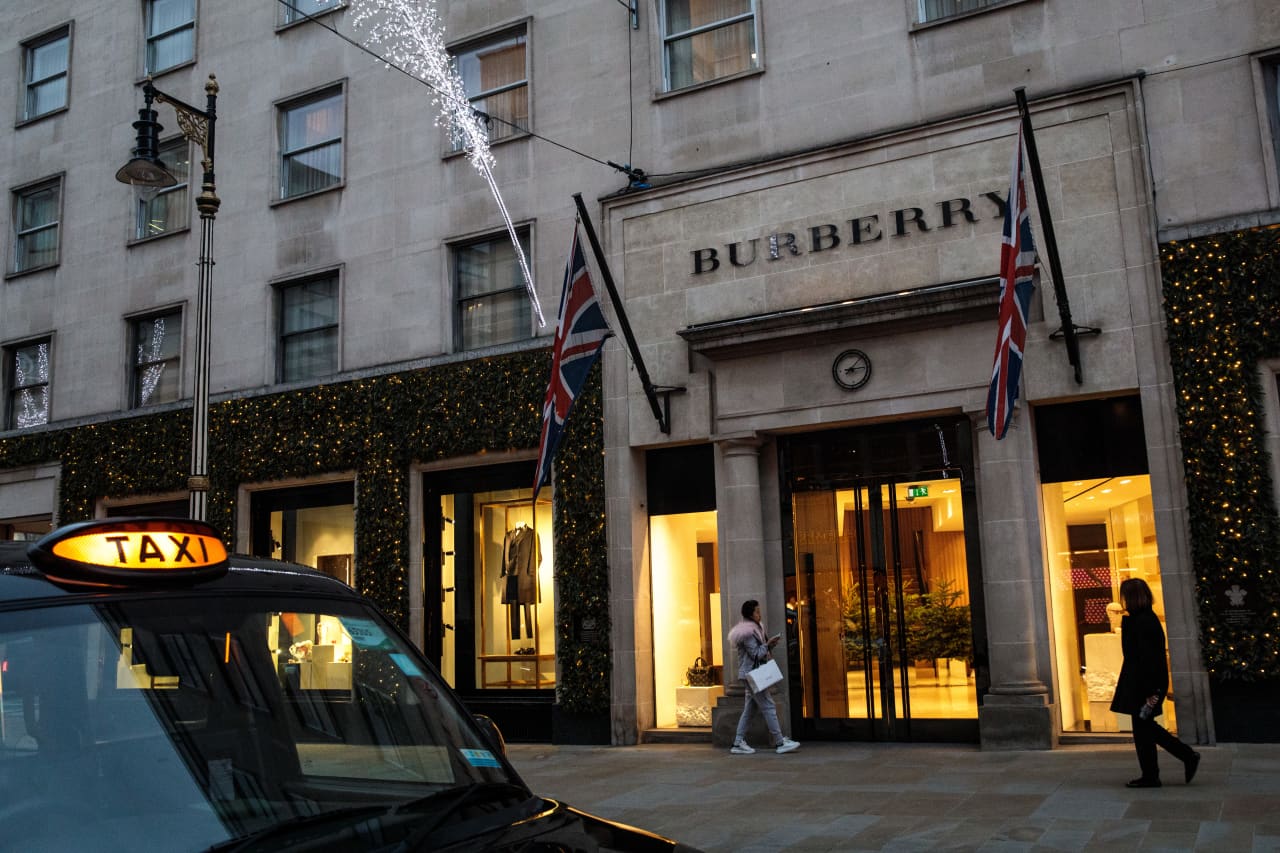
Don’t expect any fashion bargains on Rodeo Drive in Beverly Hills, or New York’s Fifth Avenue. And property on these famous luxury shopping streets looks as overpriced as the clothes.

While the average commercial building is worth 20% less than in 2022, the world’s most exclusive shops have barely been touched by the highest U.S. and European interest rates in two decades.

Cartier’s Swiss owner, Compagnie Financière Richemont , recently bought a property on London’s Bond Street at a rock-bottom 2.2% rent yield. Similar to the way bonds work, the lower the rent yield, the richer the price paid. The Bank of England’s base rate is around double this level. Most investors these days wouldn’t buy real estate that generates less income than the cost of debt that might be used to purchase it.

Last month, Blackstone sold a luxury store on Milan’s Via Montenapoleone to Gucci owner Kering for a similarly eye-catching price. The building was part of a portfolio of 14 properties that Blackstone bought in 2021 for 1.1 billion euros, equivalent to roughly $1.2 billion. Kering coughed up €1.3 billion, or about $1.4 billion, for the Via Montenapoleone building alone, equivalent to a 2.5% rent yield.

The private-equity firm is understandably eager to do more deals like this, and has since bought another luxury store in London. It is a surprising focus for Blackstone, which for years steered clear of retail property.

Luxury rents are resilient, but they aren’t rising fast enough to justify such hefty price tags for the buildings. Last year, rents increased 3% on Rodeo Drive and were flat on Upper Fifth Avenue, according to data from Cushman & Wakefield .

What luxury retail properties do offer is scarcity. London’s Bond Street has 150 individual buildings, according to real-estate consulting firm CBRE . But because luxury brands are fussy about where they will open a flagship store, only around two-thirds of the street is considered posh enough, limiting their options.

Supply is even tighter on New York’s Fifth Avenue, where just four or five blocks of the six-mile avenue are ritzy enough to lure the world’s most expensive brands. The luxury shopping district of Rodeo Drive in Los Angeles has fewer than 50 individual buildings.

This creates intense competition for both space and ownership. The world’s biggest luxury company, LVMH , has more than 70 brands that need a foothold on prominent shopping streets. Increasingly, LVMH’s answer is to buy the best locations. The Paris-listed company owns at least six properties on Rodeo Drive and six on London’s Bond Street.

Luxury brands see their flagship stores as marketing tools. Counterintuitively, e-commerce has made its physical locations more important. Labels including Christian Dior have opened restaurants and mini museums in their boutiques to give shoppers an experience they can’t find online.

When they are investing this much money in refurbishments, it makes more sense to own than to rent . Luxury brands have spent more than $9 billion buying boutiques since the start of 2023, according to a Bernstein analysis, and they control increasingly larger tracts of major shopping districts. Back in 2009, brands owned 15% of the buildings on London’s Bond Street, says Phil Cann, an executive director at CBRE. Today, their share has jumped to 30%.

Luxury labels also need to avoid being kicked out of a property by a rival-turned-landlord, which is happening more often. British handbag maker Asprey was given its marching orders by Hermès on London’s Bond Street. The French brand bought the building that Asprey occupied since the 1840s and wants to convert it into an Hermès flagship. Rolex recently bought a store that is rented out to Patek Philippe, although its competitor doesn’t need to move out any time soon as there are still several years left on the lease.

Most luxury stores are still in the hands of sovereign-wealth funds or rich families who might have owned the buildings for decades. Given the enticing prices that brands are willing to pay despite high interest rates, more are considering cashing out.

Landlords from Hong Kong, who began parking their cash in luxury stores around 2010, are among those selling up. New York real-estate investor Wharton Properties also sold two Fifth Avenue buildings to Kering and Prada this year at very high prices that were equivalent to 2% rent yields. Wharton is experiencing some distress in other parts of its portfolio, so it might have needed to raise funds.

Luxury brands made huge amounts of money during the pandemic. Richemont currently has more than €7 billion of net cash sitting on its balance sheet. Merger and acquisition activity has been quiet, so real estate might be the next-best thing to pour their riches into.

Property deals on the world’s most expensive streets will continue to operate in their own twilight zone, no matter what central bankers do next.

Homes in Bath, England, Feature Heavily in ‘Bridgerton’—and Command Robust Demand in Real Life

Bath has long been known for its genteel pleasures and civility.

It came to prominence 2,000 years ago as a religious spa where people worshiped the Roman goddess Sulis Minerva and bathed in the natural thermal spring waters that still flow with hot water today. In the early 1700s it re-emerged as a spa resort, attracting fashionable society as resident Jane Austen observed in her novels.

The city has come to the fore yet again thanks to the Netflix series “Bridgerton,” since many of its well-preserved heritage sites, stone-flagged streets and wisteria-clad mansions form a glamorous backdrop to the show’s high-society Regency world.

For instance, the city’s Holburne Museum acts as Lady Danbury’s townhouse. No. 1 Royal Crescent was used as the Featheringtons’s London home, while the Abbey Deli on Abbey Street was transformed into the Modiste dress shop, and Bath Assembly Rooms served as the venue for Lady Danbury’s ball in the first season. Glimpses of Bath, particularly its City Centre neighbourhood, are back as the first part of season three was released on Thursday.

Boundaries

Bath lies in the River Avon valley 97 miles west of London, between the Cotswold Hills and the Mendips. To the north, the city centre is bounded by Lansdown Road, to the east by the A46 highway, and the south by the A36 and the end of the Lower Bristol Road to the A4 highway. The river runs through the city, dividing it north from south, and there are four main bridges. The Roman Baths lie at the heart of the city, close to the great medieval church, Bath Abbey. The most iconic streets—some of which featured in “Bridgerton”—are the Royal Crescent and the Circus, which are a short walk from the baths and feature sweeping classical facades.

Price Range

David Mackenzie, partner at broker Carter Jonas, said the typical house price is £900,000 to £1 million, reaching up to £6 million for more expensive properties.

One- and two-bedroom apartments fetch between £200,000 to £400,000.

Prime prices cost about £1,000 per square foot, said Savills property consultant Christine Penny.

Housing Stock

Since Bath is a Unesco World Heritage City, its historical environment is protected, so it does not expand. The centre contains tall Georgian townhouses, while there is more modern housing on the infill sites created when the city was bombed during World War II. A Georgian townhouse usually has five stories and 100 stairs.

“They were built with entertaining in mind with large reception rooms, grand proportions, high ceilings, big windows and fireplaces. They have a doll’s-house look,” Mackenzie said. “Many have railings at the front and wrought-iron balconettes.”

The city is famous for its townhouses, like this one, on the market for £3.45 million with Carter Jonas.
Carter Jonas

Parking is at a premium; the Georgians built stables and coach houses at the back of properties but many have since been converted into residences. A garage can cost as much as £200,000 and a secure car-parking space £100,000.

Bathwick Hill and Weston Park also feature Regency villas that are individual in style, unlike the uniform feel of the monumental Georgian terraces.

“The Grand Tour of the day inspired the architects of that era because a lot of the houses will have beautiful pediments and columns that are almost Grecian in feel,” Penny said.

Villas are usually 5,000 to 6,000 square feet in size set within grounds of 0.5 to 1 acre. Such properties are rare, coming on the market once a year and can command between £3 million and £10 million.

What Makes It Unique

“Bath is a lovely mix of town and country life because it is such a small city, added to which it is very beautiful and very safe,” Mackenzie said, calling out the several bodies of water that cut through the city.“It’s very historic, but more recently what has attracted people to Bath is that it’s got very good schools and the University of Bath.”

This home in Bath is on the market for £4.895 million with Savills.
Savills

Former radio producer Penny Faux and her composer husband, Steven, moved to Bath from London with their young family. They were attracted by the city’s beautiful buildings, lack of urban sprawl and good schools. Faux also cited its vibrant arts scene as a draw.

“Bath punches above its weight, with good theatre and music festivals,” Faux said. “It’s also an international place, home to a university and many language schools.”

Bath also has good transport links, including an international airport and train connections into London in 90 minutes.

“It’s immensely attractive with period properties interspersed with lots of public space and parks,” Savills’s Penny said. “We have a university that attracts overseas students. We are a global destination.”

Luxury Amenities

Bath is a lively place with an excellent shopping centre and numerous restaurants, including the Michelin-starred Olive Tree. To relax, there is the Thermae Bath Spa with its natural springs, Royal Victoria Park and the Botanical Gardens on the edge of Royal Crescent. For sports, there are Tracy Park and Lansdown golf clubs to the north, and the Manor House Hotel golf club at Castle Combe.

The Roman Baths are at the heart of the city.
Getty Images

Bath has much to offer culturally with numerous art galleries and museums, as well as music, literary and film festivals. The Theatre Royal stages shows pre and post runs in London’s West End.

Among the top-ranked private schools on the north side are two day and boarding schools that enrol students from pre-kindergarten through high school: the Royal High School Bath school for girls and the co-ed Kingswood.

On the south side, King Edward’s School is co-ed day school geared toward pupils from pre-K to 12th grade. The co-ed Paragon School is for children aged three to 11. Prior Park College is a mixed Catholic day and boarding school for children ages 11 to 18.

Who Lives There

“Bath attracts people with connections outside of the area; a lot of people who work in London. People who move to Bath with their children tend to stay here, so we do have retirees,” Penny said.

There’s also an arts crowd in Bath that goes back to residents like writers Austen and Mary Shelley, Mackenzie said. “It’s also got a lot of academics who love its history, as well as high-net-worth individuals who come for the schools and because it’s safe, yet can get into London very quickly by train.”

Notable Residents

Mackenzie said the city is a lure for the famous because “you can blend in in Bath.” It’s been home at one time or another to many actors, from Indira Varma of “Game of Thrones,” to John Cleese and Nicolas Cage , according to published reports.

Royal Victoria Park is one of many places to relax in Bath.
Getty Images

Also from the arts, designer Manolo Blahnik reportedly made Bath his home 43 years ago and lives in a Georgian townhouse on Camden Crescent by architect John Eveleigh.

Outlook

Mackenzie said prices have increased 15% to 20% over the past five years. At present, it takes on average six to eight weeks for a home to sell. But Mackenzie said that properties in locations such as the Circus, the Royal Crescent, St James’s Square, Lansdown Crescent and Widcombe along the canal sell quickly.

“Property in Bath always holds its value because housing stock never increases, there’s never a flood of properties that come to the market,” he said.

“Bath stands its ground,” said Penny. She said the first quarter of 2024 had been very busy and the value of prime property rose in value 0.6% compared to the previous year.

Mackenzie said prices will remain stable in what is an election year but if a new government reduces stamp duty that may nudge prices up 5%.

Futuristic Feng Shui-Designed Malibu Mansion Once Asking $57 Million Heads to Auction

A contemporary home designed with Feng Shui principles in Malibu that once asked $57.5 million will be auctioned in June.

The architectural home lies on the Pacific Coast Highway in Western Malibu, a surf spot known for its pristine beaches and celebrity owners. Concierge Auctions, which is handling the sale, expects bidding to open between $10 million and $19 million.

The long, narrow lot is about four-fifths of an acre and boasts 75 feet of private beachfront. Owner Wei-Tzuoh Chen, a California-based nephrologist, purchased the property in 2003 with his wife, Carrie Chen, for around $2.25 million. They originally intended to knock down the existing house and develop four condo units but then decided to keep the location for themselves as a vacation property.

Concierge Auctions

“I’ve lived in many beachfront houses in different parts of Southern California, but this is the finest sandy beach I’ve ever seen,” he said, distinguishing it from places where the water comes right up to the house during high tide.

The couple spent over six years building an 8,206-square-foot glass, steel and concrete residence with Malibu architect Ed Niles, who Chen said “spoke to his taste as a contemporary, not modern, architect.”

A native of Taiwan, Chen wanted to incorporate elements of Feng Shui into Niles’s signature futuristic design, inspired by the Guggenheim in New York City and the Broad in Los Angeles.

“I wanted a mini-museum in which to display my collection of Chinese antiques in a futuristic setting,” he said.

The property was previously listed in March 2023 at $57.5 million by Madison Hildebrand, president and CEO of the Malibu Life Team (and star of Bravo TV’s “Million Dollar Listing Los Angeles”), along with Jennifer Chrisman of Compass,  Wendy Wong of Treelane Realty Group and Katherine Quach of Treeline Realty & Investment. The agents are collaborating with Concierge Auctions, which will launch the auction on its online marketplace in mid-June. It is currently listed at $42 million.

Concierge Auctions

The residence juxtaposes organic with geometric shapes; curved and straight lines mingle inside and out.

As shown in an aerial photo, it consists of a series of circles, semi-circles, triangles and rectangles. “There are basically eight different-shaped structures in a configuration,” Chen said, explaining that the number eight symbolises good fortune in Chinese numerology.

Integrating Feng Shui elements was accomplished in numerous ways.

“Feng means ‘wind,’ and the idea is to have air flowing throughout,” Chen said. “Based on a survey of the site, Niles designed it so that when you open the door on the ocean side, the breeze will circulate into every area of the house.”

He added that the architect also designed the house around the sun’s movement, capturing the ever-changing light via over 45 custom skylights. “The architectural perspective of the house shifts every minute of the day.”

Feng Shui also refers to the flow of movement, which starts from the street-side security gate, where a short driveway descends to the house below. “The concept of the Chinese home is to be unassuming from the front and then to provide a wow factor when you walk inside,” he explained.

Steps lead down to the glass-walled entrance with a soaring steel-paned glass ceiling. This spills into a cavernous space framed by massive architectural concrete walls and a floating bridge overhead. Two expansive sets of built-in stairs lead in different directions—one connects with a floating staircase to an upper level. The other flows into the ground floor living area and kitchen, with views to the horizon on two sides. A wall of frameless glass doors opens onto the back patio and an outdoor dining area.

Two separate upper-level spaces—one rounded, the other a triangle—jut out over the patio, creating covered sitting areas below. The round space comprises the primary suite, featuring a wood-panelled sleeping area and a marble bathroom with a cylindrical Japanese stainless-steel tub overlooking the ocean. A 50-foot bridge and short flights of stairs lead to three more bedrooms with private decks.

“Every split level has its own wing with an en-suite bedroom, so they are private with no shared walls, and everyone gets to take advantage of the view,” Hildebrand said. “The guest house is separate with its own private outdoor space.”

Concierge Auctions

Two marine-coated red steel sculptures in the back play on the shapes and number themes. One is an immersive red triangular sculpture that doubles as an enclosure for a small dining table; the other is a humanistic red figure-eight piece. Chen confirmed that both are part of the sale, as is a larger-than-life green butterfly sculpture at the entrance.

Inlaid rectilinear stepping stones cut a diagonal across the lawn to the sandy beach, bordered by large rocks. Although it is technically open to the public, Hildebrand said it is not easily accessible or widely known.

Beyond the interiors, the outdoor entertaining spaces—counting an in-ground fire pit with stone crescent benches—can accommodate up to 100 guests. Six uncovered parking spaces are available in addition to a two-car garage.

“It also has a tide pool where you can see sea urchins, mussels and other marine life on the rocks in ankle-deep water at low tide, which is also very rare here,” Chen said. “That’s the reason I chose this lot over others. It’s such a unique location.”