Bell & Ross Takes Flight With High-Performance Timepieces

Bell & Ross has re-engineered its iconic BR-03 line with the launch of the BR-X3 series, a new generation of professional instrument watches designed for those who live at the edge of performance.

The new models — the BR-X3 Black Titanium, BR-X3 Blue Steel and BR-X3 Night Vision — take the brand’s signature “circle within a square” aesthetic into more experimental territory, merging technical mastery with striking design.

At the heart of the BR-X3 line is the BR-CAL.323 calibre, a self-winding mechanical movement developed by Kenissi for Bell & Ross, offering a 70-hour power reserve and COSC-certified precision.

Each piece is built around a multi-component 41 mm case that uses advanced materials including titanium, steel, carbon fibre, and luminescent resin, with a 5-year warranty across the range.

Three Takes on Flight

The BR-X3 Black Titanium focuses on lightness and strength, combining micro-blasted titanium plates with a perforated rubber strap for comfort.

The BR-X3 Blue Steel channels the colour of the stratosphere, with polished and satin-finished steel, anodised blue aluminium pillars, and a sunray blue dial inspired by space flight.

Completing the trilogy, the BR-X3 Night Vision pushes into nocturnal territory, its LUM-CAMO carbon-fibre case infused with photoluminescent resin for readability in total darkness — a 250-piece limited edition referencing the green glow of aircraft head-up displays.

BR-X3 Black Titanium, left, and BR-X3 Blue Steel.

A Partnership Born in the Skies

Unveiled at the 2025 Paris Air Show, Bell & Ross became the official partner of the Rafale Solo Display, the French Air and Space Force’s official flight demonstration unit.

To mark the collaboration, the brand released the BR-03 Chrono Rafale Solo Display, a 500-piece limited edition that embodies the precision and performance of the fighter jet it honours.

Housed in a 42 mm micro-blasted black ceramic case, the chronograph features the BR-CAL.301 automatic movement with a 42-hour power reserve.

Its matte black dial incorporates aviation-inspired details — a yellow dotted line around the date window, orange chronograph hands, and the Rafale Solo Display insignia.

The watch comes on a black rubber or ultra-resilient fabric strap, both built for durability under extreme conditions.

The stunning BR-03 Chrono Rafale.

Precision Meets Passion

Since its founding in 1994 by Carlos-A. Rosillo and Bruno Belamich, Bell & Ross has built its identity around precision timekeeping for professionals — from fighter pilots to deep-sea divers.

The BR-X3 and BR-03 Chrono Rafale Solo Display extend that lineage, fusing experimental design with the technical sophistication expected of modern instrument watches.

For collectors and aviation enthusiasts alike, these new releases represent Bell & Ross at its most daring — and most authentic — where mechanical innovation meets the thrill of flight.

MAISON de SABRÉ TAKES PARIS: AUSTRALIA’S MODERN LUXURY BRAND ARRIVES AT LE BON MARCHÉ

Australian design house MAISON de SABRÉ has opened a pop-up at Le Bon Marché Rive Gauche, marking its first Paris appearance and celebrating eight years of extraordinary growth for the brand founded by brothers Omar and Zane Sabré.

The residency, running from October 25, 2025, to January 3, 2026, positions the self-funded label within one of the world’s most exclusive retail destinations — a milestone that cements its status as one of Australia’s most successful global luxury exports.

Since its founding in 2017, MAISON de SABRÉ has evolved from a personalised phone case start-up into a $100 million modern luxury business, now shipping to more than 150 countries.

Around 80 per cent of its sales come from international markets, proof that its clean, design-led aesthetic and commitment to craftsmanship have global appeal.

At the centre of the Paris showcase is The Palais, the brand’s flagship handbag and new icon. Conceived over eight years, its architectural form represents MAISON de SABRÉ’s shift from personalised accessories to the rarefied territory of luxury fashion.

“The industry loves to romanticise heritage,” says co-founder Zane Sabré. “But heritage doesn’t guarantee relevance. The Palais proves you don’t need a century of history to create something iconic – you need conviction, execution, and a brand people actually believe in.”

Maison de Sabré Pop-up at Le Bon Marché, October 2025, Paris

Brother and creative director Omar Sabré adds, “Hermès has the Birkin. We have The Palais.”

Following its global sell-out debut earlier this year, The Palais now leads the brand’s international assortment and signals its arrival in the global handbag market.

The Le Bon Marché installation features multiple sizes of the bag, alongside the full collection of handbags and small leather goods. A Charm Bar offering on-site personalisation brings the brand’s signature interactive retail experience to the Paris stage.

The pop-up follows a string of high-profile activations in Tokyo, New York and Milan, where MAISON de SABRÉ has demonstrated its ability to reinterpret traditional luxury through a modern, design-forward lens.

Its recent flagship experience at Tokyo’s Miyashita Park placed the brand alongside Louis Vuitton, Gucci, Prada and Balenciaga — a move that signalled its ambition to compete at the highest level.

Underpinning MAISON de SABRÉ’s rise is a quiet but resolute commitment to sustainability and responsible production. The brand sources all leather from Leather Working Group Gold-Rated tanneries, including a Dutch partner pioneering waterless tanning technology that saves up to 20 litres of freshwater per hide.

Its charm collections are crafted from upcycled leather offcuts, demonstrating that environmental awareness can coexist with luxury design.

For a brand that began in Australia with a single monogrammed accessory, the Paris debut at Le Bon Marché is more than a retail event. It’s a statement — that modern luxury can be born anywhere, thrive without legacy, and redefine craftsmanship for a global audience.

Property of the Week: 7 Myola Rd, Newport, NSW

Although it sits just off the sand at Newport in Sydney’s Northern Beaches, this Myola Rd residence takes its cues from global design practices.

Known as Kinoshita House, the four-bedroom home was the original vision of investment banker-turned-yoga devotee Eriko Kinoshita and her husband, Clive Mayhew, a former executive at Netscape.

The couple bought the land in 1992 for $750,000 and engaged Peter Stutchbury and his team to create a fusion of Japanese and Western influences that demonstrate Asian minimalism and relaxed Aussie living.

Award-winning Bellevarde Constructions completed the home in 2006. However, despite its almost two decades, the modern beach house with its striking copper roof still stands the test of time along one of Sydney’s most coveted waterfront parcels.

Kinoshita and Mayhew sold the Myola beach pad back in 2016 for $7.9 million, then it exchanged hands again in 2019 for $8.5 million. Today, the home on 1146sq m of level oceanfront land is listed via a private treaty campaign with a guide of $15.5 million to $17 million through Ray White Northern Beaches agents Emma Blake and Sasha de Bilde.

One of only four properties on the short street, the house is a local landmark thanks to its iconic asymmetrical roofline.

Upon entry, a tranquil reflection pond pulls focus along a gallery foyer and the open plan ground floor space combines living and dining as well as the state-of-the-art entertainer’s kitchen. In addition to high-end appliances, the kitchen has a butler’s pantry and Italian Copper bench tops, which pay homage to the unique exterior of the house.

The living zone peels back via sliding doors to connect the house with not only a lush landscaped lawn, but also the prized beachfront deck and ocean.

For those days when the Pacific is too wild to play safely, the 23m hydronic heated and tiled lap pool, plus the separate hot tub, make perfect relaxing alternatives.

On the same level, there is also a private study, a family room for movies, a barbecue side terrace and access to a 1000-bottle wine cellar.

Up on the accommodation level, the main bedroom is home to a sleek bath ensuite, ample walk-in wardrobe space and more sliding doors to showcase the enviable water view.

The remaining bedrooms upstairs feature custom-made built-ins and copper louvres controlling the natural sunlight throughout the day.

Added extras of the Newport beach house include an outdoor shower, iPad-controlled designer lighting, security gates with keyless entry and a double lock up garage with additional storage.

This Newport home at 7 Myola Rd is on the market through Ray White Northern Beaches with a price guide between $15.5 million and $17 million.

Wealthy Families Are Writing Mission Statements to Avoid Fights, Lost Fortunes

Serial entrepreneur and investor James Harold Webb has done careful investment and estate planning to pass down his wealth to his five children, their three spouses, and six grandchildren. He also got everyone together to write a family mission statement.

“The entire goal is to preserve the family and to preserve the wealth,” said Webb, 65 years old, whose ventures include buying and building 33 Orangetheory Fitness franchises in Texas that he sold to private equity.

The mission statement for his 16-person blended family: “Life is a gift that cannot be wasted. Family is the essence of that life and, as a family, we will work hard. We will play hard. We will live in the pursuit of knowledge. We will love our family unconditionally. We will give more than we take to ensure a better world.”

A family mission statement lays out principles and goals in a few sentences. The aim is to avoid the fighting that has destroyed fortunes and left relatives battling in court, or just make sure younger generations don’t squander the fortune.

Behind the trend is the extraordinary wealth creation in recent years and a boom in ​​family wealth and concierge services catering to it.

Sometimes known as a declaration of purpose or vision, mission statements aren’t legally binding. Some advisers embrace the statements as a way to increase a family’s chances of what they consider success, preserving their wealth for a century or more.

Advisers point to Gilded Age dynasties that have disappeared to warn about depleted fortunes and families that no longer are connected.

Wealth advisers like to reference a 2023 book written by Victor Haghani and James White, “The Missing Billionaires,” which notes how rare it is for great family fortunes to last beyond a few generations.

Some families opt for a more robust, legalistic document, called a constitution. For families that own businesses, constitutions can lay out what minimum requirements family members and their spouses must meet to be able to work at the business. To try to avoid drama later, they also can define who even counts as family, such as stepchildren.

Some family members put the mission statement on the back of their business cards or hang them, framed, on a wall at home.

“It’s going to be the family’s why. Why are we doing what we’re doing? Why are we making all this money?” said Shawn Barberis, whose firm, More Than Money 360, works with families including Webb’s to create mission statements and prepare the next generation for leadership. “Every family gets off the tracks a little bit and it can get them refocused.”

Webb was born to teenage parents in rural Mississippi. He says he is astonished that he has been able to create what he calls “generational wealth” for his family, including from a medical-imaging business he sold in 2017 for $94 million. He and his wife, Cathy, split their time between Frisco, Texas, and San José del Cabo, Mexico.

Webb and his wife, plus the children and their spouses, sat around a conference room at a Frisco hotel several years ago to come up with their mission statement at the encouragement of Barberis, with whom they’d started working several years after they got married.

With Barberis guiding the discussion, Webb and his family spent a few hours talking about what was important to them to brainstorm their mission statement.

Webb now kicks off his family’s annual meeting by reading the mission statement aloud and leading a discussion of whether it needs revision. Then, he updates the family on his finances and estate plans before they break for games and a meal.

The mission statement by itself isn’t enough to hold the family together long-term, Webb said. But, coupled with transparency and financial education, he figures his family has a shot at maintaining its wealth for generations.

At UBS , which has a big business advising wealthy families, Sarah Salomon, head of family advisory and philanthropy, and her team help families that typically are worth at least $50 million write mission statements.

They’ll often kick off discussions by handing each family member a pack of cards inscribed with words such as “curiosity,” “reliability” and “spirituality”—and asking them to choose the cards that resonate with them the most.

Advisers sometimes have family members look at a series of images and riff on what they see. A photo of redwood forests, said Elisa Shevlin Rizzo, head of family office advisory at J.P. Morgan Private Bank, has prompted themes of permanence and environmental stewardship.

“If we know one of our core values is stewardship and legacy, maybe we don’t use the trusts for current consumption to fund extravagant lifestyles,” Rizzo said.

Colorado vacation homes and luxurious Airbnbs in Utah are popular sites for brainstorming mission statements, Salomon said. She typically steers clients away from offices, preferring settings where family members can relax and reflect.

Doug Baumoel, whose Boston-based consulting firm, Continuity LLC, focuses on resolving conflict among family business owners, says values exercises work best when the values family members choose are ones they actually practice.

“Inevitably, the most difficult family member will choose ‘family harmony’ as their most important value,” he said.

As Sam Schmidt, 61, an investor in businesses for decades, simplified his interests in recent years, including by recently selling his IndyCar racing team to the McLaren motor-racing outfit, he wanted to gather his family in Las Vegas to discuss the family’s purpose.

Coming together to share and communicate, Schmidt said, was just as valuable as the end statement, if not more so. With a third-party facilitator, they came up with a mission.

It reads, in part, “Our mission is to preserve, grow and steward resources while prioritizing generosity so that we may invest in family through education, life enriching experiences, and quality time together.”

Schmidt also is trying to pass on financial advice to the next generation, naming family trusts different variations of DSTP, for “Don’t Spend the Principal.”

Some families’ rallying cries have been passed down like well-worn stories. Anya Paiz, 23, said her family’s mission statement is so ingrained it’s rarely discussed. Her take on it: Do good by doing well.

She grew up in the U.S. hearing the family lore about her great-grandfather, an orphan who started a grocery store in Guatemala in 1928 that his children turned into one of Central America’s leading supermarket chains—and later sold to Walmart .

Her grandfather’s philosophy was that the better he did, the more he would be able to provide for his family and community. Paiz said setting herself up to do well was part of the reason she emphasized education; she recently graduated from New York University.

These days, she sees her extended family at its annual reunion, which stretches from lunch to dinner at a relative’s home in Guatemala City.

With members flying in from the U.S., Switzerland and parts of Central America, the family in attendance numbered 103 last December, she recalled. Tags listed people’s names, their branch of the family and the generation they represent.

Rodolfo Paiz, Anya’s father and a family business consultant, said various branches of the family have evolved their own versions of the informal family mission statement. That can make sense as families change, he said.

“You can’t expect children of a sixth-generation family worth $200 million to go through the kind of cold and hunger and scarcity that their parents or grandparents or great-grandparents went through,” he said.

Dow Industrials Hit Record, Boosted by Strong Earnings

Strong earnings reports briefly helped power the Dow Jones Industrial Average above 47000 for the first time, the latest milestone in stocks’ three-year bull run. The blue-chip average pared gains to close below the mark, but still finished at a record.

With sky-high earnings expectations baked into stock prices, Wall Street has been watching this third-quarter reporting period closely. So far, Corporate America has delivered.

Heavyweights Coca-Cola , 3M and General Motors all reported results that exceeded analyst expectations before the opening bell on Tuesday. 3M shares rose 7.7% to a four-year high, leading the Dow.

GM soared 15% to the highest level since its 2010 post-bailout initial public offering after Chief Executive Mary Barra raised guidance and told analysts the automaker can’t make enough full-size SUVs to keep up with demand.

GM said it is making faster-than-expected progress reducing a multibillion-dollar tariff bill—a key topic for investors who are still laser-focused on trade tensions between the U.S. and China.

A solid start to third-quarter earnings has helped buoy investor sentiment, taking stocks back toward record highs after concerns over trade and credit quality bubbled up earlier this month.

As of last Friday, 86% of companies overshot earnings estimates, according to FactSet. Nearly one-fifth of S&P 500 companies are scheduled to give financial updates over the course of this week.

The S&P 500 was little changed Tuesday, while the Nasdaq composite dropped 0.2%. The Dow rose 0.5% to a record closing level of 46924.74. Treasury yields slipped, with the benchmark 10-year yield closing at 3.962%, its lowest reading since October 2024.

“This is a market being driven by strong fundamentals,” said Scott Helfstein , head of investment strategy at asset manager Global X. “Earnings growth is largely driving equity values.”

Elsewhere Tuesday, it was a historically ugly day for precious metals after an epic run-up switched abruptly into reverse. Gold tumbled 5.7%, its worst single-day decline since 2013. Silver fell 7.2%.

Some analysts tied the selloff in safe-haven assets like gold to optimism that the U.S. will reach a new trade deal with China, after the U.S. and Australia signed a rare-earths trade agreement on Monday. The drop followed a remarkable run of gains : Gold remains up 55% on the year and only fell to its lowest level since Oct. 10.

In company news, Warner Bros. Discovery said it is exploring a potential sale of some or all of its media holdings, which include a movie studio, HBO Max and CNN. Its shares rose 11% on the news, which could reshape the entertainment industry.

Whitsundays’ Most Exclusive Home Lists for Sale

Is this Whitsunday’s best home?

Hayman Island may have been ravaged by Cyclone Debbie in 2017, which saw the island, one of the smallest of the major Whitsunday islands, all but shut down, but the 390-hectare paradise has made an extraordinary comeback.

The InterContinental brand took over the island’s only resort, which was completely devastated by the Category 4 cyclone. The same year the cyclone hit, The Residence at Hayman was built, one of just two private residences on the island.

Constructed by Hutchinson Builders, a Tier 1 builder better known for delivering some of South East Queensland’s finest multi-residential developments, the lavish home is made from reinforced concrete with a blend of glass and timber battening.

It was designed by the late, internationally renowned architect Kerry Hill, widely regarded as a key figure in refining tropical modernist architecture. Hill was an island specialist, having designed several major resorts in Bali.

The Residence at Hayman spans three levels and offers over 1,400 sqm of living space, including around 580 sqm of internal living areas. The remainder comprises breezeways, terraces, and balconies designed to embrace the island’s subtropical climate.

Entry to the home is via the upper level, as the property tiers down the site with direct access to the beach. The top and lower levels accommodate most of the home’s eight bedrooms, as well as a study and a double garage with buggy parking, the preferred mode of transport throughout the Whitsundays.

The middle level is home to the main kitchen, living, and dining areas, complete with a full butler’s pantry. It opens to a large, L-shaped terrace featuring an outdoor kitchen, alfresco dining and lounge zones, and a sundeck. The terrace flows to the basalt-clad infinity swimming pool, deck, and cabana with integrated seating, as well as a pool house.

Owners or guests of The Residence also have access to the InterContinental Hayman Island Resort facilities, including 24-hour room service, butler assistance, private chefs, and the resort’s wellness centre.

Whitefox agents Cheyne Fox and Nic Whitehead are marketing The Residence as “a rare and extraordinary find.”

“This is more than just a home, it’s an opportunity to own a piece of paradise, a legacy to share with family and friends for generations to come,” Fox said.

The only other private residence on Hayman Island, Hayman House, is also on the market. Commissioned by Terry Peabody, former billionaire and Transpacific Industries founder, Hayman House was first listed last year with hopes of $27 million, later reportedly reduced to $20 million in early 2025.

Designed by Kerry Hill and also built by Hutchies (in 2010), Hayman House shares a similar design ethos to The Residence, albeit on a smaller scale. Its 18-week construction endured three cyclones, with all site access via the beach, which had to be reinforced to prevent heavy vehicles from sinking into the sand.

Gold Could Hit $5,000, Strategist Says. Why Others Are Worried About a Crash.

Investors normally don’t talk about the risks of a bubble forming in the asset that they’re buying to hedge against a different bubble, but gold’s extraordinary surge is starting to trigger uncomfortable conversations about the yellow metal’s bullish prospects.

Gold prices have gained more than 55% this year, blowing past the $3,000 an ounce mark in early spring and topping the $4,000 threshold for the first time on record last month. Gold was up another 3.3% to $4,108.60 in Monday trading, a new record high.

Myriad reasons have been cited for the surge, including the slumping U.S. dollar, soaring tech stocks that have concentrated broader market risks into a handful of megacap tech names, purchases by central banks seeking to diversify away from the dollar, and renewed inflation risks tied to ongoing tariff and trade disputes.

Central bank buying has also been significant, with China alone adding 39.2 tons to its overall holdings since it returned to the market in November of last year.

“Central banks’ appetite for gold is driven by concerns from countries about Russian-style sanctions on their foreign assets in the wake of decisions made by the U.S. and Europe to freeze Russian assets, as well as shifting strategies on currency reserves,” said ING commodities strategist Ewa Manthey.

“The pace of buying by central banks doubled following Russia’s invasion of Ukraine in 2022.”

Gold-backed ETFs , meanwhile, are attracting billions in new investments, with overall additions likely to have topped 100 tons over the three months ending in September. That’s more than triple the quarterly average over the past eight years.

The combination of forces is likely to drive more gains for gold in the months ahead, according to Société Générale’s commodity research team, headed by Mike Haigh.

“Gold’s ascent to $5000 seems increasingly inevitable,” Haigh wrote in a note published Monday, citing both strong ETF flows and renewed central bank purchases.

Haigh also notes that ETF flows are tracking a rise in SocGen’s U.S. uncertainty index, which is now pegged at more than three times the level it reached over the five months before last year’s presidential election win for President Donald Trump.

“We cannot imagine a situation where we return to pre-Trump index uncertainty normalcy over our forecast horizon, so ETF flows are a key component to our price forecasting,” Haigh said. His $500o price target is pegged for the end of 2026.

Lisa Shalett, chief investment officer at Morgan Stanley Wealth Management, has a different take, tied in part to what she sees as a way for governments to “challenge the dollar’s stranglehold on global money movements.”

Gold holdings, Shalett argues, can “improve collateralisation of their fiat currencies and/or cryptocurrencies in a world where currency markets undefined may be remade by digital assets, cryptocurrencies, and stablecoins.”

The gold market’s mimicry of previous historic booms, however, has caught the attention of Bank of America analyst Paul Ciana, who cautioned in a note published last week that “prices have tended to pivot near round-number levels.”

Citing data showing “midway corrections” in long term bull markets for gold, Ciana sees the chances for a near-term pullback that “rhymes” with pullbacks of around 40% in the mid-1970s and 25% following the global financial crisis in 2008.

“This boom is about 10 years old, smaller in size than the 1970s and 2000s boom but nearly as old,” Ciana wrote. “This warrants caution into round number resistance at $4,000, or again later at $5,000.”

Gold isn’t likely a bubble. It’s hard for central banks to sell, and many of the countries encouraging its import, like China and India, also make it difficult for investors to move offshore.

But gold did lose around 60% of its value in the two decades that followed its 1970s boom, with bear markets following in 2008 and 2015.

This year’s really is still going strong, of course, but with gold’s advance tied to nearly all of the concerns currently gripping financial markets, maybe it’s worth asking if it’s being “all things to all people” is the best kind of hedge—or just another risky bet on rising prices.

Revealed: Australia’s most expensive houses & the records they’re smashing

Australia’s luxury property market is once again reaching dizzying heights. After a brief slowdown, national home values have surged to new records in 2025, and nowhere is that more evident than at the top end of town.

While median prices are rising across most capital cities, the ultra-prestige segment is seeing even sharper growth, with trophy homes fetching never-before-seen sums.

Demand for harbourfront, beachfront, and blue-chip inner-city estates remains intense, driven by a mix of local billionaires, global buyers and intergenerational wealth.

This year alone, Australia’s residential record has been rewritten, with sales surpassing $130 million, and even an apartment now holding the crown as the nation’s most expensive dwelling.

From Sydney’s Point Piper to Melbourne’s Toorak, Brisbane’s riverfronts to Perth’s Golden Triangle, these exclusive enclaves continue to define the country’s property elite.

We’ve taken a closer look at the most expensive houses across Australia’s largest capitals, the landmark sales that have set new benchmarks, and the homes that could challenge those records if they ever hit the market.

Elaine Gardens

Sydney

House Price Record: $130 million
Residential Record: $141.5 million

Sydney’s harbour has always commanded the city’s highest price points, with Point Piper the main epicentre.

For years, the residential house price record was held in Point Piper. First, Atlassian billionaire Scott Farquhar spent a record $71 million on Elaine, the Seven Shillings beachfront estate that had been in the Fairfax family for generations.

That 2017 sale held the top spot until the following year, when Farquhar’s Atlassian co-founder Mike Cannon-Brookes spent $100 million on Fairwater next door, following the death of Lady Mary Fairfax.

The grand heritage-listed mansion dates back to the early 1880s and sits on 1.12 hectares, far larger than Elaine, which is just shy of 7,000 sqm.

The Fairwater sale has only been topped twice. Last year, Farquhar purchased Uig Lodge for $130 million, one of the highest homes in Point Piper, with sweeping views of the harbour.

In turn, he sold Elaine for the same amount to a consortium led by tech entrepreneur Patrick Shi, CEO of Acce Investments Group. The group reportedly intends to subdivide the 7,000 sqm parcel into four blocks for new trophy homes.

There are several harbourfront properties that could challenge the record should they ever transact. This year, Aussie John Symond reportedly turned down offers exceeding $200 million for his home, colloquially known as “Aussie Stadium.”

The four-level residence, one of only three on Wolseley Road’s Windmill Point, took eight years to build and features six bedrooms, an eight-car garage, a 22-seat theatre, and a 2,500-bottle wine cellar.

Another contender is the Vaucluse waterfront compound owned by Menulog founder Leon Kamenev. Kamenev spent $80 million on the land alone in 2016, four amalgamated blocks totalling 4,200 sqm, before demolishing the existing homes to create a mega-mansion that cost more than $30 million to construct.

Meriton founder Harry Triguboff’s Wentworth Road property, also in Vaucluse, would likely compete for top spot. He first bought a block on the prized waterfront street in 1983 and acquired the adjacent property in 1998 to create over 5,200 sqm.

The Packer family compound could return the record to Bellevue Hill if it ever sold. Sir Frank Packer began assembling the estate, Cairnton, in 1935; his son Kerry added further titles through the 1980s and 1990s. The property now spans 1.1 hectares across Kambala and Victoria Roads.

The aforementioned Fairwater would almost certainly exceed $130 million today, given its larger harbourside footprint compared to Elaine.

Sydney’s highest property price, however, isn’t a house, it’s a penthouse. The One Sydney Harbour penthouse in Barangaroo sold off the plan in 2019 for $141.55 million. The three-level residence spans over 1,600 sqm and includes nine bedrooms, a private rooftop pool, spa, and gym.

Blair House, Toorak

Melbourne

House Price Record: $130 million+

In Melbourne, Toorak is the equivalent of Point Piper. The rich-lister suburb home to the nation’s highest concentration of billionaires, including Lindsay Fox, John Gandel, and Solomon Lew.

The highest price achieved, though yet to settle, is for Coonac, the 1867-built mansion reportedly sold earlier this year for around $130 million. It was the longtime home of billionaire developer Paul Little and his wife, University of Melbourne Chancellor Jane Hansen.

While Coonac sits on Clendon Road, alongside the Myer family’s Cranlana compound, currently seeking around $100 million, Toorak’s most consistently expensive street is St Georges Road.

It previously held the Victorian record when crypto billionaire Ed Craven bought the long-abandoned “Ghost Mansion” for $80 million in 2022. He has since demolished the structure and is set to build a new luxury residence on the vast 7,187 sqm site.

Other notable St Georges Road sales include Blair House, which fetched $74.5 million in 2022 when purchased by tech entrepreneur Grant Rule.

Outside Toorak, billionaire Anthony Pratt’s Raheen estate in Kew remains one of the state’s most valuable homes. The heritage-listed Italianate mansion, built in the 1870s for Edward Latham of Carlton Brewery, has been in the Pratt family since 1981 and was recently refurbished by Anthony following his father Richard’s passing in 2016.

Sutherland Ave, Ascot

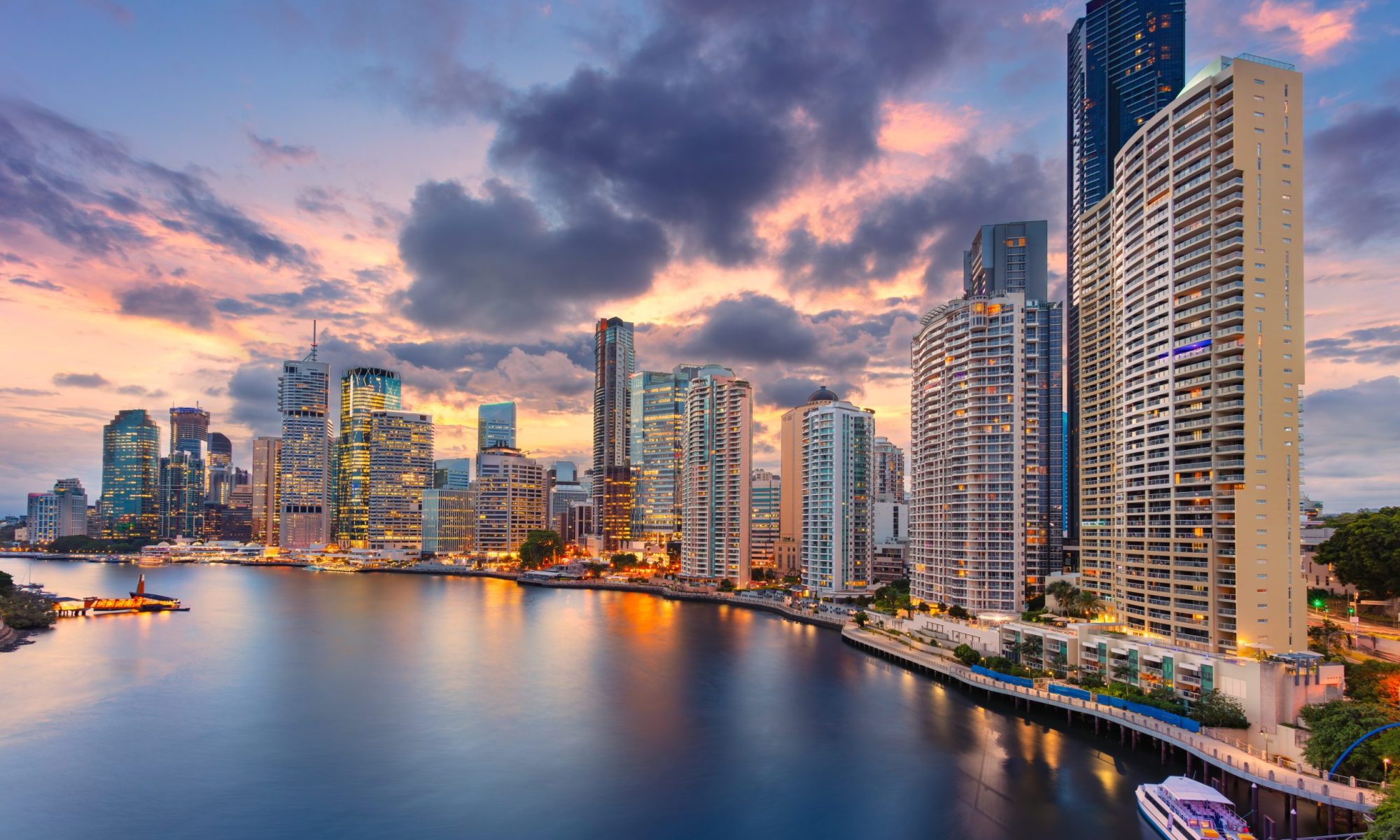
Brisbane

House Price Record: $23 million

The Brisbane record was set earlier this year when BWC Group construction boss Brett Walker sold his Ascot home for $23 million.

Walker had bought the 1930s Queenslander from Ray White Chairman Brian White in 2021 for $10 million and spent another $7 million on extensive upgrades.

The 1920s home with six bedrooms sits on a private 3,035 sqm block with a championship-size floodlit tennis court, swimming pool, and cricket pitch.

The sale comfortably surpassed the previous record, set in 2023 when the 1890s waterfront Amity House in New Farm sold for $20.5 million.

New Farm also holds the city’s apartment record, set this year when coal baron Matthew Latimore, founder of M Resources, spent $17.5 million on a two-level penthouse atop the Cutters Landing building on Refinery Parade. The 740 sqm residence includes a sauna, steam room, ice bath, and spa.

There had been suggestions the penthouse atop the Pier building in Newstead would sell for $20 million, but it ultimately settled for $16 million.

Queensland’s priciest homes, however, sit beyond Brisbane. The state record was set earlier this year when DISSH fashion owners Lucy Henry-Hicks and Mitchell Lau purchased three adjoining beachfront properties for $40 million on Palm Beach’s Jefferson Lane.

Some don’t consider it a record, given it was an amalgamation. If it wasn’t to be a record, the highest price is $34 million, in Sunshine Beach. Webb House was bought by Peter Tighe, Non-Executive Chairman of AuKing Mining and part-owner of champion mare Winx, in 2021.

Western Australia

House Price Record: $56 million

Western Australia’s luxury market has surged. According to Knight Frank’s Prime Global Cities Index, Perth ranked 16th globally in Q1 2025 for luxury property price growth, rising 3.8 per cent over the year to March.

The priciest homes typically cluster in Dalkeith, Mosman Park, and Peppermint Grove. The state’s record was set when Mineral Resources co-founder Chris Ellison purchased a Mosman Park residence on Saunders Street for $56 million.

That same street saw another notable sale this year, a 2016-built luxury home with dual Gaggenau and Sub-Zero kitchens, a solar-heated magnesium pool, 600-bottle wine cellar, 13-person lift, and panoramic river views, for $22.75 million.

Many of Perth’s top-end sales occurred in the post-GFC mining boom, though some values later softened.

In 2011, Mineral Resources co-founder Steve Wyatt paid $39 million for a Dalkeith mansion; it resold in 2020 for $27.5 million to entrepreneur Danny Pavlovich and his wife, Suza.

Eclectic House With a James Bond-Style Garage on the Portuguese Riviera Lists for €10 Million

If you’re looking to run into Cristiano Ronaldo, this six-bedroom villa near the coastal Portuguese town of Cascais, where the footballer lives, might up your chances.

The detached home, which came to market earlier this month asking €10 million (US$11.79 million), is within the gated Quinta Patino community in the town’s Estoril suburb, and comes with a private green-tiled pool, its own wine cellar and cinema, as well as a moody six-car show garage.

The eclectic house comes with a little French flair, including a grey mansard roof, as well as arched windows and a cream-stucco facade.

The interiors showcase a mix of modern floor-to-ceiling windows as well as more old-school elegance, including black-and-white checkered flooring, extensive crown moldings, a wood-paneled library and classic columns in between arched windows.

There are six bedrooms across 7,000 square feet, as well as a wine cellar, game room, a pergola and easy transitions between the indoors and outdoors.

“This residence was created for the way people truly want to live, with light-filled spaces that flow naturally from the kitchen and dining areas out to the garden and pool,” said listing agent Yared Hagos of Nest Seekers International via email.

Cascais is located in the Portuguese Riviera, roughly 30 minutes from Lisbon, and features sandy beaches, resorts and other visitor attractions.

“This property represents the best of both worlds, complete privacy in one of Portugal’s most prestigious gated communities, and yet you’re just minutes from the beach, the golf courses, and Lisbon’s cultural scene,” Hagos wrote.

Cascais is also one of many Portuguese cities to have benefited from the popularity of the country’s real estate among foreign investors, particularly its high-end homes , according to Hagos. Mansion Global could not determine the identity of the seller.

“With six consecutive months of rising buyer demand and price growth now exceeding 15% annually, prime areas like Lisbon, Cascais and the Algarve are seeing international buyers compete for an increasingly scarce supply of high-end homes,” he said.

The Portuguese Riviera also has seen an influx of celebrities in recent years, including most notably, soccer legend Cristiano Ronaldo, Mansion Global previously reported.

Murdoch Family Settles Battle Over Trust

Lachlan Murdoch is set to take control of his father’s media assets as part of an agreement announced Monday between the patriarch and his children. Lachlan will control all the votes in a new trust that will hold sizable stakes in Fox Corp. and News Corp once the deal is completed.

The Murdoch trust, which currently holds roughly 40% voting stakes in Fox and Wall Street Journal parent News Corp, was initially designed to give each of his four oldest children an equal voting share.

As part of the settlement announced Monday, Rupert Murdoch’s children James, Elisabeth and Prudence will give up their claims to the existing trust. They will instead receive new trusts with cash funded in part by sales of some of the existing trust’s Fox and News Corp stock.

The three children will also be subject to a long-term agreement preventing them from buying shares in the companies.

Fox and News Corp shares fell slightly in after market trading.

The new agreement caps a tumultuous succession drama atop media companies whose holdings include cable giant Fox News, major newspapers in the U.S., U.K. and Australia; digital real-estate companies and HarperCollins Publishers. It also brings to a close a conflict that potentially threatened the futures of both News Corp and Fox Corp.

Murdoch, 94 years old, had sought to amend the family trust to put control in the hands of Lachlan. James, Elisabeth and Prudence opposed the change.

An acrimonious family battle has played out  largely behind closed doors and in sealed court  proceedings in recent years. Last December, a Nevada probate commissioner  ruled against  Murdoch’s efforts to amend terms of the trust and give control to Lachlan.

Clockwise from top left: Lachlan Murdoch, James Murdoch, Prudence MacLeod and Elisabeth Murdoch arriving for a hearing in Nevada in September 2024.
Fred Greaves/Reuters

Murdoch sought the change, in part , because Lachlan is the one most aligned with his conservative political views as well as the best manager to run the companies.

New trusts will also be created for Lachlan, who is executive chair and chief executive officer of Fox Corp. and chair of News Corp, as well as the two children that Rupert Murdoch had with Wendi Deng. Grace and Chloe Murdoch are beneficiaries of the original trust .

A holding company owned by Lachlan, Grace and Chloe Murdoch’s new trusts will control about 36% of Fox and 33% of News Corp.

Rupert and Lachlan Murdoch had no comment beyond the announcement. A spokesman for Elisabeth Murdoch and Prudence MacLeod declined to comment. Deng and a representative for James Murdoch couldn’t be reached for comment. A spokesman for Anna dePeyster, mother of Elisabeth, James and Lachlan, declined to comment.