Page 63 – Kanebridge News

HYBRID WORK MEETINGS ARE HELL. TECH IS TRYING TO FIX THEM.

To the people I just had a very important meeting with:

I tried to take you all seriously. I really did. Except since I’m at home, watching you all crowded into a conference room, the effect was more like toy figures sitting around Polly Pocket’s kitchen table. I spent most of the time imagining picking you up with tweezers then zipping you into my change purse.

Please don’t call HR.

Best,

Me

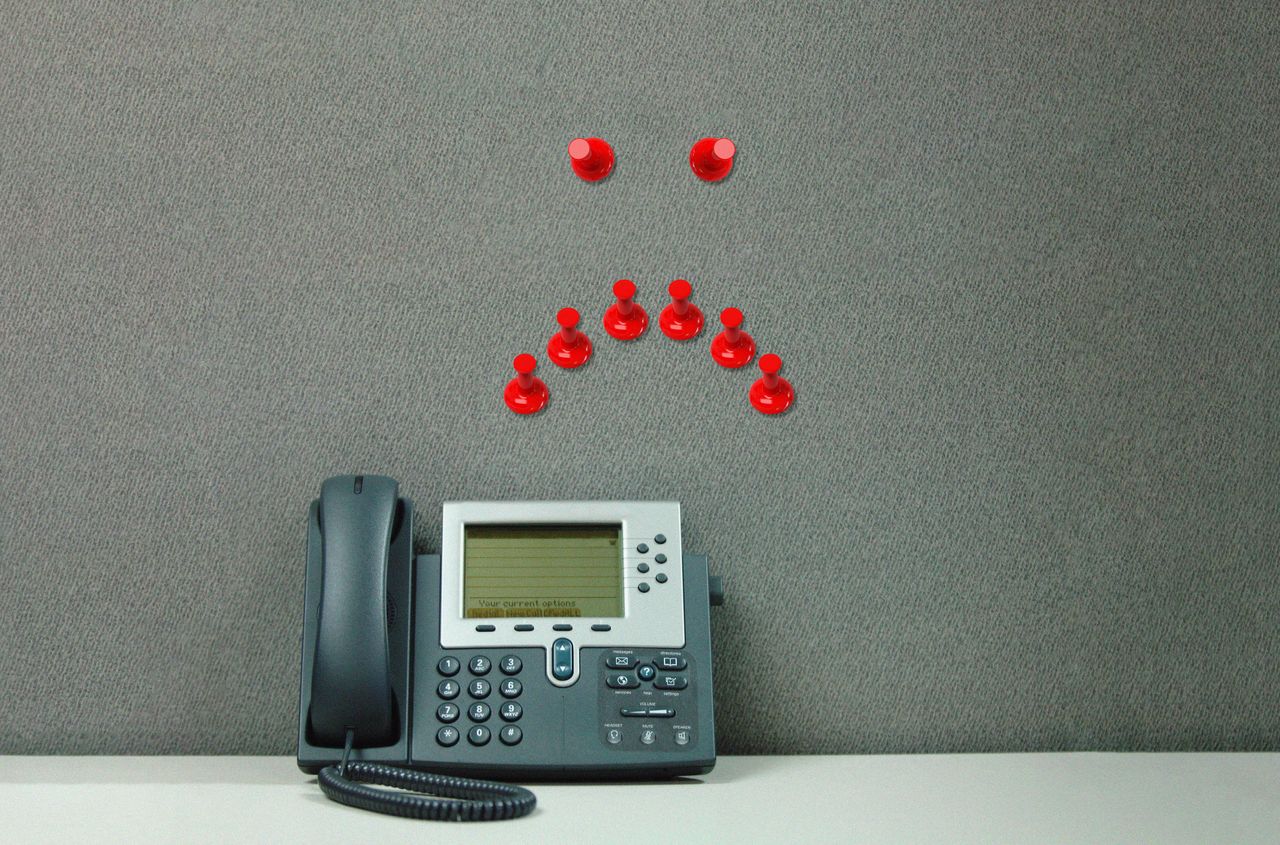
Welcome to the hell of the hybrid meeting. Throw in the related side effects—office-people often ignoring the video-call people and that guy who always forgets to mute—and you’re left longing for the simpler times of toilet-paper shortages, double-masking and all-day Zoom.

The solution? Ask Elon Musk and it’s butts-in-seats for all. Employees of SpaceX and Tesla are expected to spend at least 40 hours in company offices. Yet the hybrid model has emerged as the leading choice for many companies, with 42% of people with remote-capable jobs working partly at home and 39% working entirely from home, according to a February 2022 Gallup poll.

The more likely solution? Tech features that help us adapt to this new new normal—just like they helped us adapt to the old new normal. Microsoft, Google, Zoom and others have some of their finest working to fix the greatest problem of our time: How we meet to talk about work stuff.

The solutions below won’t fix everything. But there are big developments coming, along with creative—and some free—options you can start trying with your colleagues right now.

Solution 1: BYO Laptop

The primary rule of hybrid meetings: Create equity among attendees—or, you know, don’t make your people go all Hunger Games. How to do that? With laptops, of course.

“Making laptops a required tool for all participants in a hybrid meeting helps level the playing field,” Angela Henderson, a meetings expert at Decisions, a startup that makes meeting management software, told me.

If people in the conference room turn on their laptop webcams, the people at home can see everybody’s face framed individually like during Covid times. This is better than some impersonal, drone-like conference-room view, especially when people in that room are talking. Microsoft, Google and other companies have started encouraging their employees to do this.

Of course, all those laptops on the same video call in the same room will create more ear-piercing feedback than a Kiss concert sound check. Avoid that by joining the call from your conference room’s audio/video system, then get everyone on laptops to mute their mics and kill their speaker volume before signing into the meeting.

If you use Microsoft Teams or Google Meet, you can log into the meeting from the conference room using a companion setting. (Google’s version is Companion Mode, Microsoft’s is Companion Device Experience.) Both automatically cut off your laptop’s mic and speakers while allowing you to turn on your webcam and access other virtual tools, including screen sharing, group chats and hand raising.

To make things feel more fair, Teams can line up people at home on the conference-room screen at eye level with a setting called Front Row.

Solution 2: Camera-Crazed Conference Rooms

The trouble with using your laptop’s webcam in the conference room is you don’t know where to look. At the webcam? At your colleague across the table, which gives everyone at home a nice view of your nostrils? At the wall?

“Conference rooms need to be rethought as hybrid spaces,” Greg Baribault, group program manager on Microsoft Teams, told me. And new systems combine updated conference-room camera technology with software from the most popular video-calling platforms, including Zoom, Google Meet and Microsoft Teams.

For example, Microsoft Teams works with other camera systems, such as Logitech’s Rally Bar. Instead of that drone-like view, the systems use artificial intelligence to isolate the people speaking and show them on screen as if they were individual participants in the meeting. No laptop webcam needed.

Zoom’s Smart Gallery works similarly. On supported cameras, it can create individual video feeds of each person in the room, and will even pan as people move. Yep, Google’s Meet works with similar conference-room offerings, too.

Now, if I’m the CEO, I’m thinking: “Uh uh. Nope. Have you seen this record inflation?” Yet the cost of conference-room A/V equipment is coming down.

Five years ago it could “cost you $20,000 to $50,000 and take three days” to redo a conference room with equipment, Logitech Chief Executive Bracken Darrell told me. Now it takes less than an hour to set up these newer, sub-$5,000 cameras, he said.

Solution 3: Metaverse Meetings

Or maybe, just maybe, the solution is completely virtual conference rooms. You know, we sit around virtual tables, our virtual legless avatars sipping virtual coffees.

Yes, I’ve attended metaverse meetings. I’ve put on a Meta Quest 2 headset and launched Meta’s Horizon Workrooms app, only to find my editor as an avatar resembling Milhouse from “The Simpsons,” cursing the tech. And I still have no idea what’s up with the virtual deer head on the wall!

Meeting in VR right now is a mess of uncomfortable headsets, flaky apps and real-world physical obstacles. But there is potential. Once we got the tech issues straightened out in that meeting with my editor, we had a lively and engaging conversation where it felt like I was really sitting across from him. (Too bad I’ll have to bribe him with non-virtual sushi to ever do it again.)

When hopping into a metaverse meeting is as easy as hopping into a Zoom call or Google Meet today, and my ears don’t feel like they have been crushed under the weight of a nerd helmet, then, sure, have your avatar call my avatar!

But in the real-verse, I have found the most promising solution of all: “There’s no better way to combat issues with hybrid meetings than to just not have as many of them to begin with,” Ms. Henderson said.

Precisely! So everyone step away from the laptop and ask yourselves: Could this meeting I’m about to schedule be an email? A Slack? A phone call? A text? Or a GIF of an angry Milhouse from “The Simpsons”?


Reprinted by permission of The Wall Street Journal, Copyright 2021 Dow Jones & Company. Inc. All Rights Reserved Worldwide. Original date of publication: June 15, 2022.

WORKERS DON’T FEEL QUITE AS POWERFUL AS THEY USED TO

Becca Smith will be back to work in no time.

Laid off from her sales position at a startup a couple of weeks ago, she says she’s received more than a dozen inquiries from recruiters in response to a LinkedIn post about her job loss.

Yet something has changed since the 40-year-old Indiana mother started at her former employer last summer. Back then, she was determined to work from home—and felt sure she could get her way. She also had the confidence to join a fledgling business amid a roaring economy.

No more.

“I will give priority to larger, more-established companies for this job search,” says Ms. Smith, whose old company was venture-funded and cut about one-third of the team to conserve cash. She adds she’ll consider reporting to an office part time. She’d also like her next job to involve selling a product customers need even in bad times, rather than a luxury that could get cut from the budget when money is short.

Though the labor market remains tight and many people still have leverage to negotiate high salaries and remote accommodations, some are bracing for a day when things won’t be so great. As unemployment claims tick higher and business leaders like Elon Musk try to reassert their in-office dominance, workers are showing a little less swagger and looking for more stability than they did just a few months ago.

It’s a strange limbo. Working conditions are about as good as they’ve ever been for many people, and office workers’ complaints can seem petty by historical standards. (Imagine your 2019 self griping about being required to work in an office a few days a month.) Yet a loss of total remote freedom, coupled with sobering economic forecasts, can make it feel like workers’ power is slipping away.

Some companies sense the change and are wresting back more control over how much they cater to employees.

Boston Properties Chief Executive Owen Thomas says his tenants are growing bolder about office callbacks. The national office occupancy rate hit 44% last week, according to an estimate by Kastle Systems, which tracks building-access-card swipes. That’s the highest since the onset of the pandemic.

Employers’ fear that workers will flee for other jobs if told to return to their desks is beginning to subside.

“Some companies are doing layoffs, and that puts pressure on people to get back to the office and stay closer to the senior leaders,” says Mr. Thomas, whose firm is among the largest commercial landlords in several major cities.

Treasury Secretary Janet Yellen has said repeatedly that she doesn’t expect the U.S. economy to fall into another recession. Such reassurances wouldn’t seem necessary if not for credible concerns, however, and it might not take the R-word to spook workers.

Career coach Phil Rosenberg says his calendar is filling up with clients who worry it’s now or never—or not for a while, at least—to snag a job with the pay and flexibility they want.

“People are trying to land before the next downturn,” he says.

Luis Caballero, one of Mr. Rosenberg’s clients, says he’s relieved to be starting a new position as a marketing executive next month.

He left a large company in late 2020 with a big enough severance package to support his family for two years, by his estimate, and initially wasn’t in a hurry to find his next long-term fit. Why would he have been?

“Companies were desperate for senior leadership,” says Mr. Caballero of the record numbers of workers who have quit or switched jobs over the past 12 months. “Several friends of mine were writing their own ticket.”

Mr. Caballero, 50, took what he describes as a short-lived “rebound” job last year but quit in February. Searching anew, he says the market“was not the gold mine I had heard about.” Many high-level roles paid less or had heavier workloads than he anticipated.

Mr. Caballero says he accepted an offer that met his expectations—with one major compromise. He’ll drive 10 hours round-trip from his home in Arizona to an office in California, staying over a night or two, to satisfy a requirement to work in person a couple of days a week.

Taking a new job can be risky in the event of a downturn. Some businesses take a last-in-first-out approach to downsizing. As the pandemic fades, companies that grew quickly when people were mostly homebound could cut back as life normalizes. Peloton, Netflix and Carvana already have laid off staff this year.

“If I’m a job seeker these days and I’m smart, I’m considering the business: Is it a business that just developed because of Covid?” says Stacie Haller, a career counsellor at ResumeBuilder.com.

For now, though, the labour market still favours workers, especially in certain industries, she says.

Competition for talent remains intense in biotechnology, with candidates often able to pick among several offers, according to Jean Sabatini, head of staffing at Tango Therapeutics in Cambridge, Mass.

Tech workers, too, enjoy considerable bargaining power, though some have been humbled by the sector’s volatile stock-market performance and shrinking venture-capital pool in recent months, says Allan Jones, founder of an HR software startup in Los Angeles.

The hiring dynamic for most of the past two years has been “bonkers,” he says; prospects frequently Zoomed into job interviews with a confidence bordering on arrogance and scoffed when told that Mr. Jones’s company, Bambee, is office-centric.

Lately, the conversations have changed.

THE ONLINE BANK THAT WANTS TO RESHAPE WORK AND MONEY

If the pandemic changed the way people view their jobs, it may have also ushered in a new challenge for managers: how to keep reshaping work for years to come.

The desire for flexibility and a rethinking of workers’ relationships with their employers are likely to remain well into the future, putting pressure on employers to respond, says TS Anil, global chief executive of Monzo Bank. The online bank based in London officially launched U.S. operations earlier this year; it employs more than 2,500 people globally. Monzo doesn’t have physical banks but instead is based on a digital app that consolidates a user’s financial information and has tools like bots that can direct money into certain categories–say, saving for a future home.

Born in India, Mr. Anil has worked around the world at companies including Standard Chartered, Citigroup and Capital One. He was global head of payment products and platforms at Visa before joining Monzo in 2020.

He says he has spent much time in recent months considering where work is headed and how the financial-technology company’s own workplace policies should evolve. Monzo this year rolled out a three-month paid-sabbatical program for staffers who have been at the company four years or more. Such efforts reflect a desire to find ways to better support employees, Mr. Anil says.

The company is also aiming to stay ahead of changes in the ways consumers manage their finances while competing with its larger bank rivals. Mr. Anil spoke with The Wall Street Journal about what he’s focused on next.

The job market right now is tight–workers have more leverage, and employers have responded. Five years from now, will employees have as much power as they do today?

What has continued to change slowly over the last several years—but then Covid quite possibly accelerated—is the shift in mindset about what it means to work. People, increasingly, don’t want their jobs to just be about, “I go do this, and I get a paycheck.” People want meaning from their work, people want the ability to work in ways that work around their lives effectively. That shift creates opportunity for companies like us who are leading the way in terms of understanding what employees want and are willing to not be anchored to a historical way of doing things. So, yeah, I don’t think things go back in five years; this is an important cultural shift, and it’s a welcome cultural shift.

What are the new benefits companies will need to offer in the future to get employees to stay?

It’s hard to speculate on specific benefits. At Monzo, we’ve always been about our values. One is this idea that you help everyone belong. And it means we come up with ways that we can institutionalize policy to make everyone get that sense of what works best for them. We announced additional paid leave for colleagues of ours who suffer pregnancy loss, or who are undergoing fertility treatments.This is one of those where it feels like this should have always been offered by companies around the world.

What was it that prompted you to start offering paid sabbaticals?

We’re now going on seven years old, and building a bank—or really any kind of tech company—and scaling it is a marathon not a sprint. And we’re at the stage where enough of our employees have put in a few years of incredibly hard work. As we built it out, it felt like a good time to give people the ability to take a break, recharge, come back with even more energy to continue this marathon that we’re all excited to be on.

What has the response been like—how many people have signed up for a sabbatical?

I don’t have the numbers that add up how many we’ve already done since we’ve announced it, but lots of people have queued it up in terms of what they want to do in a few months, at the end of the year, early next year, and so on. So the response has been amazing.

When you look at banking, what’s the biggest change you expect to see in the industry in the next 10 years?

The biggest thing that I hope we see is making money work for everyone, which means really giving people the tools to make great decisions for themselves, to help them understand and make sense of their money. It’s still amazing and sad how little customers around the world are supported in all decisions related to their money. It’s such a source of anxiety for customers, that I’m hoping that, in the next decade, as an industry, we’ve solved that problem.

Is there a specific shift you foresee in how people will manage their money?

What I aspire to for us is that across all of your financial needs—whether it’s spending, paying, transacting borrowing, saving, investing—all of that happens in a single place. So as an individual trying to make sense of my money, I can see it all in one place; I can visualize it, I can analyze it.

What are the challenges you feel the company will need to overcome to fulfil this vision?

It’s important for us that we continue to evolve our culture for the scale that we’re growing into. That’s probably the single biggest one, to make sure that you preserve the best aspects of your culture—what we internally describe as the golden threads. Keep the golden threads, let go of the stuff that’s not working and keep evolving it. If you can get that right, then you can continue to scale and continue to have impact.

What will your job or industry look like in 2030?

It is making money work: taking the anxiety out of it for [customers] and replacing it with a sense of control and the sense that their money is working. It’s this idea of a single financial control centre—it’s in one place, they get in there, and they understand across the financial needs what the best choices are and they’re able to make them. The fundamental job of CEO is to enable the team to do the best work of their lives, and do it in a context of creating better and better outcomes for customers and for the company as a whole. So the fundamentals don’t change; that will remain the job of the CEO.

OK, five years from now, will people be working in offices more or less than today?

We joke inside the company that, what people talk about as the future of work, we talk about the now of work. Even before Covid-19, we were remote enabled; hybrid work was a reality for us anyway. Technology enables remoteness, but the human need for connection is just as real. The interplay between these two forces, I think, is what the future will be informed by. I’ve never thought of the future as being sort of homogenous, just like the present is not homogenous, right? Even in the same country, in the same company, people have different realities. The future will not be different.

Reprinted by permission of The Wall Street Journal, Copyright 2021 Dow Jones & Company. Inc. All Rights Reserved Worldwide. Original date of publication: May 6, 2022.

TIME TO TAKE THE ‘E’ OUT OF ESG INVESTING

The days when selling ESG funds was an easy marketing ploy for fund managers are over.

Investing based on environmental, social and governance criteria has been a hugely popular new market for full-service asset managers struggling to compete with low-fee tracker funds. While this type of ethical investing can genuinely mean different things to different people, scrutiny of the environmental part of the claims is rising.

On Wednesday, Asoka Woehrmann, chief executive of DWS, Deutsche Bank’s minority-listed asset-management subsidiary, said he would resign after its coming annual general meeting. The news came the day after German authorities raided the offices of both companies amid allegations that DWS made misleading claims about ESG funds. The U.S. Securities and Exchange Commission and federal prosecutors also have ongoing probes.

ESG investing has been a boon for the industry. Fund managers have often promised investors higher returns while doing good with their money. However, ESG is a slippery concept, without widely accepted definitions, criteria and metrics. Infamously, a single company’s ESG rating can vary widely between credible credit-rating firms.

That variance isn’t unreasonable. There are many ways to combine the three criteria into one score, and for any single one there can be honest disagreement about what good or bad actually looks like. For example, some might rank Shell highly on “E” because it has a plan to decarbonize its business, or poorly because it sells oil and plans to sell natural gas for years.

However, the scope for variance in environmental ratings is starting to narrow. European officials have set new rules for different categories of sustainable investments and are working on definitions of what is and isn’t green. The SEC is also working on its own set of rules. While the standards increase the compliance burden on fund managers, they should also help ensure investors are getting what they were promised, rather than just a lot of hot air.

Concerns about greenwashing—in which reality falls short of green claims—are widespread and recent events are only fanning the flames. The SEC recently fined Bank of New York Mellon $1.5 million for misleading claims about ESG funds. DWS reported far lower “ESG assets” in its most recent annual report than “ESG integrated” assets in the prior year. A whistleblower alleged last year that its disclosure was misleading. It will now be up to a new boss to draw a thicker line under the affair.

A speech last month entitled “Why investors need not worry about climate risk” from the head of responsible investment at HSBC’s Asset Management arm, in which he argued that the financial effects of climate change would be “de minimis,” only reinforced concerns that inside thinking often doesn’t match the marketing. The bank’s executives were quick to distance themselves from the now-suspended employee’s comments.

The continuing fallout at DWS is a warning to other asset managers to stand up or scale back green claims. More broadly, the tighter rules around what qualifies as environmentally friendly, even as social and governance criteria remain less well-defined, could mean it is time to take the “E” out of ESG investing—if not retire the grouping altogether. It never helped investors, and now it isn’t much use for fund managers either.

Reprinted by permission of The Wall Street Journal, Copyright 2021 Dow Jones & Company. Inc. All Rights Reserved Worldwide. Original date of publication: June 1, 2022.

WHICH STOCKS DO BEST DURING HIGH INFLATION?

Investors commonly hear that when inflation surges, it is best to put your money into physical assets that track the jump in prices, with real estate often suggested as the best option. But physical assets, particularly properties, generally can’t be bought as easily or quickly as securities, and acquiring them often entails significant transaction costs.

The second-best option is usually to rebalance your stock portfolio to shift it into industries that do well in an inflationary environment. So, when inflation surges, what industries do best for a stock portfolio?

To sum up: Shares in real-estate investment trusts or companies in the real-estate industry are not the best option. Stocks in the materials and energy industries outperform all others by a long shot, according to the findings of a study I conducted with my research assistants, Zihan Chen and Yiming Xie.

We gathered data on the returns for all stocks listed on the New York Stock Exchange or Nasdaq over the past 50 years. We then examined the course of the consumer-price index over those years and found three spikes in prices during which the inflation rate doubled in less than 24 months: March 1973 to May 1975, April 1978 to September 1980, and February 2021 to March 2022.

We separated each company in our data set into one of 10 industries, and examined how the median stock in each industry, in terms of returns, performed during those three periods of surging inflation.

The median real-estate stock delivered a 3.32% annualized return over the three periods, far below the annualized returns of 18% for the median energy company and 16.81% for the median materials company.

On the opposite end of the spectrum, healthcare (including pharmaceuticals) performed the worst, with an annualized return of minus 8.44%, followed by consumer staples at minus 6.73%, consumer discretionary at minus 5.71%, utilities at minus 4% and technology at minus 3.64%.

The negative results for healthcare, tech and consumer discretionary are understandable, because these are interest-rate-sensitive industries. But the results for consumer staples and utilities might surprise some investors, because these are often thought of as safe assets in rough times.

At the end of the day, the best move for investors who want to reposition their portfolios quickly when inflation is surging is to shift into materials and energy companies.

TWITTER ON PACE FOR 7-DAY LOSING STREAK

Twitter shares were on pace Monday to decline for a seventh-straight day amid doubts about whether Elon Musk’s $61 billion deal to acquire the social media platform would go through.

Twitter (ticker: TWTR) was down 6.7% to $37.98 on Monday. Unless the stock stages an end-of-day rally, this would the Twitter’s longest losing streak since December, when it also fell for seven consecutive days. The shares have lost 23.5% over this seven-week stretch, their worst decline since March 19, 2020, when the stock lost 29.7%. The Nasdaq Composite was down 4.6% over the same period.

Musk tweeted last week that his acquisition of Twitter was on hold pending details on the number of fake accounts, or bots, that were active on the platform. Twitter has calculated that less than 5% of accounts are fake, but Musk said his team would be conducting a random sample to verify the calculation. Eliminating bots has been a key point for Musk, who said it will help make the platform more valuable.

In a flurry of tweets on Monday, Twitter CEO Parag Agrawal defended the company’s spam-fighting policies, saying management had shared an overview of the process with Musk a week ago.

“We suspend over half a million spam accounts every day, usually before any of you even see them on Twitter,” he said in a tweet. “We also lock millions of accounts each week that we suspect may be spam – if they can’t pass human verification challenges.”

Musk responded to Agrawal’s thread with a “poop” emoji. The Tesla (TSLA) CEO said last week he was “still committed to [the] acquisition].”

Wall Street still seems to expect that the acquisition will go through, with some speculating it may be a way to renegotiate the price.

“While we believe this review likely delays the acquisition, we would be surprised if there are any material changes to the deal structure as a result of spam/false [daily active users],” wrote Citi analyst Ronald Josey.

Separately, Twitter last week announced it was suspending hiring and would be rescinding some offers. The company also laid off two senior executives.

Reprinted by permission of Barron’s. Copyright 2021 Dow Jones & Company. Inc. All Rights Reserved Worldwide. Original date of publication: May 16, 2022.

THE REBELLION AGAINST THE RETURN TO THE OFFICE IS GETTING SERIOUS

im-529324

Some of the economy’s most in-demand employees are about to find out how much power they have over where and how they work.

After months of return-to-work starts and stops, many tech companies, including Alphabet Inc.’s Google, Apple Inc. and Microsoft Corp., are telling remote workers it’s finally time to come back for good, or at least show up part of the week. Employees who fled the Bay Area and other high-cost tech hubs earlier in the Covid-19 pandemic—or who just prefer to work from home—now face hard choices: move back, try the super commute, or hold out for a concession or new job elsewhere.

How the emerging power struggles play out will be a telling indicator of how much leverage remote-work converts in other sectors have as more employers call staff back to offices. A competitive job market, plus the relative ease with which businesses adjusted to work-from-home over the past two years, has emboldened many professionals to try to say goodbye to offices permanently.

Two-thirds of the workforce said they would find a new job if required to return to the office full-time, according to a survey of more than 32,000 workers by ADP Research Institute. Of those who quit their jobs in 2021, 35% cited wanting to move to a different area, according to the Pew Research Center.

If highly skilled tech workers have trouble flexing their market value, though, it’s likely many other remote workers wanting to stay put will, too.

Some tech professionals have already thrown down the gauntlet. Ian Goodfellow, a director of machine learning at Apple, announced to staff this month that he was resigning, in part because of the company’s return-to-office policy. “I believe strongly that more flexibility would have been the best policy for my team,” Mr. Goodfellow wrote in a goodbye note, according to a tweet from a reporter from the Verge. Mr. Goodfellow declined to comment. Apple didn’t comment.

A group called Apple Together says more than 1,400 current and former employees signed an open letter to company executives asking for them to reconsider the office-return policy, which requires employees to work in-person on Mondays, Tuesdays and Thursdays as of last month. Apple employs more than 165,000 people.

“Stop treating us like school kids who need to be told when to be where and what homework to do,” the letter reads.

Office mandates are proving to be recruiting opportunities for some competitors: Airbnb Inc. last month announced employees could work from anywhere without taking a pay cut. In the three days following the announcement, the company’s careers page received around 800,000 visitors, according to a spokeswoman. Twitter Inc. and Zillow Group Inc. have said most employees can work from wherever they want and executives of Facebook parent Meta Platforms Inc. are living all over.

Sean Regan, head of product marketing with software maker Atlassian Corp., moved to Lake Tahoe from the Bay Area this past November and is now using the company’s flexible work policies to lure new hires.

“My access to top talent has gone through the roof,” he says. “It takes me half the time to recruit great people when I tell them they can work anywhere.”

Mr. Regan says he’s currently trying to sign on someone he ran into while skiing who had also moved to Lake Tahoe from the San Francisco area. “She wants to stay in Tahoe. Her employer wants her to go back to the office,” he says. “I’m recruiting her to stay put and work for us.”

Workers in tech have long had the advantage: Their skills are highly sought-after in nearly every industry. As the pandemic has dragged on, flexibility started to become not a perk but something companies needed to offer in order to hang on to talent. Eager to stay competitive, companies have increasingly accommodated their workers and in some cases, walked back in-office requirements.

But there are signs the balance of power may shift. Netflix Inc., Lyft Inc. and other big names in tech have posted disappointing quarterly results—a signal that leaner times may be ahead, and skilled workers won’t be in such demand. Companies including Meta say they are slowing down hiring. Peloton Interactive Inc., Carvana Co. and others have announced layoffs.

Some of those called back have found jobs elsewhere. Christina Patterson, 30, was managing client partnerships for a clothing-rental startup. She says that by the time she got called back to her New York office in March, she had grown allergic to in-person work. Since the fall of 2020, she had been working for months at a time from Tulum, Mexico, and wasn’t ready to give it up.

Desperate to find a new role ahead of the March deadline to return to work, Ms. Patterson texted an executive she’s friendly with at a Chicago-based startup, offering to be her remote assistant. “She was like, ‘I’ll do you one better: We need someone in business development,’ ” Ms. Patterson says.

She took the role at the startup, Swaypay, which makes an app for consumers to earn cash for posting TikTok videos featuring recent purchases. The new job didn’t require a move or any commitment to come into the office. Her last day at the old job was the Friday before she was supposed to go back to her old office.

“I was like, ‘Phew, I missed that very narrowly,’ ” she says.

Adam Ozimek, an economist with the think tank Economic Innovation Group, estimates that, across the U.S. workforce, there have already been 4.9 million relocations as a result of remote work, according to data extrapolated from a survey of 23,000 workers. Mr. Omizek conducted the survey this past November, while working at another company. More than a quarter said they planned to move more than 4 hours from their current job in 2022—because of remote-work options, while 13% said they were looking at moving 2 to 4 hours away. Mr. Ozimek himself says he recently started commuting 2½ hours once a month from central Pennsylvania to Washington, D.C., where his job with EIG, which he joined in March, is located.

Some tech workers who have relocated and don’t have permission to stay remote say they’re in a standoff with HR: They’ve been called back to the office but haven’t moved yet. They’re looking for remote-friendly roles both internally or elsewhere.

“If the time comes where they say: ‘Here’s an ultimatum, you show up in an office or you find somewhere else to work,’ I will find somewhere else to work because there are a lot of remote opportunities,” says one engineer who works for a North Carolina bank and bought a house earlier this year in New York’s Catskill Mountains, where he plans to stay.

Despite some signs of a downturn for the industry, tech workers who want to stay remote will have options if their employers won’t accommodate them, says Tim Herbert, chief research officer for CompTIA, a tech trade association. The number of U.S. employers posting tech jobs hit a record level last month, despite initial rumblings of a downturn.

“Especially in tech, you have companies that are simultaneously either slowing or transitioning workers or sometimes laying off workers in one area of the company and then they’re hiring in another area,” he says.

Companies with disappointing earnings can always scale back signing bonuses but continue to offer remote work as a perk for new hires, he added.

Google recently called its workers back on a hybrid schedule that requires most to be in the office three days a week. Some employees have complained that because the policy is implemented based largely on local managers’ discretion, it can feel arbitrary. “If you have a friendly manager and a friendly VP who support you, then your odds are pretty good,” says Andrew Gainer-Dewar, a senior engineer and member of the Alphabet Workers Union. “If you don’t, then things get tough.”

More than 14,000 of Google’s approximately 166,000 employees have requested to go fully remote or to transfer to a new location, and the company has approved 85% of those requests, according to a spokeswoman. “We know our employees have many choices about where they work,” she said. “So we continue to provide top of market compensation.”

Until August, Laura de Vesine was a senior engineer for Google living in San Jose, Calif., near the company’s offices. She jumped ship before officially being called back after growing tired of uncertainty surrounding when she’d have to return to work. She knew she wanted to move to a lower-cost city where she wouldn’t depend so much on a car, such as Philadelphia.

Such a move would have involved a 15% pay cut from Google, she says. “Is my work actually worth less?” she says she asked herself. If she wanted to keep her Bay Area salary, she worried she’d be required to report at least a few times a week to Google’s New York City office.

Instead, she made the move to Philadelphia and took a remote role with a New York-based cloud-computing company. She says she is now making around 20% more than her former salary and has the assurance she won’t have to give up her remote status.

“I could have confidence it wasn’t a temporarily remote offer,” she says.

Reprinted by permission of The Wall Street Journal, Copyright 2021 Dow Jones & Company. Inc. All Rights Reserved Worldwide. Original date of publication: May 14, 2022.

ARE TIES REALLY DEAD?

IN 2019, Christian Conner was pondering buying a membership to Soho House, a social club in Manhattan’s Meatpacking District. The then-28-year-old media consultant showed up for a tour of this playground for the hipster elite in his classic “preppy with a twist” uniform—sport coat, trousers and one of his prized Gucci ties. All was going swimmingly, he recalled, until his guide turned to him and said, “Hey, you should take off your tie. We want to create a more casual atmosphere and discourage people from wearing ties.” Mr. Conner was gobsmacked. “I thought, this is crazy. This tie is cool as hell, so why would you tell me not to wear it?” (When asked for comment, a Soho House representative sent a link to the House Rules page of its website which requests that members and guests “keep it casual.”)

Interest in ties has been waning for some time, but the last two years of schlubby-comfy pandemic dressing have particularly dimmed their future. Business formal has taken on a near-death mien, and for many months, our collective dance card of tie-required events like weddings, bar mitzvahs and blowout birthday fetes was effectively erased. Even as we’ve approached a new normal, fewer and fewer back-to-the-office and party dress codes call for a smartly knotted tie. Can this once-essential accessory be saved?

Certain men feel strongly that it should, yet even some professionals who once wore ties daily now hesitate to sport them to work for fear of being teased. Investor George Birman, 33, of Shelter Island, N.Y., spent years building out his tie repertoire for business dinners, client meetings and the like. His prized collection now sits “neatly folded in its drawer,” lonely and dusty, he said. “And if I show up to the office with a tie these days, someone will make a joke and ask, ‘How was your interview?’”

Even so, the tie market isn’t quite catatonic. According to Macy’s men’s general business manager Sam Archibald, ties are having “healthier…momentum than what we expected” in 2022 so far. The days of widespread office-mandated ties may well be over, but “occasion-based” ties are moving. “You see less of what you would see as a ‘banker’s tie’ and much more business in what I would call ‘casual neckwear,’ said Mr. Archibald. “Brights and prints are definitely working. Floral neckwear is working for us.”

Smaller retailers also have noticed the shift to party-time ties. Larry Mahoney, longtime manager of the Andover Shop, a menswear store in Cambridge, Mass., remembers when ties were a “prominent part of any well-dressed man’s wardrobe,” and you wouldn’t dare head to the office, dinner or a professional engagement without one around your neck. “I would say that maybe 10 years ago, the tie started to begin its decline, although it did hold its ground for a while.” Today, the shop’s tie business, he said, is driven more by men heading to events than businessmen.

The tie can also still be found on the fringes of culture, in communities that historically haven’t worn ties. Leon Elias Wu, founder of Los Angeles gender-inclusive custom suiting brand SharpeHaus, sees the tie as less of a sober, wear-to-work proposition these days and more of a novelty fashion statement, especially when its traditional maleness—and its traditional function as a tool to help one fit in—is undercut. “Just throwing on a tie because it’s an occasion doesn’t work for everybody,” he said. “But look at what Avril Lavigne did with the tie 20 years ago—it can totally be used to make a statement,” whether you’re a formal guy, a female rocker or just a person trying to stand out.

Three Guys on the Ties They’ll Never Ditch

Ties aren’t just formal fashion accessories—they can hold sentimental value. Here, notable neckwear devotees shed light on the ties they’ll forever hold dear.

Ken Fulk

Interior Designer

I’m a creature of my upbringing—of my preppy years growing up in Virginia when I had every color Izod shirt, every color Polo shirt, wore them religiously and washed all of them until they were pastels. I remember this beautiful ritual of my father standing behind me and showing me how to tie different tie knots—and I still have this blue and yellow repp stripe tie from Eljo’s in Charlottesville.”

Michael Strahan

Television Personality and former New York Giants Defensive End

“Most of my ties remind me of special moments. When I went up to space [with Jeff Bezos on Blue Origin in 2021] I got some space ties with spaceships and stars and rockets…That’s the great thing about a tie. It can have its own individual story. It’s something you can share or keep close to yourself…But the one tie I’ll never part with is a black tie. A straight-up black tie.”

Simon Kim

Restaurateur

“I have about 75 ties, and 90% of them are Hermès. But I have this one Hermès tie that my sister gave me. She is an art dealer with very meticulous taste. It has a red background with little blue-and-white turtles. She gave it to me when I was straight out of college and whenever I wore that tie to an interview, I had a 100% success rate in landing the job.”

Reprinted by permission of The Wall Street Journal, Copyright 2021 Dow Jones & Company. Inc. All Rights Reserved Worldwide. Original date of publication: May 10, 2022.

‘BUY THE DIP’ BELIEVERS TESTED BY MARKET’S DOWNWARD SLIDE

This year’s stock market volatility has turbocharged a favourite strategy among individual investors: buying the dip. The dramatic plunge in major indexes will test their resolve.

On Thursday, when the stock market had one of its worst days of the year, individuals rushed in, setting a one-day buying record. In March, they invested the largest-ever monthly sum, according to Vanda Research data beginning in 2014, and continued to pour money into the markets in April.

Investors followed suit on Tuesday in a volatile session, a day after the S&P 500 fell to its lowest level this year. The broad stock-market gauge swung before edging up 0.2%, snapping a three-session losing streak.

Individuals’ willingness to backstop markets throughout this year’s selloff demonstrates that the group—for now—has been more resilient than analysts and trading professionals anticipated. Few were surprised when individual investors pounced on small dips as the market churned higher last year, helping the S&P 500 cruise to 70 records and rewarding those who waded in.

This year, the S&P 500 has fallen 16%, its worst start to a year in nearly a century, and the Nasdaq Composite has dropped 25%. Inflation is at a 40-year high, and the Federal Reserve has embarked on an aggressive monetary tightening cycle, enacting this month its biggest rate increase since 2000. That has fanned worries about a recession—periods when stocks have on average fallen as much as 29%, according to Dow Jones Market Data.

Some of the wildly popular trades of the past two years have already crumbled. Many investors have soured on richly valued technology stocks. Newly minted public companies, which soared last year, have come back down to earth. Highly speculative corners of the market, such as Cathie Wood’s flagship ARK Innovation exchange-traded fund, have plummeted.

Despite the turning tides, many individual investors said they have relished the chance to buy stocks at a discount. Many said the calculation is simple: History has shown that stocks eventually go up.

Small investors ploughed US$114 billion into U.S. stock funds through March as the S&P 500 tumbled into a correction, falling at least 10% from its high, according to Goldman Sachs Group. That marks a sharp shift in the group’s strategy for much of the past two decades. Typically, individual investors have sold about $10 billion in the 12 weeks after a market peak when the S&P 500 has tumbled that much.

In the month of March alone, individual investors bought about $28 billion of U.S.-listed stocks and exchange-traded funds on a net basis—the total amount after subtracting the amount sold—the largest monthly sum on record, according to Vanda, and another net $24.4 billion in April. On Thursday, when the S&P 500 tumbled 3.6%, individual investors bought a net total of nearly $2.6 billion of stocks and ETFs, a one day record, according to Vanda.

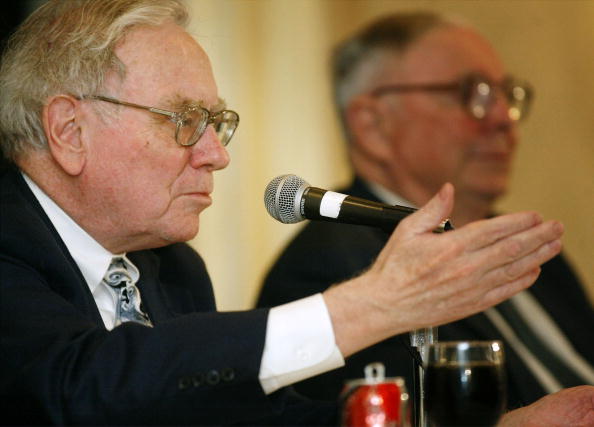
John Case, a 71-year-old retired engineer in Las Vegas, said he has tried to follow famed investor Warren Buffett’s advice to be “greedy only when others are fearful” and to hold stocks for long periods of time.

He said he has often stepped into the market during times of volatility and learned this lesson the hard way when he sold some of his shares during the 2008 financial crisis. That plunge was followed by an 11-year bull market during which the S&P 500 surged roughly 400%. Now, he said he is more confident in his strategy.

“When the market zigs, I zag,” Mr. Case said.

He has steadily increased his exposure to stocks since he stepped out of the workforce, he said. About two-thirds of his portfolio is in stocks, up from around half when he retired.

Mr. Case recently picked up shares of software company Adobe Inc. and Microsoft Corp., which have both recorded double-digit losses this year. Since he bought the shares, though, they have fallen even further, weighing on a retirement portfolio that has already slid in value this year.

Many individual investors who bought the stock-market dip are sitting on losses. Through April, the S&P 500 fell an average 0.2% during the session after it notched a loss, according to Jason Goepfert at Sundial Capital Research, making 2022 one of the worst years for buying the dip since 1974.

Unlike the crash of early 2020, which lasted just 23 trading days, investors are weathering a more prolonged selloff that could worsen as recession risks grow. The Fed’s move to raise rates and shrink its $9 trillion asset portfolio has already triggered a selloff in the government-bond market, sending the yield on the benchmark 10-year U.S. Treasury note jumping past 3% to its highest level since 2018. Higher yields typically chip away at the stock market’s allure by giving investors another attractive place to park their cash.

Individual investors’ appetite for stocks diverges from the behaviour of professional investors, who have collectively sold stocks during the turbulence. JPMorgan Chase & Co. estimates that institutional investors have pulled $199 billion out of the stock market this year, according to an analysis of public order flow data through Friday. Meanwhile, pros keep ramping up bearish bets against major U.S. equity indexes through the futures market, analysis from Citi Research shows.

That hasn’t stopped many individual investors from wading in. Their allocation of stocks in their portfolios crept up to nearly 70% last month, hovering around the highest levels since early 2018, according to a survey by the American Association of Individual Investors. Many individual investors whittled their exposure to bonds, sending fixed-income allocations to a 14-year low.

Some market strategists say that retail investors’ appetite for buying could continue to help support stocks, blunting the impact of severe down days. Goldman analysts forecast that U.S. households will buy $150 billion in stock in 2022, following last year’s record of roughly $390 billion.

Demand could deteriorate if the economy sours. Households have pulled around $35 billion from stock funds since early April, as the selloff accelerated, the firm said.

The rising value of their stockholdings and homes over the past two years has made some investors feel more comfortable taking bigger risks, financial advisers said. Home prices logged a record jump in 2021, while the S&P 500 has still soared almost 80% from its March 2020 low, thanks in part to the Federal Reserve’s Covid-19 stimulus measures that led to a boom in asset prices world-wide.

Pandemic-era stimulus checks and a reprieve from student-loan payments also helped some people stockpile cash. Some are also beginning to reap the benefits of the greatest wealth transfer in modern history, with older generations expected to hand down trillions of dollars in the coming decades.

“They just have more money,” said David Sadkin, a partner at Bel Air Investment Advisors, who oversees about $4.6 billion for high net-worth clients. “We did not see the kind of ‘hit the exit, hit the eject button’ that we’ve seen in the past.”

Mr. Sadkin said his clients have seemed concerned about the latest leg of the selloff but that there hasn’t been any “panic selling.”

Concerns about inflation and Fed policy have already led to sharp stock plunges this year. So far, several of those selloffs have been followed by some of the most dramatic rebounds of the past decade.

On Feb. 24, investors dumped stocks as the Ukraine crisis intensified, sending the Nasdaq Composite down by more than 3% intraday. As stocks hit their lows during the session, a familiar pattern emerged: Investors piled in, helping the index claw back its losses and sending it up to close 3.3% higher than the previous day.

Investors purchased nearly $1.5 billion of U.S. stocks and ETFs that day on a net basis, according to Vanda, higher than the 2022 daily average of nearly $1.3 billion. This year, individual investors’ 10 biggest buying days by dollar volume have occurred when the S&P 500 has fallen rather than risen.

The strategy of picking up stocks and other investments on sale has grown so popular that the term “buy the dip” has mushroomed into an online sensation, garnering millions of mentions on social-media platforms. The growing entanglement of investing and social media means that even sharp plunges can bring on calls of FOMO—fear of missing out.

In January, when stocks suffered their worst month since the early days of the Covid-19 pandemic, and prices of assets including stocks, bonds and bitcoin slid, many investors turned to platforms such as Twitter and Reddit to tout the strategy, leading to more than 200,000 mentions across social media, according to social-media management company Hootsuite. That’s more than 30 times the figure three years ago.

On Monday, as the S&P 500 finished its worst three-day stretch since March 2020, the term started trending on Twitter again.

Chris Johnson, a 30-year-old individual investor who runs an online trading community called The Wealth Squad, has been among those encouraging small traders to remain steadfast. “Every asset class has a down cycle,” he tweeted in April, on a day when the S&P 500 dropped 1%. “Those who survive the down cycles come out of the cycle much wealthier.”

Mr. Johnson, an army veteran turned full-time trader who splits his time between Houston and Las Vegas, has taken advantage of recent market swings to scoop up shares of companies he plans to hold for the long haul. That has helped him amass large positions in companies such as Roblox Corp., Coinbase Global Inc. and Shopify Inc.

Each of the stocks has fallen much further than the broader market, with all three down at least 70% this year. His Roblox and Coinbase positions are now worth about $185,000 and $30,000, respectively. Still, he said he isn’t worried because he believes the companies are industry leaders and the stocks will eventually rebound.

He said he has used the more recent market turmoil to double down on cryptocurrencies, which have tumbled alongside stocks, to help bring down the average cost of tokens in his portfolio. At the moment, he said, “I see opportunities in crypto that I’m not seeing in the stock market.”

Mr. Johnson said he has been trying to be more diligent in taking profits in his own portfolios. In addition to stocks and cryptocurrencies, he said he also has a portfolio of real-estate properties.

Some strategists say buying the dip is a risky way to invest because it is so difficult to gauge whether the market is going to keep falling. Vanda estimates the average individual investor portfolio peaked late last year and has since tumbled, giving the average individual a paper loss of about 28%.

This year’s turmoil has spurred some individual investors to pull back on trades that have soured. After years of investing in index funds, Do Kim, a 45-year-old accountant near Philadelphia, began actively investing in stocks and options in spring 2020, pouring hundreds of thousands of dollars into the market. He won big through options trades and buying dips in technology stocks, and he said his portfolio swelled.

The wild swings in the market this year have tested his belief in the strategy. He has sold some of his losing bets, which include personal-finance company SoFi Technologies Inc. and insurance firm Lemonade Inc., which have both lost more than half of their value this year. At times, he bought the dip in stocks only to have them tumble further.

He said he has recently backed away from the strategy, wary that stocks could fall much further and that there may be a recession on the horizon. “I’ve had a lot of sleepless nights for sure,” he said. For now, he is still holding his Tesla Inc. and Nvidia Corp. shares.

Online brokerages including Robinhood Markets Inc. have reported a slowdown in customer trading activity in recent weeks.

Chief Executive Vlad Tenev said on the firm’s April earnings call that it faced a “challenging macro environment, one most of our customers have never experienced in their lifetimes,” noting that for most of its history, “Robinhood has operated in a period of low interest rates, low inflation and rising markets.” He said that while larger customers are still remaining active, many other customers have become more cautious with their portfolios and are trading less frequently.

Some traders are still looking to make bold bets. At brokerage Webull Financial, traders are flocking to some of the riskiest products designed to profit from market volatility. Trading in exchange-traded funds offering leverage, or turbocharged exposure to stocks and other assets, makes up around half of all ETF trading on the platform, Chief Executive Anthony Denier said.

Matt Wyskiel, who manages money for several individuals at Skill Capital Management in Baltimore, has sought to magnify his exposure to the stock market in his personal portfolio through derivatives and ETFs that profit if volatility edges lower, he said. Those bets stand to win big if stocks rise and volatility falls—and they can also backfire if market turbulence rises.

“I’m calling it a stocks-plus strategy,” Mr. Wyskiel said. He said market volatility this year hasn’t triggered a shift in his strategy. “The best course of action often is to buy and hold and ride it out.”

Reprinted by permission of The Wall Street Journal, Copyright 2021 Dow Jones & Company. Inc. All Rights Reserved Worldwide. Original date of publication: May 10, 2022.

Why Buy a Multimillion-Dollar Home When You Can Live Aboard a Yacht?

David Akellian planned to spend his retirement traveling the world. But that required getting on a plane. When the Covid-19 crisis hit, he quickly pivoted to a different mode of travel and bought a 16-metre yacht.

Mr. Akellian, 61, the former head of global wealth management for Refinitiv, a financial market data firm, always had a penchant for sailing and had planned on buying a boat anyway. As a child growing up in northern New Jersey, his family had a sailboat and spent a lot of time on the Long Island Sound. He just never imagined he would be spending this much time aboard.

During the pandemic, Mr. Akellian, who had been living in a three-bedroom home in Wyckoff, N.J., with his wife, Susan Akellian, has been spending weeks or even months at a time living on the yacht, he said, cruising to the Bahamas and frequently docking at a marina in Jupiter, Fla. He’s currently planning to spend a few weeks in the Bahamas, then cruise back up the East Coast for the summer, making stops on the coastlines of Georgia and South Carolina, weaving through Chesapeake Bay and eventually docking in Connecticut. The $1.9 million yacht he bought last July is a Navetta 52, built by the yacht maker Absolute Yachts, and has three bedrooms, a large terrace, a main salon with 360-degree views and an outdoor galley with a dining table. It is built for cruising, with high ceilings and large windows. The motor yacht is small enough that Mr. Akellian can operate it without a crew.

“I figured I could buy a US$2 million home in Jupiter or I could buy a US$2 million boat and go different places and explore different areas,” Mr. Akellian said. “Economically it just felt right.”

Spending long periods living on board a yacht has long appealed to superrich business titans such as DreamWorks co-founder David Geffen. Now, as the pandemic drags on, it has gained popularity among a subset of people fortunate enough to be able to afford it and looking for a low-risk way to travel. “A lot of our clients have wanted a safe haven, a private domain where they could be away from other people and feel safe with their families,” said Jim Dixon of Winch Design, an international design firm that works on yacht projects.

The proof is in the numbers, which show three years of consistent order-book growth in the yacht sector, according to Boat International. The yachting trade publishing company found that, at the end of December 2021, there were 1,024 boats on order and in production for the following year, up almost 25% from the tally at the end of the 2020. The surging numbers of new and would-be yacht owners have left marinas packed and global shipyards with lengthy order backlogs, compounded by supply-chain issues brought on by Covid and the war in Ukraine.

“The clients without yachts are desperately searching for a slot or a production boat already in build, which has a shorter lead time,” said Mr. Dixon, noting that while he’s constantly in communication with shipyards about their capacity, many of his new projects now won’t be completed until 2026 or 2027.

When the pandemic hit, Florida developer Gil Dezer, 47, best known for condos such as the Bentley Residences in Sunny Isles Beach, was fortunate enough to already own his 84-foot motor yacht, a Sunseeker Predator retrofitted with a special engine package that achieves 45 miles an hour. He bought it for US$7.7 million in 2010. At the height of the early pandemic, he and his then-girlfriend were occasionally traveling 200 to 250 miles a day. Sometimes, his two children would join them, doing Zoom school aboard, he said.

“It used to be, we would go out once a month for three days or so, but during Covid it was a savior because it meant we weren’t stuck at home,” he said. “We took it out for months at a time and went up the East Coast to Martha’s Vineyard. We got to see the United States.”

The expeditions came with a price. Mr. Dezer said his boat’s superfast engines burn about 220 gallons of diesel per hour, whereas a typical boat of that size burns about 60. Mr. Dezer said his then-girlfriend occasionally felt some cabin fever but he never did. With four bedrooms and often just two people aboard, he said there was plenty of room to grab a moment of privacy.

But even those who already have a yacht can’t avoid the supply-chain issues. Mr. Akellian said he recently ran around for weeks trying to buy a small inflatable tender for his boat, but with at least one large tender manufacturer based in Ukraine, it was next to impossible. When he finally found one, manufactured in Turkey, he was told it wouldn’t arrive for more than a month, he said.

Vural Ak, 54, a Turkish entrepreneur and speed enthusiast whose interests include a rental car company, agricultural businesses and a motor sport racetrack, completed his superyacht, the roughly 280-foot motor yacht Victorious, last year. Superyachts are generally defined by brokers as those over 25 meters in length. Mr. Ak, who normally lives in Istanbul, said he intends to spend four or five months a year on the boat and, as such, like many other yacht owners, is looking to maximize its autonomy.

The long-distance Victorious has a range of about 15,000 miles and enough refrigerated food storage and freezers to provision for six months at sea. It has a gentleman’s club with a wood-burning fireplace, a beach club, a gym, a massage room, a beauty salon, a hammam, a children’s playroom for Mr. Ak’s three children and a flexible workspace that can be transformed into an entertainment area. The cost: roughly $100 million.

Elaborate heating and air-conditioning systems mean the boat can operate easily at almost any temperature,” Mr. Ak said. “It can be in Saudi Arabia or in Antarctica,” he said.

Mr. Ak’s journey to build Victorious predates the pandemic but it still influenced the design. He included a space that could be used as either an isolation or hospital room with its own separate HVAC system in case someone on the boat is required to quarantine.

He purchased the incomplete yacht from Graeme Hart, New Zealand’s richest man, in 2016, he said. Then, struggling to find a shipyard that could complete the boat to his desired specifications, he eventually resorted to starting his own shipbuilding company in Istanbul. His wife, Nur Ak, and friends thought he had lost his mind, he said.

But the new venture has given Mr. Ak a front-row seat to the frenzied state of the yachting world. After taking his boat to a yacht show in Monaco earlier this year, he entered contract talks to build four yachts, a striking wave of demand for such a new company. Meanwhile, he’s finding that “the logistics chain is nearly broken,” he said. “You order something and it comes only after many, many months,” he said.

Zaniz Jakubowski, a London-based designer who goes by the name Zaniz and who recently designed a roughly 350-foot yacht, said she’s also seeing an uptick in new owners looking to make their yachts more efficient, asking about the latest innovations in fuel efficiency and in wastewater treatment systems, which can reduce the volume of waste over long passages. They are also more focused on fast connectivity and solid Wi-Fi, so owners can work remotely more reliably, she said.

“I have clients who now live aboard three to four months of the year,” she said. “I think people have realized how wonderful it is to be on board for extended periods, which then changes the design slightly.”

She said clients looking to maximize their time on board are asking for spaces that can be used in several different ways. On one of her most recent projects, a luxury superyacht, Zaniz said she included an office with a personal assistant’s office attached. The project also included a “touch-and-go” helipad immediately outside the office so that clients could come in for a meeting without moving around the whole yacht to get to the main helipad. She also designed a series of cold rooms, including a flower storage room and freezer space for ice cream.

“If you’re out in the middle of the water and you want to dress your boat with flowers, and you’re going to get a delivery every two or three weeks from Holland, you need to store the flowers in the correct environment with the correct temperature,” she said. “If you have a craving for a certain ice cream from America, you need your coolers to be there.”

Mr. Dixon said he recently had a client who wanted to grow his own fruits and vegetables on board.

There are, of course, drawbacks to spending long stretches of time on the water, Mr. Akellian said, especially if one’s yacht doesn’t fall into the superyacht category. For one, Mr. Akellian said he doesn’t have a dishwasher on board, so he has to hand wash everything and minimize the pots and pans he is using. He also has no oven, so he relies on a stove top and microwave. For laundry, he mostly heads out to a laundromat since the washer on board doesn’t have sufficient capacity. “I’ve never been one to separate the whites from the colours,” he said. Mrs. Akellian, 61, still works in New Jersey and visits periodically.

Another inevitable part of yachting is wear and tear on the boat. Mr. Dezer said he had to put his boat, which had been getting battered, in the shop for repairs late last year. It is slated to be back in the water next month.

In the superyacht market, there is also some growing anxiety around the confiscation of a number of superyachts owned by Russian oligarchs, as governments around the world hunt down the luxury real estate, private jets, yachts and other assets of Russian elites located around the globe amid the war in Ukraine. Many in the yacht market expect that if these confiscated yachts start hitting the market, it could cool prices in the booming boat market.

“It’s natural it’s going to have an effect,” said Richard Lambert, senior partner and head of sales for yacht brokerage Burgess Yachts, though he noted that the American market accounts for about 30% of the global market, while Russian superyachts only make up about 10% to 12% of the total market.

Another factor could cause choppier waters for yacht owners: the volatile price of fuel. On a Facebook group for yacht enthusiasts, Mr. Akellian said he has noticed more people worrying about the price of fuel.

“When I burn my engines for the full day and then go to the dock to refuel, they say ‘That’ll be $800.’ You’re thinking, ‘Oh, my God. That’s more than my first car cost.’ ”

Mr. Dezer said he would like to upgrade to a new boat, but most shipyards are no longer manufacturing superfast boats with engines such as the ones on his Sunseeker Predator. He said most companies are now trying to be more sensitive about the environment.

“If you have to worry about gas, you shouldn’t have one of these boats. That’s my answer,” Mr. Dezer said.

Reprinted by permission of The Wall Street Journal, Copyright 2021 Dow Jones & Company. Inc. All Rights Reserved Worldwide. Original date of publication: April 21, 2022.—