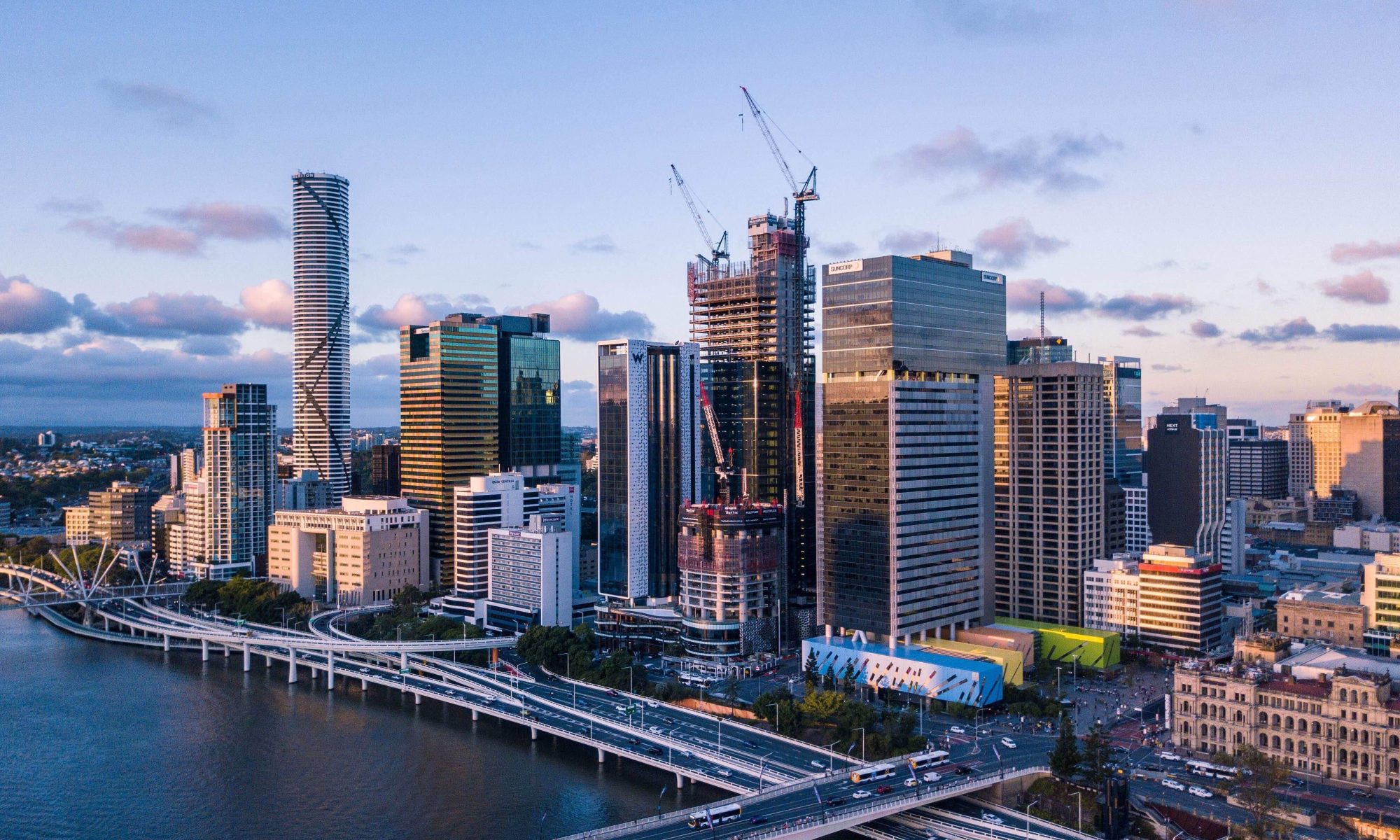
Sydney Most Affordable East Coast City For Liveability … Apparently

Yes, you read that correctly. Sydney has been declared the east coast’s most affordable city for liveability by PRD Real Estate.

Ignoring the fact that the Harbour City has an entry-level price of $1.2 million for a house within 20km of the CBD, PRD’s research argues that Sydney is indeed “the most affordable city for liveability.”

The firm’s reasoning boils down to Sydney having the greatest cost differential between premium and affordable dwellings in the same metropolitan area.

Residents can purchase a house in a liveable suburb for 87% less than the premium needed to purchase in Sydney Metro, well above the other eastern capitals.

PRD’s considerations for affordable and liveable suburbs include property trends, investment potential, affordability, project development, and liveability factors such as low crime rates, availability of amenities within a 5km radius (i.e. school, green spaces, public transport) and a steady unemployment rate.

According to PRD, Peakhurst in Sydney’s south came out on top for houses.

The suburb’s median house price for the first quarter was $1.2 million while units were among the most affordable at $685,000.

Melbourne Metro is the runner up at 42% less, and Brisbane third at 16% less.

Melbourne’s most affordable and liveable houses are found in Greenvale ($728,000), Bellfield ($800,000) and Mulgrave ($850,000).

Elsewhere, Melbourne’s most affordable units were found in Northcote ($595,000), Lower Plenty and Pascoe Vale (both $630,000)

Brisbane’s best performing suburbs included  Springwood  $530,000, followed by Rochedale South ($545,000) and Ferny Grove ($653,000).

Warner had the lowest-priced units in the Queensland capital with a median of $290,000, followed by Taigum ($320,000) and Coorparoo ($422,000).


CBA Broadens Its Digital Strategy

The Commonwealth Bank of Australia (CBA) will be the first big four bank to allow customers to view account information from rival banks within its app – adding functionality to its digital offering.

“We aim to be the most trusted partner at the centre of our customers’ financial lives by saving them money, giving them more control over their finances, and by making banking simpler and easier,” said CBA CEO Matt Comyn.

The move increases the bank’s usage of the ‘consumer data right’.

Further, the bank aims to increase its use of data and disruptive tech-focused business to improve its digital offering to the customer.

“We are integrating new services into our platform to customise and personalise the digital experience in ways that will increase engagement and bring greater value to our customers,” added Mr Comyn.

The statement is made evident through CBA’s 25% shareholding in Amber, a new energy retailer providing direct access to wholesale energy prices for a monthly subscription of $15.

Consumer data right will soon be extended from banking to energy and Amber will provide CBA with relevant consumer behaviour when buying energy.

“Purchasing a home is a time when customers look for ways to save money, and electricity is a large expense in a household budget. Our partnership with Amber will help to differentiate our home buying proposition …”

Also announced today is a 23% shareholding in Little Birdie, an online shopping start-up designed to help customers find deals online.

“Deals and offers, integrated with CBA’s goal savings products, will help customers save for a special purchase in a completely different way.”

Property Of The Week: 6 Desaumarez St, Kensington Park, SA

Located on the quiet, English Oak tree-lined Desaumarez street in the eastern suburbs hot spot of Adelaide’s Kensington Park is this warm, character residence reborn.

Built circa 1926, the home has been extensively renovated and sees 3-bedrooms, 2-bathrooms and 1-garage.

On arrival, one notes the privacy offered through manicured hedges and the handbuilt wooden slate gate. Here, entering into the driveway is a Japanese inspired, professionally landscaped garden, replete with Volcanic Basalt pavers, walls and feature boulders.

Upon entry, the home’s charm and immediate warmth is apparent – provided by the polished Tasmanian Oak floorboards and the sunny aspect.

The home meanders from room to room – echoing the kind of serenity found in the gardens. Here, a wide entrance – replete with feature lighting – guides one through to the dining area, which overlooks the established gardens.

The main living spaces are home to a custom “library wall”, gas fireplace in the main lounge, and German designed Paarhammer custom tilt-and turn windows.

It’s also here the kitchen lands, complete with Falcon gas cooker, oven, overhead pot filler and Miele appliances.

A Sonos audio system serves the rear garden, kitchen and dining area, bathroom and main bedroom.

The home is also privy to three bedrooms, with the master bedroom complete with built-in robe, more custom joinery (which houses VAF speakers).

Kensington Park is close to The Parade’s boutique shops, cafes, cinemas, Burnside Village, Marryatville shopping precinct and elite schools including Pembroke, Marryatville and Norwood Morialta.

The listing is headed to auction on June 5 and is managed by Stephanie Williams (+61 413 874 888) of Williams Real Estate. Williamsproperty.com.au

Australia’s Regional Rent Markets Soared

Regional Rent Rise

Rent in regional markets has increased at almost three times the rate of capital city markets in the past 12 months.

That’s according to the Corelogic Hedonic rental value index, which tracks the combined value of rent estimates for all dwelling types. The index points out that all dwelling types increased 9.6% for regional rents, while capital city markets increased 3.3%.

“Of the 25 regions analysed, total available rent listings have, on average, halved during the year,” said Corelogic head of research, Eliza Owen.

“Across these regions, the average time a rental property spent on the market has declined from 25 days in the three months to April 2020 to 17 days during April 2021.”

According to Owen, factors that influenced the tightening of the regional rent market included less people leaving the regions – due to COVID-19, an influx of people moving to the regions, boosted domestic tourism markets and rising property values.

“Creating more affordable housing in regional Australia and major cities could ease rental conditions,” added Owen.

“Having well dispersed affordable housing options can also serve to restrict internal migration based on affordability constraints.”

TikTok Crypto Influencers Are Teaching A New Generation of Investors

On March 22, 2020, the day before the United Kingdom announced its first Covid-19 lockdown, Joel Davies joined TikTok, excited by the buzz surrounding it. He was unaware that doing so would lead him toward life-changing money. Davies, 23, had been interested in cryptocurrency since the age of 16, but apart from a small investment in Bitcoin, his curiosity remained on the back burner while he finished his studies in film, television and digital production at Bath Spa University. After graduating in 2019, Davies moved back into his parents’ house in South Wales, stacked savings from his marketing job and, in the evenings, logged on to a Discord server, a communication platform he discovered through Dennis Liu, 26, a leading crypto influencer on TikTok, who also goes by the name VirtualBacon.

“When I found VirtualBacon on TikTok, that spurred me more into investing and learning about [cryptocurrency],” says Davies. Liu’s down-to-earth style and emphasis on research and analysis stood out to Davies in a space that he saw as rife with shilling, scams and hyperbolic price targets. Aided by VirtualBacon’s Discord community and TikTok videos, Davies learned the basics of investing in crypto, including how to trade on centralized exchanges and create a digital wallet, then more advanced skills, such as how to analyze tokenomics and assess the fundamentals of a company. He made his first crypto investment a month into the U.K. lockdown. Over the course of a year, Davies says he transformed his initial investment of 2,500 GBP into nearly 100,000 GBP (about $3,548 into nearly $141,930).

Perhaps no other market is more susceptible to social media’s influence than cryptocurrency, where, for instance, a single tweet from Elon Musk can pump Dogecoin, a meme currency, to all-time highs or send Bitcoin spiralling. One TikTok user created a coin called SCAM (“Simple Cool Automatic Money”) as a joke and it grew to a $70 million market cap an hour after its release. It is currently at an approximately $850,000 market cap.

Newer, self-directed investors are more likely to put their money in riskier investments like cryptocurrency, in part because of the thrill, novelty and social cachet, according to a study commissioned by U.K. watchdog Financial Conduct Authority. Much of cryptocurrency’s buzz, the study found, is due to influencers and hype on social media. An informal coterie of crypto enthusiasts has recently flocked to TikTok because it represents the greatest potential to expand their audience, says Liu. And the audiences they are reaching likely skew young, according to an April survey from Pew Research Center that shows 48 percent of adults under age 30 say they use TikTok, compared to just 22 per cent of those ages 30 to 49. Scams—like meme economies in which online memes are treated like financial commodities and vice versa as well as pump-and-dump schemes—also run rife, according to some influencers on the platform.

“When I started doing crypto [videos] on TikTok, nobody was doing them,” Liu says. Liu’s first foray into crypto was mining Dogecoin—using computers to solve complex mathematical problems in order to introduce new coins into circulation—from his McGill University dorm room in 2014. In 2017, he had some extra cash he wanted to invest and crypto was what he knew best. “It’s a more risky playing field, but, in a weird way, that’s kind of more fair for someone that’s new—a younger audience,” he says. Liu’s most popular TikTok videos are timely analyses, he says, of major price shifts in Bitcoin and Ether, especially when they dip, and other highly traded crypto assets. “People on TikTok are often very new investors, so those types of videos do well,” he says. “It’s not just analysis, but a bit of reassurance to calm their minds in the volatile crypto market.” In his videos, his straightforward delivery, talking over a green screen that displays a coin’s chart or other information, is now a popular format on crypto TikTok.

CryptoWendyO, the TikTok username of a person who says she is a woman in her 30s and declined to give her real name, saying that she has experienced online harassment, makes four to eight TikTok videos a day, analyzing Bitcoin’s price movement, responding to questions in the comments or rounding up the top three daily news stories in crypto. Her most-watched video has over 500,000 views and details a simple investment strategy known as the “moon bag.” “The moon bag strategy is you pull out your initial investment once you’re in profit, and then you take your initial investment and roll it into another project,” she says. “Rinse and repeat.”

CryptoWendyO says she didn’t take TikTok seriously at first but was won over after Ben Armstrong, who goes by BitBoy Crypto, among the most popular crypto accounts with over 2.6 million TikTok followers, encouraged her to join. “TikTok is a great platform to get a large amount of information in a very short amount of time,” says CryptoWendyO. “I can get a lot more on a TikTok video than I can on a Twitter [thread], and more people are going to watch the TikTok.”

Lucas Dimos, 20, known on TikTok as TheBlockchainBoy, says he first heard of Bitcoin from his mom in 2017. “I came for the money, but I stayed for the tech,” he says, echoing a common refrain on crypto social media. Later, he started his own blockchain company, CryptoKnight, to develop an algorithmic trading bot and today runs a Discord server by the same name. Dimos joined TikTok on January 27, 2021 in the heat of the GameStop short squeeze. Since then, he has gained more than 210,000 followers.

study by Paxful, a cryptocurrency trading platform, analyzed more than 1,200 videos from TikTok finance influencers and determined that one in seven videos misleads viewers by encouraging them to make investments without making clear the content is not meant to be taken as professional financial advice. The study did not conclude whether or not the videos intended to mislead. Dimos describes what he sees as an ecosystem of undisclosed paid promotions. “Developers will go to the influencer and say, ‘We want to give you $3,000 worth of this token—make a video, hype it up and then you can sell for a massive profit,’” he says. (Dimos and CryptoWendyO say they disclose all of the sponsors in their videos, per TikTok’s community standards. Liu did not respond to a request for comment about compensation and sponsorship.)

TikTok declined to comment for this article. Its community guidelines state, in part: “We remove content that deceives people in order to gain an unlawful financial or personal advantage, including schemes to defraud individuals or steal assets.”

Dimos and CryptoWendyO stay away from meme coins, which tend to be online jokes that are turned into cryptocurrencies, like Dogecoin. “By the time the videos circle TikTok’s algorithm, the coin is already pumped and dumped,” says CryptoWendyO. This happened on May 12 with Shiba Inu, a meme coin, which the coin’s website has nicknamed the “Dogecoin killer.” In part thanks to viral TikTok videos targeting investor FOMO—“fear of missing out”—in the wake of Dogecoin’s parabolic rise, $SHIB rocketed in price, increasing 25-fold within the beginning of May, until an approximately $1 billion sell-off by Ethereum co-founder Vitalik Buterin, which he said was a donation to help fight Covid-19 in India, caused $SHIB and several other meme coins to plummet.

Dimos believes all the scamming—what insiders call “rug pulling”—that happens on TikTok in particular, not only takes advantage of new, vulnerable investors, but also tarnishes the image of cryptocurrency. “Every meme coin that exists today feels like a spit in the face to people like me who’ve worked for the professional blockchain industry,” he says.

After becoming an early and active member of VirtualBacon’s Discord server, which has over 20,000 members today, Davies recently joined VirtualBacon in an official capacity, serving as the content marketing lead for BaconDAO, or “decentralized autonomous organization.” Led by Liu, a community of expert contributors shares daily market analysis, picks for low-market-cap “gems” and other insights, while the community can vote on what topics Liu will cover in his TikTok videos, ask questions and chat about their trades. Although it’s not yet publicly listed, those who purchase and hold the $BACON currency will gain access to BaconDAO exclusive content.

TikTok has exposed a class of new investors to cryptocurrency, but for crypto influencers it is now becoming a feeder channel for other online platforms, like the BaconDAO community and Patreon, where many influencers monetize their Discord channels by charging for access. Young crypto investors seem to be particularly mercurial. In March 2021, one year and six figures later, Davies became bored by TikTok and deleted it.

Reprinted by permission of The Wall Street Journal, Copyright 2021 Dow Jones & Company. Inc. All Rights Reserved Worldwide. Original date of publication: May 21, 2021.

Apple and the End of the Car

Now that the car is evolving into essentially a smartphone on wheels, it’s no wonder Apple is kicking the tyres.

First, there is the transition from internal combustion engines to electric motors, which have far fewer mechanical parts. Now, enabled by that change, a second shift is under way—one that’s a prerequisite for a self-driving future.

For a century, the automobile was a system of interoperating mechanics: engine, transmission, drive shaft, brakes, etc. As those mechanics evolved, electronic sensors and processors were brought in to assist them, but the concepts changed little. The result was cars with dozens or hundreds of specialized microchips that didn’t talk to each other. Now that auto makers are moving to electric motors, elaborate entertainment systems and adaptive cruise control, cars need central computers to control all these things—why not use them to control everything?

At the hardware level, this might just mean fewer chips handling more of a car’s functions. Yet it has profound implications for what future cars will be capable of, how car makers will make money, and who will survive—and thrive—in what could soon be a global automotive industry made unrecognizable to us today.

No one inside Apple is saying exactly what its plans are, but the company has been contemplating a role in autos for years, spending huge sums on hiring hundreds, then eliminating their roles when its priorities change, and almost as quickly hiring other engineers with similar skill sets, then firing yet more engineers, all to realize a still-mysterious ultimate vision.

The company also recently approached auto makers including Hyundai about a potential manufacturing partnership, then saw talks fizzle. It’s just as likely Apple is, as usual, experimenting until or unless it hits on something it thinks it can do better than anyone else.

“We have seen enough echoes in the supply chain that we know Apple is really looking into every detail of car engineering and car manufacturing,” says Peter Fintl, director of technology and innovation for Capgemini Engineering Germany, part of a multinational that works with dozens of auto makers and parts manufacturers. “But nobody knows if what Apple creates will be a car or a tech platform or a mobility service,” he adds.

Many other tech companies, including Intel, Nvidia, Huawei, Baidu, Amazon and Google parent Alphabet, are pushing into the usually staid, conservative and relatively low-margin world of automobiles and their parts. Meanwhile, traditional auto makers like Ford, General Motors, Toyota, Daimler and Volkswagen, plus longtime automotive suppliers such as Bosch, ZF and Magna, are trying to behave more like those tech companies.

Basically, everyone is shifting their emphasis to software—and hiring like crazy to do it. In the past year, almost every major automotive company has advertised that it would like to hire many more software developers. Volkswagen, for example, announced in March 2019 that it would add 2,000 to its technical development team; the company already employs thousands of software engineers.

“Software is eating the world, and cars are next on the menu,” says Jim Adler, managing director of Toyota AI Ventures, a venture-capital fund owned by the car maker.

From hardware to software

Today’s most complicated automobiles have up to 200 computers in them, just smart enough to do their jobs controlling everything from the engine and automatic braking system to the air conditioner and in-dash entertainment, says Johannes Deichmann, a partner at McKinsey whose expertise is software and electronics in automobiles. These computers, made by an assortment of suppliers, tend to run proprietary software, making them largely inaccessible even to the auto maker.

Such modularity is fine up to a point—when building a Chevy Malibu, does GM really need to know how the windshield-wiper computer works? Yet the proliferation of these narrow-minded processors has led to unsustainable complexity, says Mr. Deichmann.

Tesla, as you might imagine, has been instrumental in pushing the auto industry in a new direction. Since the first Model S, Tesla pioneered replacing hundreds of small computers with a handful of bigger, more powerful ones, says Jan Becker, chief executive of Apex.ai, a Palo Alto-based automotive-software startup. Systems that used to require dedicated microchips now run in separate software modules instead.

This is why Tesla can add new capabilities to its vehicles through over-the-air updates, he adds. Want better acceleration, longer range, an enhanced self-driving system, or your in-dash entertainment system to play fart noises every time you flip your turn signal? Tesla has shown they’re just a software upgrade away. It’s very much like the model of continual updates to the software in our mobile devices we’ve come to expect.

Following suit, auto makers are scrambling to build or commission their own whole-car operating systems. The field is still wide open, says Mr. Fintl. Nvidia offers its Drive OS, VW and Daimler have announced they are, like Tesla, working on their own, and Google is insinuating itself ever deeper into vehicles through its Android Auto OS. To date, it’s still focused on in-dash entertainment and navigation, but Ford recently announced that as of 2023, it will use Android in the displays of all models sold outside of China—including the just-revealed Ford F-150 Lightning—and will also use Google to help manage the data streams collected from its vehicles. GM is also using Android in its all-electric Hummer.

This is where Apple might face a tough decision: While it has the chance to flex its enormous software and chip-making expertise to create a next-generation platform for the highest bidder, the company tends to create products for its own brand, not components for others. Besides, the strategy of being just another supplier to auto makers is already being pursued by Intel (via Mobileye), Alphabet (via Waymo and Android Auto), Nvidia and others.

The enormous complexity and expense of making and delivering vehicles by the thousands, much less millions—and making them safe—are why so many tech companies are joining forces with automobile companies, rather than trying to build their own vehicles, says Ryan Robinson, automotive research leader at Deloitte.

While analysts for years predicted that big auto makers would make short work of Tesla, it turns out electric vehicles are more about software than hardware. And auto makers aren’t yet good at the kind of software today’s cars and drivers demand. Volkswagen decided last June that, despite years of development, it had to delay the debut of a flagship electric vehicle because its software wasn’t ready.

Enter Apple

“This is the big industry mystery, if a famous fruit company is entering the game,” says Mr. Deichmann.

Apple already has its CarPlay in-dash interface for iPhones. But it’s limited to functions such as entertainment and navigation, and has nothing to do with the deeper integration and capabilities required of a true vehicle operating system. Apple has also demonstrated tremendous capabilities in designing the kinds of microchips and sensors that a smart automobile would require, though for now they’re mainly found in iPhones, iPads and Macs.

Apple didn’t respond to requests for comment.

Apple could build an operating system for a whole vehicle, and run it on its own silicon. But the company seeks to vertically integrate whenever possible, to control every aspect of the user experience. So the question is: Would a car maker let Apple treat it as the company once treated AT&T, when it first rolled out its iPhone? Or the music labels, when it launched iTunes? At a stroke, it turned the tables and took control of massive markets and significant portions of our lives.

This February, Apple’s partnership talks with Hyundai broke down, possibly over Hyundai’s concerns about being absorbed into the Apple Borg. Immediately after, Nissan signalled it might be willing to work with Apple.

If there is any tech company on earth with the resources to go it alone, building a new automaker from the ground up, it’s Apple. But there is no indication this is the company’s aim. If Tesla is the model here, it’s unclear why Apple’s executives would want to endure the tortuous process of building the manufacturing, testing and service capacities this path would require.

If providing the brains for other auto makers’ vehicles is unlikely, and competing directly with Tesla and every other electric vehicle startup unsavoury, that still leaves another option for Apple. As the automotive industry inches toward self-driving taxi services, Apple’s persistence in both acquiring and developing software and hardware for electric, autonomous vehicles could signal its long-term ambitions. Could an Apple mobility company, instead of an Apple car, make the most sense?

GM’s Cruise, Amazon’s Zoox and many others are already moving down this path. But since no such robot-taxi service yet exists, save for some limited experiments by Waymo in Arizona, there is potential for Apple to create something it controls completely, while also providing significant additional revenue to a struggling automaker such as Nissan.

Apple and others could design and commission vehicles that bear their branding, and operate as part of a service they provide, with no trace of the actual manufacturer on them, says Mr. Deichmann.

Apple, after all, isn’t an electronics manufacturer. In fact, it outsources all of its manufacturing, much of it to Foxconn—which as it happens is building up its own auto-making capabilities. Rather, Apple is first and foremost a customer-focused company that uses technical know-how to develop products physically made by contractors like Foxconn. It just happens that deep technical expertise is how it realizes its leaders’ visions. And because fully autonomous driving is turning out to be much harder than anyone predicted, Apple could have the time it would need to develop its own service.

It’s quite possible that Apple will end up spending billions on attempts to develop an electric car without ever releasing a product. Or maybe it offers a product or service that fizzles. It’s possible that transportation is so different in scope and complexity from personal and mobile computing that the only way to succeed is through the kind of grand-scale collaboration Apple isn’t known for.

Toyota chief Akio Toyoda said in March that Apple should prepare itself for a 40-year commitment if it offers cars to consumers. This makes sense, especially if the goal turns out to be not merely to create a car, but to replace a significant portion of the world’s 1.4 billion cars with a completely autonomous, emissions-free, radically transformed transportation system. In other words, a trillion-dollar revolution—and Apple’s already pulled off one of those.

Dasha Zhukova’s New Real Estate Venture

The future of museum-going and cultural forays could be down in your own lobby, according to Dasha Zhukova, the arts patron and philanthropist who is launching a new residential real estate development firm in New York.

Ray, the name of Zhukova’s new brand, sets out to remedy a blind spot she sees in the residential world: the lack of arts and culture experiences in urban developments. Where other buildings and “co-living” spaces offer perks like golf simulators and dog grooming services, Ray’s buildings will offer cultural programming like master classes, events and workshops drawn from local institutions and artists to encourage creative synergy, says Zhukova, 39, with rents pegged at or below market rate.

One of the venture’s projects is reimagining Harlem’s three-story National Black Theatre, founded in 1968 by the late Barbara Ann Teer on the corner of 125th Street and Fifth Avenue, and is set to break ground by the end of May. A 21-storey building will take its place, with the new theatre space, retail and an event space spread across the first four floors, which Ray is developing with L+M Development Partners. The final structure will include 222 apartments, as well as artist studios, co-working spaces, communal kitchens, a library and a wellness space, and is slated to be completed in 2024.

Teer’s daughter, Sade Lythcott, now leads the theatre. “This project and partnership has felt [like] kismet from the time Dasha and I first met in 2019, not around aesthetics or Ray’s business model, but around our mothers. What it has meant to be women, raised by fearless matriarchs,” Lythcott wrote by email. “There is an incredible amount of equity created when you first start from a place that recognizes our shared humanity, honours what came before, in service of creating the built spaces of the future.”

Zhukova was inspired to launch Ray after seeing how visitors were drawn to the Garage Museum of Contemporary Art, the Moscow museum she co-founded in 2008. Its current home was designed by acclaimed architect Rem Koolhaas. “Even if [visitors] had seen all the shows that we had on, they would just stay and hang out in our lobby,” she says. “They would hang out in our cafe for hours on end—just come back day after day because they wanted to be in that environment.”

While hotels such as New York’s Gramercy Park Hotel have showcased art collections including names like Andy Warhol, Damien Hirst and Jean-Michel Basquiat, and developers have often staged high-end homes with trendy art to help sweeten the blue-chip price tags, one of Ray’s rental buildings will boast a permanent installation by Rashid Johnson, whose work just fetched a record US$1.95 million at Christie’s on May 11. Johnson will be creating a plant-filled installation for the lobby of a 110-unit building in Philadelphia’s rising Fishtown neighbourhood, which also will have six street-level artist studios, as well as maker spaces, and will be completed in 2022.

“Access to art shouldn’t be for a privileged few,” Johnson wrote by email. “These art and living spaces are aiming to bridge some of this gap, for me that’s exciting.”

The first two Ray ventures in Philadelphia and Harlem are largely financed by Zhukova. Ray recently inked a third deal, in Miami, where the site will expand beyond the 250-plus unit rental building that will anchor it, says Zhukova, with future plans for retail, offices, landscaped walkways and single- and multi-family homes.) With each project, Ray will emphasize new buildings rather than retrofitting existing space: “To truly rethink the space and how we occupy it…you really need to rebuild,” says Zhukova, who is looking to make inventive use of materials and space in part to make up for areas where Ray is spending more freely. “The focus [is] on how our habits have changed, the technological innovation and the cultural change.”

Her team at Ray currently eschews traditional titles—Zhukova calls her colleagues “thought partners”—and includes Will Kluczkowski, a real estate veteran from DDG; Becca Goldstein, a Stanford MBA whose CV includes a stint at a Brooklyn-based whisky distillery; and the design gallerist Suzanne Demisch.

“We are looking for creative solutions,” says Demisch, who says she enjoys the challenge posed by a limited budget. “We are asking why. There’s not a package for all the touchpoints of the experience—it’s about the aesthetic and the culture of each location.” Months were spent developing and perfecting the hand-split bricks for the facade of the Philadelphia project with manufacturers Glen-Gery and architecture firm Leong Leong—and finding the perfect Pantone swatch for the pinkish hue of the Harlem building facade, which is a nod to the historic Nigerian site the Osun-Osogbo Sacred Grove.

Such historic references were a priority of the architect of Ray’s Harlem project, Frida Escobedo, who is based in Mexico City. Art panels, inscriptions and a geometric, rhythmic facade that echo the motifs of the original National Black Theatre all refer to its previous incarnation, but “we’re also putting a great deal of focus on communal spaces, such as the artist studio and constellation of gathering areas,” says Escobedo, who is collaborating on the interiors with designer Little Wing Lee of Studio & Projects.

Zhukova, meanwhile, is partnering with Artspace, the Minneapolis-based nonprofit developer of art spaces, which will receive funding from the Ford Foundation in order to provide housing and studios at the Harlem building. She hopes to do the same in all Ray buildings. Her goal is to create accessible rents that will allow artists to remain in their home neighbourhoods rather than fleeing cities for more affordable live/work options. Zhukova next has her eye on rising cities including Austin, Nashville, Denver and Portland, Oregon, where she says they will focus on neighbourhoods that are a cultural fit for the brand.

“My personal dream is to build in Arizona,” says Zhukova. “I think in that climate and given the less restrictive building codes, you could build something absolutely incredible.”

Reprinted by permission of WSJ. Magazine. Copyright 2021 Dow Jones & Company. Inc. All Rights Reserved Worldwide. Original date of publication: May 14, 2021

Auction Markets Running Out Of Steam

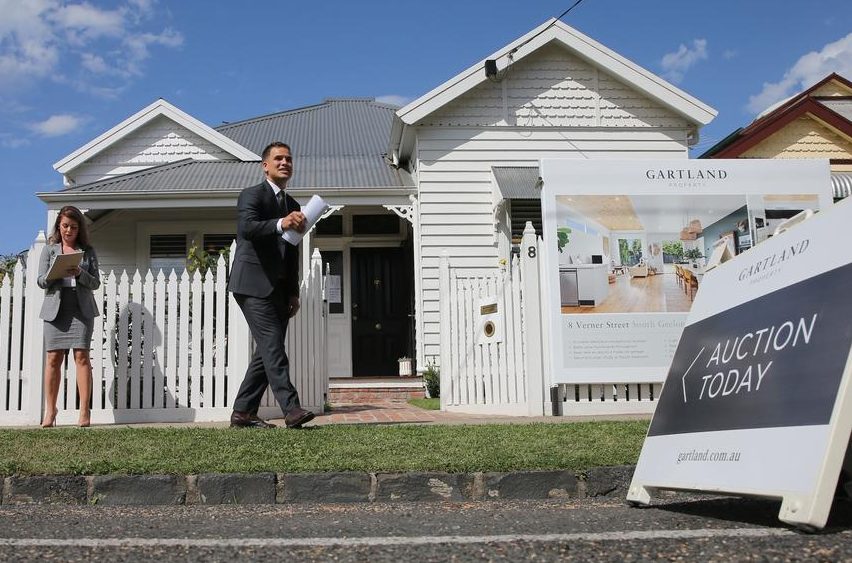
Home auction markets reported mixed results over the weekend, May 22, as more record-level offerings tested buyer depth.

National listing numbers were again lower on Saturday but stayed within touching distance of the <ay record of 2563 reported two-weeks ago with 2333 auctions this past weekend.

The national average clearance rate increased to 82%, higher than the previous weekend’s 80.8% and the first rise in six weekends. However, despite the lift, it is smaller markets like Adelaide (90.1%) and Canberra (91.2%) carrying the results.

The larger auction capitals of Sydney and Melbourne are showing signs of fatigue and are expected to drift downwards over the next coming weekends.

Sydney reported a clearance rate of 81.5%, again lower than the 82.9% recorded the previous weekend. Saturday’s results were the fifth consecutive weekend of lower rates.

A total of 949 auctions were reported in the Harbour City, again just below the previous weekend’s 990.

Sydney has now recorded an unprecedented four consecutive weekends with more than 900 auctions, with this weekend’s median price of houses sold at auction sitting at $1,620,000, lower than the previous Saturday’s $1,641,000.

Melbourne reported a clearance rate of 76.9% which was again below the 78.6% of the previous weekend and just ahead of the 74,0% recorded over the same weekend last year.

Saturday, May 22 was the lowest clearance rate of the year so far.

A total of 117 homes were auctioned in Melbourne, close to the previous weekend’s 1159 listings.

Melbourne recorded a median price of $995,500 for houses sold at auction on the weekend which was 9.8% lower than the $1,093,000 recorded over the previous weekend, but 9.9% higher than the 906,000 recorded over the same weekend last year.

Data powered by Dr. Andrew Wilson of My Housing Market.

Prestige Property: Quamby Estate, Hagley, TAS

Quamby Estate has adopted diverse and distinguished roles in the rural, cultural and political life of Tasmania.

The historic manse – which dates back to 1828 – remains as one of Australia’s most desirable family homes.

The 10-bedroom, 10-bathroom, 5-car parking pile is surrounded by some 64-hectares of prime farming land, ideal for those who prize privacy, and are searching for a comprehensive escape from city life.

The picturesque homestead – built in an Anglo-colonial style – is a  heady mix of art and architectural wonder with an elegant flagstone paved verandah wrapping around the residence to the north and east – bringing beautiful light to the home.

With a distant view of Ben Lomond plateau the house enjoys double-hipped roods and attics and is structured around a transverse hall. Aside from the ballroom, which was added later, the principal rooms open directly onto the verandah through eight-pane French doors in pairs with transom lights.

Upon entry one is led into the hall which sees two evocative reception rooms – each embodying the home’s classic character with French doors and fireplaces and a library wedged between.  

Elsewhere, the dining room’s soaring ceiling, floorboards and generous proportions are ideal for entertaining with an adjoining bar and fireplace adding a layer of intimacy to the residence.

The kitchen – which is built to a commercial quality – ensures Quamby has indeed, moved with the times.

The expansive residence is privy to 10 bedrooms, each accompanied by a sophisticated ensuite.

However, the estate is not limited to the historic homestead, with Quamby including its own manicured nine-hole golf course (yes it has its own golf course), complete with its own clubhouse delivered in a converted stables building.

Further Quamby’s light-filled function room, Georgian era coach house and extensive farm outbuildings play to the estate’s adaptability, with many hosting weddings on the grounds.   

Built for Sir Richard Dry, who became the first Australian born state premier, the home sits just 10 minutes from the township of Hagley, and only 30 minutes from Launceston.

The listing is with Knight Frank Tasmania’s Sam Woolcock (+61 400 813 033). Price guide, $8-$10 million; knighfranktasmania.com.au

15 CEOs Reflect On Their Pandemic Year

Hilton Worldwide Holdings Inc. Chief Executive Chris Nassetta worked from home in Arlington, Va., with his wife, six daughters and two dogs for two weeks before returning to the hotel chain’s nearly empty headquarters for the rest of the past year. Sharmistha Dubey has been leading Match Group Inc. from her dining room table near Dallas. Herman Miller’s Andi Owen has her dog Finn to keep her company while working from her home office in Grand Rapids, Mich. Moderna Inc. MRNA 5.05% CEO Stéphane Bancel relishes twice-daily 30-minute walks between his home in Boston and the vaccine maker’s Cambridge offices, where he resumed working in August, so he can crystallize his priorities and reflect on the day. The Wall Street Journal photographed them and 11 other business leaders in their pandemic office spaces as they discussed the past year and what’s to come.

More than a year after the coronavirus upended the way we work, the business leaders said they have found that more communication, flexibility and transparency have been crucial in staying connected to their employees.

Heads of companies across sectors including finance, hospitality and technology spoke from their current workspaces about what they’ve learned from the largely remote year, what challenges they faced and what changes they plan to leave in place during the next phase of work.

Brad Karp, chairman of the law firm Paul, Weiss, Rifkind, Wharton & Garrison LLP, predicted his schedule will remain less hectic after the pandemic is over: “Personally, I can’t see myself reflexively flying cross-country for an hour-long presentation or meeting.”

Nandita Bakhshi

Bank of the West. Working from her home office in New Jersey.

PHOTO: HANNAH YOON FOR THE WALL STREET JOURNAL

“[To handle overwhelming Paycheck Protection Program loan demand], we got 600 volunteers signed up overnight that left their day job, learned how to do a PPP loan, and started to work day and night on that. If we were in the physical world, that collaboration would take lots of meetings to set up. But that happened within hours.”

— Nandita Bakhshi


Adena Friedman

Exchange operator Nasdaq Inc. Working from Nasdaq’s New York office.

PHOTO: GABRIELA BHASKAR FOR THE WALL STREET JOURNAL

“I don’t want to make permanent decisions in a temporary situation…. We want to be able to plan for the future, our employees want us to be able to plan for the future, and yet we’re in a temporary situation so we try very hard to avoid making decisions that we’ll later realize were not the right ones for the organization.”

— Adena Friedman


Juan Andrade

Insurer Everest Re Group Ltd. Working from Everest Re’s New Jersey office.

PHOTOS: GABRIELA BHASKAR FOR THE WALL STREET JOURNAL

“We’re built for responding to a typhoon or to an earthquake or to a hurricane or winter event or whatever it is. And so, yes, you look inward and then you apply a lot of those lessons to how you run the company.”

— Juan Andrade


Chris Hyams

Job-search site Indeed. Working from his home office in Texas.

PHOTO: MARY KANG FOR THE WALL STREET JOURNAL

“I used to spend a lot of time on aeroplanes, travelling as a means of trying to stay connected to people. I was flying 200,000 miles a year for the last six or seven years. And sitting in this one room and just being on Zoom, I am more connected with everyone in the business than I’ve ever been––because everyone is in the same place. We’re all just squares on a screen.”

— Chris Hyams


Stéphane Bancel

Vaccine maker Moderna Inc. Working from Moderna’s Massachusetts office.

PHOTO: MICHAEL BUCHER/THE WALL STREET JOURNAL

“Because of the intensity required to save every hour, every day we could, we were literally working seven days a week non stop. And I realized that I have to be very disciplined … And so I had to actually make sure I was doing sport in order to stay healthy and to stay mentally sane.”

— Stéphane Bancel


Sharmistha Dubey

Online-dating giant Match Group Inc. Working from her dining room in Texas.

PHOTO: ZERB MELLISH FOR THE WALL STREET JOURNAL

“In the Zoom world, you can get a lot of things done, but you have to ask for it. There are very few serendipitous moments. It’s almost as if there is a scripted narrative that we’re using in every conversation we have; it’s very transactional.”

— Sharmistha Dubey


David McCormick

Hedge fund Bridgewater Associates LP. Working from his kitchen in Colorado.

PHOTO: MICHAEL BUCHER/THE WALL STREET JOURNAL

“We took a lot of steps to try to make sure we reaffirm the culture remotely, but there’s nothing like being together. So I think we’re all going to go back to work, hopefully this fall [autumn], with a sense that work is a real privilege. It’s a real privilege to be able to go to the office and be with your colleagues.”

— David McCormick


Michel A. Khalaf

Life-insurance company Metlife Inc. Working from his converted-closet office in New York.

PHOTO: MICHAEL BUCHER/THE WALL STREET JOURNAL

“We like to think that there will be a better normal, hopefully, coming out of this. We’ve seen incredible levels of collaboration of people working in agile ways of innovation and experimentation during the pandemic. In a way, we had to move much faster than we normally work because that was the only way for us to deliver for our customers during the pandemic.”

— Michel A. Khalaf


Andi Owen

Furniture company Herman Miller Inc. Working from her home office in Michigan.

PHOTOS: SYLVIA JARRUS FOR THE WALL STREET JOURNAL

“If we think about how we’re going to take what we’ve learned from this [year of remote work] and move it into the future, we’ve got to take a hybrid approach that’s good for the employer and for the employee … I think productivity in the future is going to be much more a measure of results, rather than activities.”

— Andi Owen


Julia Hartz

Event-ticketing company Eventbrite Inc. Working from her home office in California.

PHOTO: MARISSA LESHNOV FOR THE WALL STREET JOURNAL

“The real shadow side to working remotely is that this [work-from-home] shift … has also revealed and greatly exacerbated inequality. We’re starting to talk more about that, in terms of how access to technology or balancing your home and work lives in this reality has been very challenging.”

— Julia Hartz


Chris Nassetta

Hotel chain Hilton Worldwide Holdings Inc. Working from Hilton’s Virginia office.

PHOTO: GABRIELLA DEMCZUK FOR THE WALL STREET JOURNAL

“The realisation for me was that I wasn’t really built for this. I’ve dealt with it like everybody else. I really like being with our people and it gives me a huge amount of energy. And I hope that when I’m with them—I can’t be with them all the time, obviously given the scale, breadth and depth of this organization—that I give them some energy…. But when I’m sitting here doing Zoom calls all day, it’s hard to really tap into that.”

— Chris Nassetta


Jean Hynes

Investment firm Wellington Management Co. Working from her home office in Massachusetts.

PHOTO: MICHAEL BUCHER/THE WALL STREET JOURNAL

“Going through the pandemic is such a stressful situation, and what we’ve heard back from our employees is that in increasing transparency we took away a lot of the stress. That was a big lesson learned for me as a leader, that we needed to be stress absorbers for the organization.”

— Jean Hynes


Brad Karp

Law firm Paul, Weiss, Rifkind, Wharton & Garrison LLP. Working from his home office in New York.

PHOTO: GABRIELA BHASKAR FOR THE WALL STREET JOURNAL

“Remote work, while initially liberating, can be exhausting. Waking up every morning and going to sleep every night in your office quickly becomes old. So does the lack of boundaries in a world without diversions. The workweek has taken on a 24/7 vibe, and, as a leader of my law firm, creating reasonable boundaries and worrying constantly about my colleagues’ mental health and stress have become critical priorities.”

— Brad Karp


Lynn Good

Electricity and gas company Duke Energy Corp. Working from her home office in North Carolina.

PHOTO: TRAVIS DOVE FOR THE WALL STREET JOURNAL

“We have remarked over and over about what an extraordinary time it has been. But it truly has. I mean, it has threatened health; it has created loss; people have had issues with how to manage their work, their families, their schooling—just everything. And at the same time social unrest [and a] tough political season all coming together.”

— Lynn Good


Brian Niccol

Restaurant chain Chipotle Mexican Grill Inc. Working from Chipotle’s California office.

PHOTO: ROZETTE RAGO FOR THE WALL STREET JOURNAL

“There’s just value in every four or five weeks getting everybody on the phone together, do a live Q&A. It’s really important for our kitchen manager all the way up to our executive team, directors, folks that are doing payroll to have the ability to hear first hand what’s going on and then also provide questions on what they’re feeling and how they’re being impacted right now.”

— Brian Niccol

Produced by Meghan Petersen. Designed by Andrew Levinson. Additional reporting by Chip Cutter and Kathryn Dill.

Reprinted by permission of The Wall Street Journal, Copyright 2021 Dow Jones & Company. Inc. All Rights Reserved Worldwide. Original date of publication:  May

Working from home or from deserted headquarters, bosses of companies from Moderna to Chipotle talk about their challenges and share lessons for the times ahead