House From Slasher ‘Halloween’ Lists for $1.8 Million

A California house featured in the 1978 slasher film “Halloween” has hit the market for $1.8 million.

The South Pasadena house was used as the fictional Haddonfield, Illinois, home of teenager Laurie Strode—played by Jamie Lee Curtis—in the horror classic, according to Heidi T. Babcock and Andrea Marcum-Valentine at EXP of Greater Los Angeles, who listed the property last week.

Fans will recognise the stoop where Curtis sat in the first “Halloween” movie, holding a pumpkin, the agents noted. Based on the story of Michael Myers and his murderous exploits, the film was one of the first big breaks in Curtis’s career and the franchise went on to include 12 titles. “Halloween Ends,” also starring Curtis, was released last year.

The home was built in 1906, with additions from 1948. It’s been in the same family for generations, according to Babcock, and is now a “legal triplex,” giving the buyer rental opportunities.

Jamie Lee Curtis on the set of “Halloween,” written and directed by John Carpenter.
Corbis via Getty Images

There are two one-bedroom, one-bathroom units, plus a two-bedroom apartment—all of which are currently unoccupied. They each have “picturesque windows and lovely views of the surrounding trees and neighbourhood,” and there’s a shared backyard, the listing said.

Outside, there’s an avocado tree planted by the sellers’ grandfather in the 1940s, according to the listing. They were not available for comment, and Mansion Global could not determine exactly when the home last traded or for how much.

The property is located in the historic Mission West neighbourhood of South Pasadena, an area known for its walkability, Babcock said. Shops, restaurants, a farmer’s market and the library are all within a short walk, and a LA Metro station is three blocks away.

TMZ first reported the listing.

This article originally appeared on Mansion Global.

From Tesla to Porsche, New EVs Revealed at Germany’s International Motor Show

Roped off on the Volkswagen Group stand at the IAA Mobility auto show in Germany was perhaps the sexiest car present, the Porsche Mission X concept. The supercar is aimed at being the fastest road-legal vehicle at the Nürburgring race track’s Nordschleife loop. The inspiration, on Porsche’s 75th anniversary, was the legendary 1985 959, the fastest series-production car of its time, capable of traveling 196 miles per hour. A more modern ancestor was the 918 Spyder of 2013.

Of late, Porsche, Rimac, and Tesla have been battling back and forth over the electric record at the German track. Rimac took the title Aug. 18 via its Nevera, but the Tesla Model S Plaid Edition with Track Pack has also been a contender, beating Porsche’s Taycan Turbo S.

Despite its racing mission, the Mission X will be a production car and appears totally ready for road work, with a luxurious leather-clad interior. The steering wheel looks like a video game controller, though, and the passenger-side stopwatch is for timing events—with both an analog and digital display. The road version seems likely to become a limited-edition special edition, and if so it should sell out quickly—even at what is likely to be a pretty high price.

The Tesla Model 3 gets a new nose, among several other refinements.
Jim Motavalli

Over at the Tesla booth was the revamped Model 3, which now has a much kinder and more aerodynamic built-to-be-electric nose. It no longer appears to be missing its grille.

Other Model 3 improvements in 2023 include new head and tail lamps, new wheels, fresh aluminium, and textile trim on the interior, customisable ambient lighting and ventilated seats, a quieter cabin thanks to sound-deadening materials and acoustic glass, dual wireless phone charging, available 17-speaker audio and, a somewhat dubious achievement, delete of the turn-signal stalk. Instead, in the name of decluttering the interior, there are a pair of touch-sensitive buttons on the steering wheel. Unfortunately, the wheel turns around so the buttons are not always in the same place. It seems confusing and unnecessary.

Audi’s Q6 e-tron had “Prototype” written all over it.
Jim Motavalli

BMW’s most striking exhibit was the Vision Neue Klasse sedan, reviving a name the company used to introduce its winning line of cars in the 1960s. The car sits on a new EV platform that will support six or seven Neue Klasse models between 2025 and 2027. Combining that platform with the sixth-generation BMW eDrive powertrain and more efficient batteries is said to yield a 30% range and 25% efficiency gain over previous models. The concept shown is striking and uncluttered, managing to be futuristic and slightly retro at the same time. The cabin on view was very airy, with large windows and a panoramic sunroof, an interior-dominating central screen, and seats with avocado inserts.

From Audi came the 2025 Q6 e-tron, which is slotted between the Q4 and Q8, and has been tested in 373 and 479 horsepower variants.

Volkswagen itself showcased another electric, the ID. GTI “hot hatch” concept based on the ID.2 (an entry-level EV we didn’t get in the U.S.) The GTI model has always been welcomed by American buyers, so this one could be too. The European price when it goes on sale in 2026 will be approximately US$32,000. VW also displayed the ID.7, a larger EV sedan aimed at executives with a 77-kilowatt-hour battery and a US$67,000 price as shown.

VW displayed the larger “executive” ID.7 electric.

Chinese brands haven’t penetrated the American market yet, but they were out in force in Munich. BYD, the best0selling brand in China, has a large dealer network in Germany already, and showed off its marine mammal-themed Dolphin and Seal models. The Seal is an electric sedan, and its new Seal U variant is a small SUV that uses its technology. The Seal U will have both 71- and 87-kilowatt-hour battery options, and 218 horsepower. That’s not hugely impressive, but the affordable price ($48,000 in Europe) will be a convincer for many buyers. Both Seals had impressive fit and finish, auguring that—if the road performance matches the appearance—BYD is probably ready for U.S. competition.

BMW’s Vision Neue Klasse introduces styling that will be seen on many production models
Jim Motavalli

The venerable British sports car brand MG (an abbreviation of “Morris Garages”) is now Chinese-owned, like Volvo and Polestar. MG has been selling gas, hybrid, and electric SUVs in Europe (16 countries), but at Munich it showed the new Cyberster, a pretty two-seat roadster concept with an electric powertrain. It resembles a beefier Miata more than it does a classic MGB, but it’s definitely attractive. U.S. sales of what was once a popular brand could happen in five to eight years.

Many suppliers were at the show hoping to catch the attention of major automakers. Rimac, which makes its Nevera supercar in tiny numbers, had a stand offering its cutting-edge electric components to other manufacturers. Michigan-based Gentech, a leading maker of the world’s rear-view mirrors, was there showing how technology—from cameras to driver monitoring systems and back-seat kid detection—can be embedded in what was once a simple device. Gentech announced a stake in Israel’s Adasky, which makes tiny thermal cameras that fit just about anywhere.

The MG Cyberster is the first sports car from the reborn brand, now China-owned.
MG

Israel-based Mobileye and Canadian parts supplier Magna International demonstrated their technology for automated driving. Massachusetts-based Nodar revealed its stereo cameras’ ability to see objects in the road at great distances. New York-based J.P. Morgan Chase’s offering was an all-in-one plan for mobility payments—loans, car subscriptions, parking, tolling, and electric vehicle charging. It debuts later this year. And SAE, the standards agency, announced a move into Europe and work on a Battery Passport that will trace the origins of minerals used in their production. “Just as we don’t want blood diamonds, we don’t want blood batteries,” said Fabian Koark, chief operating officer of SAE Europe.

Try Hard, but Not That Hard. 85% Is the Magic Number for Productivity.

Are you giving it your all? Maybe that’s too much.

So many of us were raised in the gospel of hard work and max effort, taught that what we put in was what we got out. Now, some coaches and corporate leaders have a new message. To be at your best, dial it back a bit.

Trying to run at top speed will actually lead to slower running times, they say, citing fitness research. Lifting heavy weights until you absolutely can’t anymore won’t spark more muscle gain than stopping a little sooner, one exercise physiologist assured me.

The trick—be it in exercise, or anything—is to try for 85%. Aiming for perfection often makes us feel awful, burns us out and backfires. Instead, count the fact that you hit eight out of 10 of your targets this quarter as a win. We don’t need to see our work, health or hobbies as binary objectives, perfected or a total failure.

“I already messed it up,” Sherri Phillips would lament after missing one of her daily personal goals.

Last year, the chief operating officer of a Manhattan photography business began tracking metrics like her sleep quality and cardio time on an elaborate spreadsheet. It was only after she switched to aiming for 85% success over the course of a week that she stuck with her efforts, instead of giving up when she missed a mark.

“It’s a spectrum of success,” she says.

The benefits of doing less

Once upon a time, bosses who preached total optimisation might actually achieve it, says Greg McKeown, a business author and podcaster who’s written about why 85% is a sweet spot.

More recently, the available comparison points and choices in our lives have exploded. We read about someone else’s dream job on LinkedIn, watch a mom prepare a perfect lunch for her kid on TikTok, then click over to scroll through thousands of products on Amazon. Constant comparison often means no end result ever feels good enough. Even searching for, say, the best umbrella to buy can become a time-sucking quest.

“We will drain ourselves,” McKeown says. “It’s a bad strategy. It costs too much.”

Test out doing a little less. If you turn in that project without the extra slide deck, “Does anybody care?” McKeown asks. If you make a decision with only 85% of the information in hand, what’s the result? Notice the time you get back for other things.

“There’s a lot of inconsequential stuff that goes into going 100%,” says Steve Magness, an exercise physiologist who coaches executives and athletes on performance. When we care too much, even minutiae starts to seem “like an existential crisis,” he adds.

Sometimes, the harder we try, the worse we get, injuring ourselves or choking under pressure, Magness says. Quit while you’re ahead, and the sense that your whole self-worth isn’t wrapped up in this one moment can actually make you more likely to nail it.

Relaxed confidence

The effortless success so many of us crave often comes from a relaxed confidence and a tolerance for ambiguity.

When economist Krishnamurthy V. Subramanian gave one of his first major addresses to the media as chief economic adviser for the Indian government, he prepared but tried not to overthink it.

“It’s that Goldilocks balance,” says Subramanian, now an executive director at the International Monetary Fund based in Washington, D.C. “85% is not slacking.”

When two of his slides wouldn’t cue up at the last minute, he pushed away his nerves and reminded himself the speech would be OK even if it wasn’t perfect.

“I’ll wing it,” he told himself calmly. The presentation went just fine.

Just tough enough

Dialling in on the sweet spot of 85% can help us grow. In a 2019 paper, researchers used machine learning to try to find the ideal difficulty level to learn new things. The neural network they created, meant to mimic the human brain, learned best when it was faced with queries set to 85% difficulty, meaning it got questions right 85% of the time.

If a task is too hard, humans get demotivated, says Bob Wilson, an author of the study and associate professor of psychology and cognitive science at the University of Arizona. “If you never make any errors, you’re 100% accurate, well, you can’t learn from the mistakes.”

Ron Shaich, a founder and former chief executive of restaurant chain Panera, is skeptical of people who hit 100% on bonus targets or sales projections. He wonders if the goals are too low. They should be ambitious enough that you won’t always get there, he says.

Presiding over Panera’s quarterly earnings reports, he’d aim to exceed guidance eight out of 10 times. The same went for big goals at the company.

Now an investor, board member and author of a coming business book that stresses 80% equals success, Shaich is convinced most companies don’t even hit that number.

“They all talk about what they’re going to get done. Then they don’t do it,” he says. Reach 80% and, “you’re doing great.”

Know when to stop

Years ago, as a consultant at Bain, Grace Ueng learned the “80-20 rule.” The idea was to stop once you were 80% complete on a project, she says. That first burst of work often contained the real meat of the project.

Now a leadership coach and strategy consultant, Ueng recently took up piano. She practiced for hours and grimaced when she performed for her music group. Then she started doing more targeted exercises, like tackling small chunks of a piece instead of running through the whole thing again and again.

Before a recent performance, she read a book and went to church instead of putting in extra hours at the piano.

When it was time to perform, she played well—and actually enjoyed it.

“You have to have the wisdom,” she says, “to know when to stop.”

Why New Technology Is So Stressful at Work—and What to Do About It

When Ben Plomion took his latest job, he learned quickly that his tech skills were behind the times.

At 46, he’s a decade or two older than most of his co-workers—and he’s used to an earlier generation of software. While he was accustomed to presentation programs like PowerPoint or Google Slides, for instance, his young colleagues were working with an app called Canva.

“I went in all reluctantly, because I had to relearn everything I’d learned for the last 10 years,” he says.

Plomion—chief marketing officer for a Los Angeles startup that works with crypto technology—is no Luddite. But he sometimes felt overwhelmed by the pace of change. Then came ChatGPT, and thousands of other artificial-intelligence apps. “Where do you start? What tool do you pick? And you’re almost frozen by uncertainty and doubt and indecision,” he says.

Anxiety over technological change on the job has long plagued workplaces—perhaps never more so than today, as AI potentially threatens to upend everything. The questions are familiar ones: Will people be able to keep their skills up-to-date? How will their jobs change as tech advances? Perhaps most stressful of all: Will new technology replace them? All of the uncertainty and stress can foster frustration, insecurity or self-blame that can affect their work and personal lives, and even their health.

Fortunately, researchers have studied this phenomenon for decades, gleaning insights into the deep psychological roots of these fears, how they affect people’s response to technology—and how both workers and companies can mitigate the stress.

To get an idea of just how high tech-induced anxiety is, consider PwC’s 2022 Global Workforce Hopes and Fears Survey, conducted before the widespread popularity of generative AI tech like ChatGPT. The report found that 30% of over 50,000 workers were concerned about technology replacing their role within three years, and 39% said they weren’t getting enough tech training at work.

In this year’s survey (released in June), 35% had some negative concerns about AI, such as fears that the technology will take their job, affect their role or require skills they might not be able to learn. They aren’t imagining the possible turmoil. A March global study by Goldman Sachs estimated that generative AI “could expose the equivalent of 300 [million] full-time jobs to automation,” although the report says that most jobs in the U.S. would be altered by AI, but not be replaced.

Workers who are worried about AI are more likely to report feeling tense or stressed at work, a new survey from the American Psychological Association found. “It can cause a person to be almost in a fight or flight state, where then every perceived threat to their job carries this heightened sense of urgency and concern,” says Dennis Stolle, one of the lead authors.

Lessons from psychology

The roots of the fear can go back to primal feelings—an instinctive, evolutionary apprehension of anything novel, says Ofir Turel, a professor of information systems at the University of Melbourne. “Our ancestors were threatened by new species…new animals, new tribes moving to their territories,” he says.

New technologies can cause insecurity, even from something as minor as disrupting people’s routines. “Our brains are designed to maintain the status quo,” says Nicole Lipkin, a clinical and organisational psychologist in Philadelphia. “We’re designed to get from A to Z as efficiently as possible. And that means keeping things the same.”

Sophia Xepoleas, a tech PR strategist in Oakland, recalls her reluctance to take time out to learn the project-management application Asana. “It is…a new pathway in your brain that you’re training,” she says. “And the ones that are already working are working real hard.”

But the sense of threat from technology can go even deeper, by menacing people’s personal identity, says Varun Grover, a professor of information technology at the University of Arkansas.

One aspect of that identity is people’s sense of professional competence, and hard-to-learn technology can threaten that. New tech can also threaten people’s sense of identity in the professional role they fill, he says, if it changes their job duties or workplace power dynamics.

Turel found this happening with the introduction of electronic medical records to a Midwestern hospital in a 2020 study. “They threatened physicians and nurses,” he says. “They were the people who actually control the information. Now you have to spend time to go through 10 screens when you prescribe something.”

This resulted in what researchers called “unfaithful use” of the new tech. Medical personnel would skip over screens or enter random information just to get through the forms. Turel and other work-stress researchers have another term for this reaction: sabotage.

The latest artificial intelligence takes this identity threat much further, says Grover, because it promises to do the higher-level reasoning that people think of as uniquely human.

Running away

To be sure, rarely does tech stress reach a clinical level of anxiety or depression. Even so, it can lead to unhealthy behaviour.

For instance, a natural response to stress is to run away from the threatening technology. “When there’s lots of uncertainty, then it’s a little bit difficult to cope,” says Mindy Shoss, professor of industrial/organizational psychology at the University of Central Florida. “And people tend to do what we call emotion-focused coping strategies, which include things like avoidance,” she says.

In tech, this could mean refusing to learn or use a new piece of software and trying to continue with the older application you are used to.

To help work through this anxiety, say researchers, people can use tools from psychological practices such as cognitive behavioral therapy, which can help people challenge negative thought patterns.

For instance, when people face new, difficult technology, it “can be a huge trigger for negative self-talk,” a sense that we lack ability or aren’t trying hard enough, says Vaile Wright, senior director for healthcare innovation at the American Psychological Association.

Instead, people can start with understanding why they find the new technology upsetting and re-evaluating the sense of risk and threat.

Workers can also reframe a technology challenge in such a way to realise the situation isn’t so bad (for instance, you won’t get fired if you don’t master this new tech). Other times, it helps them accept genuine misfortune (you will lose your job) and strategise how to move on.

It can also help for workers to give themselves some credit for facing challenges.

“It could be a thought like, ‘It’s not that surprising that this is hard. I didn’t go to school for this. But I’ve overcome hard things before,’ ” says Wright.

These tools work best in a therapeutic setting, but they are also available in self-help workbooks, says Wright. She suggests, for instance, checking out “The Dialectical Behavior Therapy Skills Workbook” or recommendations from the Association for Behavioral and Cognitive Therapies.

Resisting or embracing

Another danger is what psychologists call catastrophising. “Examples of cognitive distortions are [saying,] ‘If I don’t learn this within a week, I’m going to get fired.’ That’s catastrophising or all-or-none thinking,” says Lipkin.

Reframing is one way Xepoleas reduces the all-or-nothing pressure surrounding tech: She doesn’t need to master every new piece of technology to get benefits from it. Plomion, meanwhile, reduces stress by telling himself he’s doing everything he needs to do to get his job done. “I am never going to be a ChatGPT expert,” he says. “There’s a lot of people who can do that. But at a minimum…I know how to use the tools.”

The two have also tried reframing new tech as an opportunity. Xepoleas admits that, after fighting the Asana app, she ultimately found it helpful. “I’ll usually take the initiative on myself,” she says, “especially if it’s something that’s important for me to learn, or if I don’t learn it, I’m going to miss out on something strategic or important.”

People can also benefit from distraction—a cognitive behavioural technique for breaking the cycle of anxious thoughts. Xepoleas enjoys visiting a park and listening to classical music, as a respite during or after the workday. Plomion goes surfing most mornings. “When I get back from the ocean and go straight to the office after that, I’m a lot more relaxed,” he says. “I’m also a lot more eager to go back to my AI tools and learn them.”

Plomion is also an ardent skateboarder and considers mastering new tricks as akin to figuring out technology. This is known as “building mastery” in dialectical behavioural therapy, a cousin of cognitive behavioral therapy, says Wright. Achievements in one activity build confidence for taking on other challenges.

It might seem daunting to be constructively positive about new tech—but it is certainly possible. While about a third of the PwC survey respondents expressed fear over new tech, about half expected positive scenarios, such as AI making them more productive or creating new job opportunities. (The Goldman Sachs AI report, meanwhile, anticipates a boost to the global economy and sees AI taking a complementary role in many jobs, not replacing people.)


Reframing disappointment

Reframing is also crucial when the worst is true. While people often exaggerate threats, they are not always wrong. They might lose their jobs because of technology, after all. And even if they keep them, technology may change their roles in ways they don’t like—fears that are accelerating because of AI.

It can be healthy to acknowledge feelings of loss—for a time. That is the thrust of acceptance and commitment therapy, or ACT. Instead of trying to debunk the problem underlying their anxiety, “ACT therapy would have a person accept the experience,” says David Blustein, a professor of counselling psychology at Boston College.

A related concept, from dialectical behavioural therapy, is radical acceptance. People don’t have to approve of a situation that causes grief and pain, but fighting reality instead of accepting it leads to more grief and pain. “Sometimes I just have to give in, and I have to say, OK, this is going to be a part of my life now,” says Grover. “So how do I reconceptualise my role identity with this technology in my life?”

How employers can help

During times of anxiety, companies can foster a sense of agency among employees by bringing them early into the conversation about new technologies—finding out what they need and if the tools on offer will do the trick.

It is all right if these conversations include some complaining, says Lipkin, the Philadelphia psychologist. “When I hear you gripe, I’m getting what you’re afraid of,” she says. But raising concerns is only the beginning of the process. Employees should be encouraged to spend most of the discussion finding solutions to the problems, she says.

Workers can also help each other cope with disruptive tech by discussing their frustrations, says Shoss, as it provides validation of their feelings, reassurance and a sense of camaraderie. On a practical level, co-workers can help each other figure out new technologies. “Most younger people, at least in my company, and probably many others, are very willing to share their expertise in a specific tool,” says Plomion.

That’s no substitute for formal employee training, though, because employers should articulate an overall plan for how the technology is meant to be used. Employers also have to recognise different types of learning that work for each employee, says Wright, and provide multiple options, such as written tutorials, videos and one-on-one sessions.

“Employers really need to prioritise their employees’ mental health,” she says. “We know that when our mental health and our emotional well-being [are] more stable, we’re actually better employees. We’re more committed to the organisation.”

Africa’s Vast Solar and Mineral Resources at Risk of Being Left Untapped, IEA Warns

Energy investment in Africa needs to more than double by the end of the decade if the continent is to meet its energy and climate goals. However, high costs are putting off much-needed investment in the region’s plentiful clean-energy resources and huge reserves of critical minerals, the International Energy Agency said.

“African countries have huge energy potential, including a spectacular range and quality of renewable-energy resources,” said Fatih Birol, executive director of the Paris-based agency in a report published jointly with the African Development Bank on Wednesday. “But these riches are largely untapped and they will remain so without greatly improved access to capital.”

Africa is home to more than half of the world’s best solar resources as well as possessing great potential for hydroelectric and wind-power projects, according to the IEA. It is also uniquely placed to contribute to industries behind the transition away from fossil fuels. It accounts for 80% of the world’s platinum reserves, half of all cobalt reserves, and 40% of manganese reserves, all of which are expected to be crucial to technologies such as autocatalysts and electric batteries, the agency said.

The report’s figures also pose a challenge for the West and the U.S. in particular, which is seeking to secure diverse sources of critical materials. In recent years, the West has lost clout in Africa as China has become the continent’s largest trading partner and fourth largest investor. Much of China’s investment in Africa goes toward energy projects and the nation’s lead in renewable technologies will likely see it grow as a funder of African renewable energy projects, the IEA said.

“Energy investment on our continent has fallen short,” wrote William Ruto, president of Kenya, in the report’s foreword. “It is imperative we take bold steps to more than double energy investment here in the next decade, with a primary focus on clean energy.”

From around $90 billion today, annual spending on Africa’s energy needs must more than double to $200 billion by 2030, two-thirds of which will need to go toward clean energy projects, the report said.

Despite the investment goal—which the IEA says will allow African nations to meet their agreed climate targets as laid out in the Paris Agreement and achieve universal access to modern energy systems—energy spending in Africa has been falling over the past five years as investment in fossil fuels has declined and spending on renewable energy projects has flatlined. The continent makes up just 3% of global energy spending.

The indebtedness of many African nations is holding back public spending on energy projects while private investors are reluctant to invest because of a prevalence of fragile states, absent regulations and perceptions of political or reputational risks.

All of these are pushing up the cost of capital which makes many African energy projects financially unviable despite ample local resources and proven technologies such as wind or solar power, the report said.

The cost of capital for a large-scale renewable energy project in Africa is up to three times higher than in advanced economies and China, the IEA said. For smaller projects, which will be crucial in rural areas, the costs are even higher.

Concessional financing—in which lenders such as international development banks offer developing nations more generous terms such as lower interest rates or longer repayment periods—will be crucial to overcoming those obstacles, the IEA said.

The IEA estimates that only half of electricity grid projects in Africa are commercially viable without such assistance, while most clean cooking projects would be unaffordable.

Despite accounting for 20% of the global population, investment in African energy projects is far too small, leaving much of the continent lacking basic access to electricity or clean cooking fuels, the IEA said.

Currently, 600 million people across Africa lack access to electricity and almost one billion have no access to clean cooking fuels.

$25 billion a year alone would be enough to provide basic access to electricity and clean cooking fuels to all Africans, equivalent to the cost of installing one LNG terminal, something European nations have done in record time following Russia’s invasion of Ukraine.

The report came as African leaders met in Nairobi for the third and final day of the Africa Climate Summit, which has seen calls for debt relief for African nations facing the effects of climate change and hundreds of millions of dollars pledged to Africa’s nascent carbon credits initiative.

African nations are seeking redress for the effects of climate change they experience despite contributing little to carbon emissions, the main driver of global warming. The continent accounts for around 2% to 3% of global carbon emissions but is particularly exposed to extreme weather.

China Exports Fall for a Fourth Month as Once-Reliable Growth Engine Sputters

HONG KONG—China’s exports to the rest of the world dropped for a fourth straight month in August, bringing little relief to the country from a deepening economic malaise and weighing on the global trade outlook.

China has struggled to sustain a wave of overseas demand for Chinese-made goods that carried it through much of the three years of the pandemic, particularly as Western consumers tilted their spending back toward services and away from smartphones, furniture and other goods. Higher borrowing rates in the U.S. and other developed countries also hit consumer appetite.

Meanwhile, Chinese imports continued to shrink in August, a reflection of lacklustre consumer demand even after the country loosened its longstanding Covid-related restrictions. A downturn in China’s property market has also sapped demand for raw materials used in construction.

Taken together, the sluggish trade data released Thursday by Beijing provides new evidence that the world’s second-largest economy is struggling to revive domestic demand.

That would ripple through the global economy as China’s slowdown weighs on oil prices and hurts commodity-exporting countries such as Australia, Brazil and Canada. Chinese manufacturers have been under pressure to cut prices to retain market share, potentially sending disinflationary currents around the world.

While Chinese policy makers have trimmed key interest rates and made new attempts to revive home-buying sentiment, economists have widely dismissed these efforts as too piecemeal to revive growth given the speed with which sentiment has soured.

“There’s still a steep hill to climb to get the all-clear on stabilisation for China,” said Frederic Neumann, chief Asia economist at HSBC.

China’s outbound shipments declined 8.8% in August from a year earlier, China’s General Administration of Customs said Thursday. The reading narrowed from the 14.5% year-over-year drop in exports in July, which marked the worst such result since February 2020.

Imports to China, including intermediate components, commodities and consumer products, fell 7.3% in August from a year earlier, slower than July’s 12.4% drop.

Even with the better-than-feared trade data, economists generally agree that exports’ ability to provide support for China’s sputtering recovery remains a distant prospect, particularly given that global trade is expected to contract this year.

“We expect exports to decline over the coming months before bottoming out toward the end of the year,” research firm Capital Economics told clients in a note Thursday.

Apart from the general slowdown in trade, China is facing a raft of other economic headwinds. After a brief spurt of spending in traveling and dining out upon reopening early this year, consumers tightened their purse strings, dragging consumer prices into deflationary territory in July. China is set to report August inflation data on Saturday.

Factory activity, meantime, reported a fifth straight month of contraction in August, while a years long downturn in the housing market has only deepened in recent months. Private investment remains depressed, while the youth jobless rate climbed to a series of record highs in the summer before Beijing decided to discontinue releasing the data to the public.

More broadly, the run of downbeat data during the summer months has sparked growing concerns over China’s long-term growth trajectory and prompted several investment banks to trim their growth forecasts for gross domestic product to below 5% for the year, compared with the official government target of around 5%, which was set in March.

Meeting with Southeast Asian leaders this week, Chinese Premier Li Qiang struck back against widespread pessimism about the country’s near-term economic outlook, saying the country is on track to hit its growth target for the year.

While Chinese policy makers have rolled out a batch of stimulus measures in recent weeks, including trimming interest rates for businesses and home buyers and extending tax relief to households, many economists have questioned whether the policies will be enough to turn around weak consumer sentiment.

China’s reduced appetite for imports—which have fallen for 11 of the past 12 months—reflects in large part the knock-on effects of the country’s continuing property crisis. Both property investment and new construction starts have plunged in recent months amid a loss of confidence in home prices; that in turn has curbed China’s appetite for commodities such as iron ore.

The export data, meanwhile, offers more evidence of China’s shifting trade patterns.

As ties have soured between Beijing and Washington, many U.S. companies have begun to redirect supply chains away from China and toward other Asian countries such as India, leading to a sharp decline in America’s reliance on goods from China.

Rising operational uncertainty, made most clear during China’s pandemic-era lockdowns, which disrupted domestic and global production and logistics, heightened the urgency for many multinationals.

In the first half of the year, China accounted for 13.3% of U.S. goods imports, down from a high of 21.6% in 2017 and representing the lowest level since 2003.

Meanwhile, trade with the 10-member Association of Southeast Asian Nations has grown over the past year to become China’s largest export market, ahead of the U.S. and European Union, according to a recent report by HSBC.

China’s warmer trade relations with Asian countries will help buffer the impact of softening Chinese exports to advanced economies. But economists say Beijing won’t be immune if the U.S. and other advanced economies tip into recession.

Global goods trade is expected to drop by 1.5% this year in part due to tightening global monetary and credit conditions before staging a modest recovery of 2.3% growth in 2024, according to estimates by Adam Slater, lead economist at Oxford Economics.

China’s weakening trade activities, meanwhile, is likely to ripple across Asia, slowing industrial expansion and hitting commodity prices, he added.

—Xiao Xiao in Beijing contributed to this article.

The Middle East Becomes the World’s ATM

Five years ago, Saudi officials watched a wave of American finance executives pull out of a free investment confab in Riyadh after the murder of a dissident journalist made the kingdom a toxic place to do business.

This year, the conference, nicknamed “Davos in the Desert,” is expecting so much demand it is charging executives $15,000 a person.

Middle East monarchies eager for global influence are having a moment on the world’s financial stage. They are flush with cash from an energy boom at the very time traditional Western financiers—hampered by rising interest rates—have retreated from deal making and private investing.

The region’s sovereign-wealth funds have become the en vogue ATM for private equity, venture capital and real-estate funds struggling to raise money elsewhere.

The market for marquee mergers and acquisitions has seen a surge of interest from the region. Recently announced deals include an Abu Dhabi fund’s purchase of investment manager Fortress for more than $2 billion and a Saudi fund’s $700 million purchase of global lender Standard Chartered’s aviation unit.

Companies and funds overseen by Abu Dhabi’s national security adviser, Sheikh Tahnoun bin Zayed Al Nahyan, have made runs at buying Standard Chartered and investment bank Lazard. They have also struck recent deals to buy a $1.2 billion U.K. healthcare company and to take partial control of a nearly $6 billion Colombian food giant.

“Now, everybody wants to go to the Middle East—it’s like the gold rush in the U.S. once upon a time,” said Peter Jädersten, founder of fundraising advisory firm Jade Advisors. “It’s difficult to raise money everywhere.”

Fund managers visiting the region say they often wait across from rivals in waiting rooms of sovereign-wealth funds. Silicon Valley and New York managers are a near-constant presence in the white-marble floored lobby of the Four Seasons Abu Dhabi, as with other top hotels, they say.

The Riyadh conference next month—a pet project of Saudi Crown Prince Mohammed bin Salman known as the Future Investment Initiative—is expected to be a magnet for money hunters. In 2018, Wall Street executives backed out after Saudi operatives murdered journalist Jamal Khashoggi, and for years many startups and funds said they avoided investment from the country over moral concerns.

Some companies continue to steer clear of the kingdom, while human-rights groups say its record on treatment of government dissidents remains a serious problem.

But Saudi funding became more in demand last year when other money began to get tight. At last year’s conference the Public Investment Fund’s chief, Yasir Al Rumayyan, sat on a panel discussion with two of the world’s biggest investment-firm executives, Blackstone’s Stephen Schwarzman and Ray Dalio, founder of Bridgewater Associates. Top names in venture capital mixed on the floor, and FTX chief Sam Bankman Fried looked for funding.

Ben Horowitz, partner at Andreessen Horowitz, said at a PIF-sponsored conference this spring that Saudi Arabia was a “startup country,” and referred to Prince Mohammed as its “founder” who was creating a new culture and new vision for the country.

The region’s new dominance is most apparent among private funds, the type that lock up investors’ money for years. While detailed statistics are scarce, figures at two of the biggest sovereign funds suggest a surge. At Saudi’s PIF, commitments for “investment securities”—a category that includes private funds—rose to $56 billion in 2022, up from $33 billion a year earlier. Abu Dhabi’s Mubadala reported that equity commitments doubled to $18 billion in 2022.

Executives at private-equity giants TPG, KKR and Carlyle Group have told investors that interest from the Middle East remains strong while other parts of the world recede.

“If you’re in the U.S., there’s a certain degree of concern,” Carlyle CEO Harvey Schwartz said at a June conference. Middle East investors, he said, are “very front-footed, very dynamic.”

While the Middle East steps on the gas, the traditional backers of investment funds—pension plans and college endowments—are in retreat. The global shift to higher interest rates caused losses in the biggest parts of their portfolios—especially stocks and bonds.

Investors put $33 billion toward U.S.-based venture capital funds in the first half of 2023, less than half the $74 billion in the same period in 2021, according to PitchBook. Global fundraising for all private funds fell 10% last year to $1.5 trillion, according to Preqin—a decline many expect to continue.

“Fundraising has become much, much harder over the past 12 months,” said Brenda Rainey, an executive vice president at Bain & Co. who advises private-equity funds.

The reason for the region’s burst of funding and deal making is twofold.

Higher energy prices—a byproduct of Russia’s invasion of Ukraine—have given the region’s oil- and gas-dependent wealth funds tens of billions of dollars of extra money to spend. That means a drop in oil prices could quickly cause a pullback from the Gulf countries, as has happened in energy booms-turned-bust of the past.

At the same time, Saudi Prince Mohammed and top officials in the U.A.E. have jostled for greater sway on the world stage—in geopolitics, finance and sports—pumping additional money into their wealth funds to do deals and expand industry at home.

The intersection of politics and finance in the region has led Gulf wealth funds from Saudi Arabia, the U.A.E. and Qatar to be the main financial backers of two key Trump administration figures: Jared Kushner and former Treasury Secretary Steven Mnuchin, who together raised billions of dollars from the region.

Gulf funds have pushed their U.S. peers to open offices in the region to more easily win investments, fund managers say.

BlackRock has said it would create a team on the ground in Riyadh dedicated to boosting investment into infrastructure projects in the Gulf.

Millennium Management LLC, based in New York, set up an office in Dubai in 2020 and others followed, including private-equity firm CVC Capital Partners and ExodusPoint Capital Management, the largest-ever hedge-fund startup with $8 billion in initial capital. Europe’s Tikehau Capital and Ardian both established teams in Abu Dhabi, and U.S. alternative investment manager, Pretium, hired a local industry veteran from Dubai.

Dalio also set up an office in Abu Dhabi for the Dalio Family Office, his personal venture. Rajeev Misra, a longtime financier for SoftBank Groupwho secured over $6 billion in commitments for a new venture from multiple Abu Dhabi-aligned investment funds, is moving to the U.A.E. from the U.K., according to people familiar with his plans.

There is now an “awareness that relationships have to be built and that doesn’t happen overnight,” said Joseph Morris, a Dubai-based managing director at U.S.-based advisory firm Newmark Group.

The venture capital arm of Tiger Global has struggled to raise its latest fund, repeatedly cutting its target by billions of dollars. Stung by losses and the cooler fundraising environment, many U.S. investors have given it the cold shoulder, investors say.

One place it found success: Saudi Arabia. A division of PIF, Sanabil, this spring added Tiger’s name to the public list of fund managers it backs. Others on the list include Peter Thiel’s Founders Fund and Andreessen Horowitz.

Ibrahim Ajami, who oversees startup investments at Abu Dhabi state fund Mubadala, which invests in companies as well as funds, said the environment gives Mubadala the ability to be “very thoughtful and selective” about who it backs.

He can negotiate terms that let Mubadala buy a stake in the fund manager itself, he said, or allow it to invest alongside others.

“What we are doing is going deeper—and more concentrated and more engaged—with a select group of managers,” he said.

Summer Said and Berber Jin contributed to this article.

Living the dream with the world’s best harbour at your feet

There are luxury residences and then there is 81.01/1A Barangaroo Avenue. This world class penthouse with 360 degrees of Sydney Harbour offers an extraordinary opportunity to enjoy the best the Emerald City has to offer without compromising on space or amenity.

Set across two full floors and spanning over 800sqm, this lavish residence on offer through Black Diamondz enjoys uninterrupted views of the harbour across to Darling Harbour and the Blue Mountains to the west, and the glittering Pacific Ocean to the east.

Perched 245 metres above sea level and a mere 30 metres from the harbour’s edge, this sumptuous residence offers exceptional connectivity to the best Sydney has to offer with abundant living space indoors and out.

Unsurpassed Amenities

The floorplan includes five light-filled bedrooms each with ensuite bathrooms, as well as a lavish master suite complete with walk-in robes, twin rain shower, and steam room that gives new meaning to the word ‘indulgence’. The penthouse offers multiple generous living spaces as well as a spacious home office with commanding views of the harbour. Health and leisure features include a private plunge pool, cinema room, and gym. There is also more than 50sqm of outdoor living space spread across three protected balconies, connected by a feature staircase and a private internal lift that opens to a galleried second floor.

Architectural and Design Marvel

Designed by award-winning architect WilkinsonEyre, Crown Sydney’s striking sculptural form means each residence is unique in size and layout. Inside the penthouse, Meyer Davis Studio Interiors has crafted an interior space that is nothing short of jaw dropping in a quietly sophisticated neutral palette with detailed, bespoke joinery, herringbone flooring and stylish floor-to-ceiling drapery. Six metre-high floor-to-ceiling windows flood the space with natural light while offering panoramic vistas that are nothing short of sublime.

Full Access to Hotel Luxuries

What truly sets this penthouse apart is its full integration with the Crown Sydney hotel below. Residents enjoy complete access to hotel services, including a 24-hour concierge, valet parking, housekeeping, and in-room dining services from Crown’s esteemed chefs. Additionally, residents have exclusive access to two pools, a state-of-the-art gym, a six-star day spa, and a tennis court.

“With this Penthouse, we have unquestionably set a new standard for residential living not just in Sydney, but globally,” said the spokesperson for Crown Residences. “It’s more than a home; it’s a once-in-a-lifetime opportunity for those who demand the absolute best.”

The Crown Residences at One Barangaroo Penthouse is available for immediate occupancy.

For more information, visit Crown Residences at One Barangaroo.

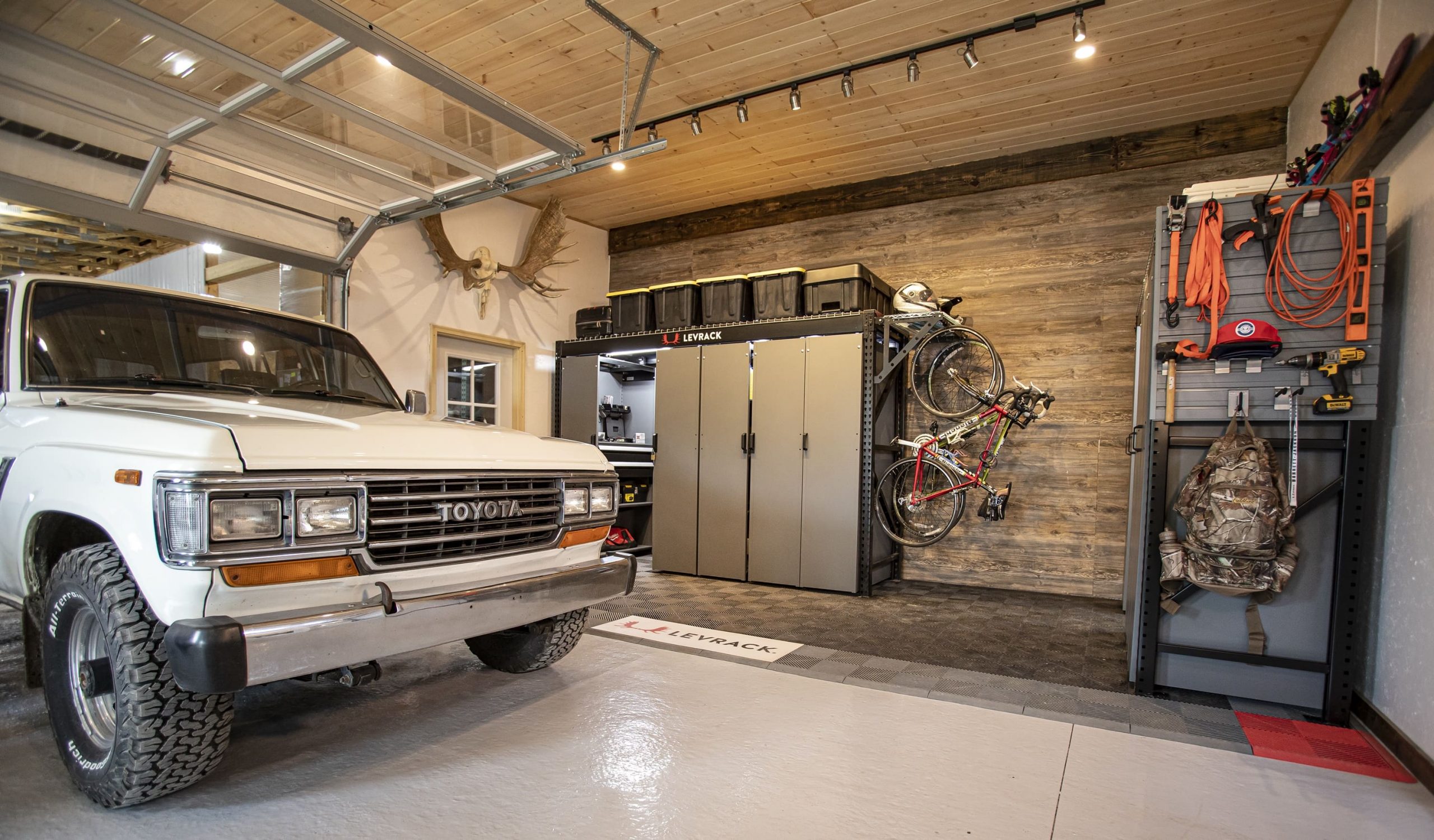
Toyota to Offer $170,000 Luxury Model to Select Few Outside Japan

TOKYO—Toyota thinks the world outside of Japan may finally be ready to embrace its six-figure super luxury flagship car.

Toyota’s Century—often described as the Rolls-Royce of Japanese cars—is a frequent choice of corporate chieftains and government leaders in Japan, including the emperor.

Since it made its debut in 1967, the Century has been sold almost exclusively in Japan and the model has changed little from its original boxy sedan shape and classic styling.

Toyota on Wednesday showed off a new, larger, plug-in hybrid version of the model that “from the start had its eye on the world,” Executive Vice President Hiroki Nakajima said, speaking at the unveiling event in Tokyo.

The new Century model will be introduced this year in Japan at a suggested retail price equivalent to around $170,000 and will be offered to customers in all regions of the world, Nakajima said. Toyota said select dealers in Japan would sell the model but didn’t describe sales procedures in other countries such as the U.S.

With its new Century, Toyota is targeting two segments—larger and luxury vehicles—that have continued to grow despite stagnation elsewhere in the car market. Until now, Toyota has primarily served the luxury market through its Lexus brand.

In 2022, global sport-utility vehicle sales grew 3% from the year earlier despite a slight decline in overall car shipments. That was due in part to strong demand for the vehicles in the U.S., India and Europe. Demand for luxury cars has also continued to rise through recent economic uncertainties.

One thing that won’t change is Toyota’s practice of having specially trained workers hand-make and customise the Century models in Japan. For now, Toyota said it wouldn’t produce more than 30 of the new Century models a month in addition to the existing sedan type it also continues to manufacture.

That means the new Century will likely have a bigger impact on Toyota’s brand image than its bottom line. Nakajima said the Century is a way to show off Toyota’s craftsmanship. He said details of overseas rollout plans would be determined based on initial reactions from customers.

Through the decades, Toyota’s Century has gained a following for being a decidedly Japanese take on a superluxury car. While little-known to most Toyota buyers in the U.S., it has attracted a following from some car enthusiasts such as comedian Jay Leno, who featured the model on a 2018 episode of his car-review series.

The vehicle’s grille features a badge inspired by the golden phoenix that adorns the Temple of the Golden Pavilion in Kyoto. The exit from the rear passenger cabin is lowered so that a person wearing a ceremonial kimono can easily get in and out.

It targets the Japanese upper crust who want to broadcast success, but not in a flashy way. The styling is boxy and understated, typically black with chrome accents.

When introducing the most recent iteration of the Century in 2018, Toyota said it had no plans to sell the vehicle outside of Japan because it didn’t think the car would appeal to foreigners.

The new models presented on stage Wednesday were a departure from the Century’s original styling—similar in shape to an SUV and showing a range of silver and gray shades.

Still, many of the Century’s interior features designed for chauffeured passengers remain. Those include rear seats that fully recline.

Chief Branding Officer Simon Humphries said the new Century was designed to maintain “the highest of Japanese sensibilities,” while also keeping in mind that customers are changing. The roomier new Century is designed for passengers who want to join online meetings from the back seat of their cars and drive without producing emissions, Toyota said.

“It’s a Century for the next century,” Humphries said.

Where to Put Your Cash Now for Every Income Level

Stop dwelling on what you’ve lost thanks to rising interest rates and take advantage of the opportunities they present.

High rates are expected to linger for a while and they are having a corrosive impact on some parts of our finances. Taking out a $500,000 mortgage to buy a home today will cost you about $400 more a month than it would have a year ago in a standard 30-year mortgage. That is not to mention higher rates on credit cards, personal loans and other products for borrowers.

The high-rate periods can also bring juicy, high yields on savings accounts, certificates of deposit and Treasury bills—that is, banks are paying you to let your money sit there. And anyone can take advantage, regardless of income.

Dena Bashri opened a SoFi savings account last fall. It now yields 4.5% a year. She wanted a higher return than she was getting at her local credit union.

Bashri, 25 years old, is a senior director at a fundraising firm and makes roughly $92,500 a year. She saves money on rent by living with her parents in Virginia so she’s able to contribute about $4,900 each month to her savings account. She’s already earned close to a few hundred dollars in interest and hopes to continue building her rainy-day fund, she said.

“Emergency savings offers me the flexibility to take risks but also financially anticipate any life changes that may happen,” Bashri said.

Here’s a financial road map for making the most of great yields while staying on track with your short- and long-term money goals.

Level 1: Nothing to spare

Living paycheck to paycheck is now the norm for most Americans.

Financial advisers urge those holding large amounts of debt to first pay down high-interest balances. About half of people carrying credit-card debt allow those balances to roll over into the next month, according to a recent Bankrate survey.

Credit-card interest rates are at record highs, making that debt even more expensive to maintain. Putting money in a savings account with a 4.5% rate will help little if you haven’t paid down your Visa balance with the current average rate of 22.16%.

“Although you may be able to set aside a certain amount of money in a savings account, if you’re potentially offsetting that with not paying off higher debt, that’s an important consumer consideration,” said Courtney Mitchell, head of consumer deposits, products and payments at TD Bank.

For avid debit-card users, high-yield checking accounts are worth consideration, financial advisers say. These accounts can be found at credit unions and online banks and are yielding up to 6%. That interest can then be linked to a high-yield savings account. This is a good option for debit-card users who want to get a start on their emergency fund.

But try not to keep more than one month’s worth of expenses sitting in a checking account, said Rob Williams, managing director of financial planning and wealth management at Charles Schwab. Research shows money sitting in a checking account is more likely to be spent than money in a savings account.

Level 2: $0—$1,000

For those who can sock away at least a little bit each month, even putting $25 in a high-yield account can make a difference, said Mitchell.

If you contribute $25 a month to a savings account yielding 4.5%, you will have roughly $300 in a year including interest.

Putting that money toward emergency savings? Liquidity is key so that when something unexpected happens, like a flat tire, you can get the money quickly. High-yield savings accounts are the best places for emergency savings because they allow easy withdrawals, financial advisers say.

“You really need emergency savings to be in something you can get at as soon as possible and also without a penalty,” said Mark Hamrik, senior economic analyst at Bankrate.

Financial advisers recommend building up six months to one year of expenses in an emergency-savings account. Homeowners should save a little more for unexpected repairs.

Level 3: $1,000+

Once you’re comfortable with your emergency savings, you can set aside money for holiday gifts, vacations and other short-term goals such as a down payment on a car.

The run of interest rate increases has made certificates of deposit popular again. If you are comfortable locking money away for a period of time, consider a CD for some of these short-term goals. Many six-month to one-year CDs are offering yields above 5%.

It can be helpful to divvy up your high-yield savings for coming expenses.

Erin Confortini, 24, is a freelance marketing consultant based in Pennsylvania who made about $120,000 last year. She has three high-yield savings accounts for her short-term savings goals.

Each month, Confortini puts $150 aside for car insurance, $300 for coming vacations and $200 toward Christmas and birthday gifts, she said.

“It’s really great that now that rates are increasing, we do have an option to earn a little bit of money,” Confortini said.

Level 4: Investing for long term

You’ve got at least one month of expenses in your checking account, you’ve beefed up emergency savings and you’ve set aside buckets of money for anticipated expenses.

Maybe it’s time to get more money out of high-yield savings. Keeping all of your money in savings isn’t a strategy for wealth building because the interest gained on high-yield accounts likely won’t outpace inflation in the long run, said Kyle McBrien, a certified financial planner at Betterment.

One simple way to take advantage of rates and get out of high-yield savings is Treasurys.

Take Victor Cipolla, a 33-year-old entrepreneur in New York.

Cipolla moved $30,000 from his high-yield savings account into a Treasury bill after he noticed that rates were going up. The bill currently yields more than 4% and he reinvests the money in another Treasury bill every six months when it matures, he said. The average yield on a six-month Treasury bill is 5.3%.

“We’ve always had this low interest rate environment, so this is a new area to navigate,” said Cipolla.